Domestic Violence Public Health Emergency Guidance Act This bill requires the Department of Justice to issue guidance to law enforcement agencies on model practices for addressing domestic violence and protecting the safety of law enforcement officers during the COVID-19 (i.e., coronavirus disease 2019) public health emergency.
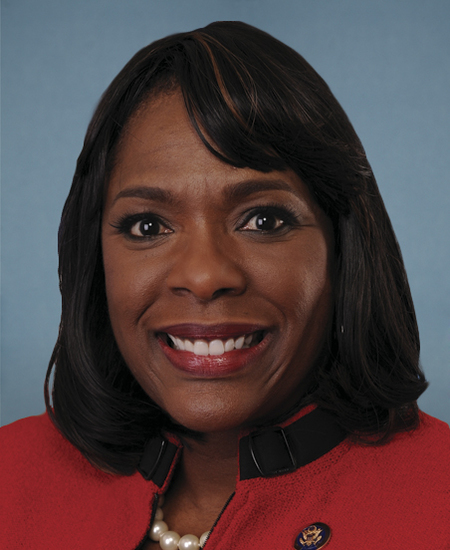
Rep. Terri A. Sewell
Sponsored bills
Restoring Neighborhoods and Strengthening Communities Act This bill directs the Department of Transportation (DOT) to establish a grant program to identify infrastructural barriers posed by transportation facilities within certain communities (e.g., communities of color, low-income communities, or tribal or indigenous populations) and study the feasibility of improving, and developing plans to improve, connectivity within these communities by redesigning or removing such barriers. DOT may award grants to states, tribal and local governments, nonprofit organizations, and other entities for (1) community engagement, education, and capacity building, including to educate community members about opportunities to affect transportation and economic development planning and investment decisions; and (2) planning and feasibility studies, including development of designs and artistic renderings to facilitate community engagement. It may also award capital construction grants to the owner of an infrastructural barrier to carry out projects for which all necessary feasibility studies and other planning activities have been completed, including the replacement of an infrastructural barrier with a new use or facility that has been identified by members of the community.
This resolution condemns the bigotry that fueled those who stormed the U.S. Capitol, the elected officials who stoked that bigotry, including former President Trump, and the Members of Congress who have continued to support those individuals. It reaffirms that harmful rhetoric and violent behavior against individuals based on factors including religion, race, immigration status, and sex will not be tolerated.
Promoting Responsible and Effective Virtual Experiences through Novel Technology to Deliver Improved Access and Better Engagement with Tested and Evidence-based Strategies Act or the PREVENT DIABETES Act This bill requires the Centers for Medicare & Medicaid Services to allow online or virtual diabetes prevention programs that meet standards set by the Centers for Disease Control and Prevention (CDC) to participate in the Medicare Diabetes Prevention Program Expanded Model. The model provides CDC-approved training on dietary changes, physical activity, and other behavioral strategies for beneficiaries who are at risk of developing type 2 diabetes.
Pharmacy and Medically Underserved Areas Enhancement Act This bill provides for Medicare coverage and payment with respect to certain pharmacist services that (1) are furnished by a pharmacist in a health-professional shortage area, and (2) would otherwise be covered under Medicare if furnished by a physician.
Hadiya Pendleton and Nyasia Pryear-Yard Gun Trafficking and Crime Prevention Act of 2021 This bill makes trafficking in firearms a stand-alone criminal offense. A person who commits or conspires to commit a gun trafficking offense is subject to criminal penalties—a prison term of up to 20 years (or up to 25 years, if the person also acted as an organizer), a fine, or both.
Black Maternal Health Momnibus Act of 2021 This bill directs multi-agency efforts to improve maternal health, particularly among racial and ethnic minority groups, veterans, and other vulnerable populations. It also addresses maternal health issues related to COVID-19 (i.e., coronavirus disease 2019). The Department of Health and Human Services (HHS) and other specified departments must address the social determinants of maternal health, which include child care, housing, food security, transportation, and environmental conditions. The bill also extends to 24 months postpartum eligibility for the Special Supplemental Nutrition Program for Woman, Infants, and Children. Additionally, HHS and other agencies must take actions to grow and diversify the maternal health workforce. To increase access to maternity care, HHS and other agencies must (1) award specified grants; (2) test an alternative payment model for perinatal care under Medicaid and the Children's Health Insurance Program (CHIP); and (3) support training, technology, and telehealth initiatives. The bill also increases research and data collection on maternal morbidity and mortality, particularly among tribal populations and minority groups. The Bureau of Prisons and the Department of Justice must establish programs to improve maternity care for incarcerated populations. The Medicaid and CHIP Payment and Access Commission must also report on the impact of Medicaid ineligibility for pregnant and postpartum prisoners. Additionally, as a condition for certain grants, states and territories must have laws limiting the use of restraints on pregnant individuals in prisons. The bill also directs activities to mitigate adverse maternal health outcomes associated with climate change and to improve maternal vaccination rates.
Justice for Incarcerated Moms Act of 2021 This bill establishes new requirements related to grants, programs, and reports to improve the treatment and care of pregnant and postpartum women who are incarcerated. Specifically, the bill requires the following: states must restrict the use of restraints on pregnant women in prison in order to receive full funding under the Edward Byrne Memorial Justice Assistance Grant program; the Bureau of Prisons must establish programs to optimize maternal health outcomes for pregnant and postpartum women in federal prisons; the Bureau of Justice Assistance must award state grants for programs to support pregnant and postpartum women in state and local prisons and jails; the Government Accountability Office must report on adverse maternal and infant health outcomes among incarcerated individuals and infants born to such individuals, with a particular focus on racial and ethnic disparities; and the Medicaid and CHIP Payment and Access Commission must report on the impact of Medicaid ineligibility for pregnant and postpartum women in prison.
National Origin-Based Antidiscrimination for Nonimmigrants Act or the NO BAN Act This bill imposes limitations on the President's authority to suspend or restrict aliens from entering the United States. It also prohibits religious discrimination in various immigration-related decisions, such as whether to issue an immigrant or nonimmigrant visa, unless there is a statutory basis for such discrimination. The President may temporarily restrict the entry of any aliens or class of aliens after the Department of State determines that the restriction would address specific and credible facts that threaten U.S. interests such as security or public safety. The bill also imposes limitations on such restrictions, such as requiring the President, State Department, and the Department of Homeland Security (DHS) to (1) only issue a restriction when required to address a compelling government interest, and (2) narrowly tailor the suspension to use the least restrictive means to achieve such an interest. Before imposing a restriction, the State Department and DHS shall consult with Congress. The State Department and DHS shall report to Congress about the restriction within 48 hours of the restriction's imposition. If such a report is not made, the restriction shall immediately terminate. Individuals or entities present in the United States and unlawfully harmed by such a restriction may sue in federal court. DHS may suspend the entry of aliens traveling to the United States on a commercial airline that failed to comply with regulations related to detecting fraudulent travel documents.
Washington, D.C. Admission Act This bill provides for admission into the United States of the state of Washington, Douglass Commonwealth, composed of most of the territory of the District of Columbia. The commonwealth shall be admitted to the Union on an equal footing with the other states. The Mayor of the District of Columbia shall issue a proclamation for the first elections to Congress of two Senators and one Representative of the commonwealth. The bill applies current District laws to the commonwealth and continues pending judicial proceedings. The commonwealth (1) shall consist of all District territory, with specified exclusions for federal buildings and monuments, including the principal federal monuments, the White House, the Capitol Building, the U.S. Supreme Court Building, and the federal executive, legislative, and judicial office buildings located adjacent to the Mall and the Capitol Building; and (2) may not impose taxes on federal property except as Congress permits. District territory excluded from the commonwealth shall be known as the Capital and shall be the seat of the federal government. The bill maintains the federal government's authority over military lands and specified other property. The bill provides for expedited consideration of a joint resolution repealing the Twenty-third Amendment to the Constitution, which provides for the appointment of electors of the President and Vice President. The bill continues certain federal authorities and responsibilities, including regarding employee benefits, agencies, courts, and college tuition assistance, until the commonwealth certifies that it is prepared to take over the authorities and responsibilities. The bill establishes the Statehood Transition Commission to advise the President, Congress, and District and commonwealth leaders on the transition.