

COVID-19 and Pandemic Response Centers of Excellence Act This bill establishes and provides funding for the COVID-19 and Pandemic Response Centers of Excellence Program Fund. The Department of Health and Human Services (HHS) must use the funds to set up at least 10 centers of excellence at academic medical centers to address issues associated with COVID-19 and future pandemic preparedness and response efforts. In addition, HHS must establish an advisory committee comprised of representatives from relevant federal agencies, each center of excellence, and national organizations that work with populations disproportionately impacted by COVID-19 and other health disparities. The committee must facilitate collaboration, information-sharing, and dissemination of best practices relating to COVID-19 and future pandemic responses.
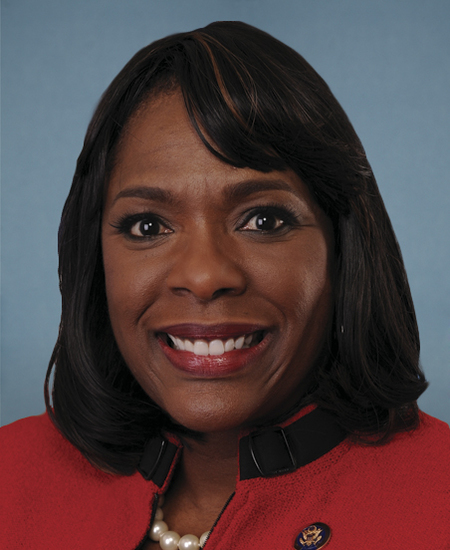
Rep. Terri A. Sewell
Sponsored bills
Disaster Reforestation Act This bill sets forth a special rule for the tax deduction for casualty losses of uncut timber (including pre-merchantable timber). It provides that in losses of any uncut timber from fire, storm, insects, invasive species, drought, or other casualty, or from theft, the basis for determining the amount of the deduction for such loss shall not be less than the excess of the value of such timber determined immediately before such loss was sustained, over the salvage value of such timber. To be eligible for the casualty loss deduction, the uncut timber subject to the loss must be reforested not later than the close of the five-year period beginning on the date of the loss.
Expand American Educational Opportunity Act of 2021 This bill replaces the Hope Scholarship and Lifetime Learning tax credits with a modified American Opportunity Tax Credit that (1) allows an income tax credit of up to $2,500 of the qualified tuition and related expenses of a student who is carrying at least one half of a normal course load, (2) allows a lifetime dollar limitation for the credit of $15,000 for all taxable years, and (3) increases the refundable portion of the credit to a maximum of $1,500. The bill defines qualified tuition and related expenses as tuition, fees, computer or peripheral equipment, child and dependent care expenses, and course materials for the taxpayer, the taxpayer's spouse, and dependents at certain postsecondary educational institutions. The bill also allows an exclusion from gross income, for income tax purposes, of any amount received as a Federal Pell Grant.
Finish the ADHS Act This bill sets aside funding from the Highway Trust Fund for the Appalachian development highway system (a network of highways linking the region to national interstates) and prescribes a method to allocate the funding.
Allergy Testing Access Act of 2021 This bill requires equal coverage of two types of allergy tests under Medicaid and Medicare. Specifically, in vitro specific IgE tests (blood tests) and percutaneous tests (skin tests) must be treated equally with respect to (1) medical necessity or other coverage requirements, (2) frequency limits, and (3) allergen unit limits.
Insulin Access for All Act of 2021 This bill prohibits cost-sharing (e.g., copayments) under Medicaid and the Medicare prescription drug benefit for insulin and associated medical supplies.
This resolution recognizes the challenges posed by sickle cell trait and sickle cell disease and encourages relevant screening, research, and surveillance. Sickle cell disease is a group of inherited disorders that cause abnormally shaped red blood cells.
Promotion and Expansion of Private Employee Ownership Act of 2021 This bill expands tax incentives and federal assistance for employee stock ownership plans (ESOPs) that are sponsored by S corporations. The bill provides additional tax incentives for ESOPs by (1) extending to all domestic corporations, including S corporations, provisions allowing deferral of tax on gain from the sale of employer securities to an ESOP; and (2) allowing a tax deduction for 50% of the interest received by a bank on loans to S corporation-sponsored ESOPs for the purchase of employer securities. The Department of the Treasury must establish the S Corporation Employee Ownership Assistance Office to foster increased employee ownership of S corporations. The bill defines an ESOP business concern for purposes of the Small Business Act as a business concern that was eligible for a loan, preference, or other program under such Act before more than 49% of the business concern was acquired by an ESOP.
Protecting Older Workers Against Discrimination Act of 2021 This bill revises the evidentiary standard for age discrimination by establishing an unlawful employment practice when the complaining party demonstrates that age or participation in an investigation, proceeding, or litigation related to an age discrimination claim was a motivating factor for an adverse practice, even though other factors also motivated the practice (thereby allowing what are commonly known as mixed motive claims). The bill (1) permits the complaining party to rely on any type or form of admissible evidence, which need only be sufficient for a reasonable trier of fact to find that an unlawful practice occurred; and (2) declares that the complaining party shall not be required to demonstrate that age or retaliation was the sole cause of the employment practice (thereby rejecting the Supreme Court's decision in Gross v. FBL Financial Services, Inc. , which requires the complainant to prove that age was the but-for cause for the employer's decision). The bill applies this evidentiary standard to other employment discrimination and retaliation claims, including claims under the Civil Rights Act of 1964, the Americans With Disabilities Act of 1990, and the Rehabilitation Act of 1973. In a claim in which age discrimination is shown, but where the employer demonstrates that it would have taken the same action absent the motivating factor of age, the bill authorizes courts to grant declaratory and injunctive relief, but prohibits the court from awarding damages or issuing an order requiring any admission, reinstatement, hiring, promotion, or payment. This limitation also applies to claims of discrimination based on disability. The bill also includes reporting requirements for the Equal Employment Opportunity Commission and the Department of Labor.
Cultivating Opportunity and Recovery from the Pandemic through Service Act or the CORPS Act This bill makes several changes to AmeriCorps programs during the COVID-19 health emergency. Specifically, the bill: increases living allowance payments to program participants; increases educational awards for program participants; relaxes program requirements, including reducing the age requirement for AmeriCorps Seniors to 45 and older; creates a pilot program to allow state commissions to directly place individuals in approved AmeriCorps programs; and allows for targeted AmeriCorps grants to fund recovery projects in communities disproportionately affected by COVID-19. The bill also excludes AmeriCorps living allowance payments and educational awards from taxable income for program participants.