

Maddy summaryHR 4398, the "Patriotism Not Pride Act," prohibits federal agencies from using taxpayer funds to support or promote Lesbian, Gay, Bisexual, Transgender, Queer, and Intersex (LGBTQ+) Pride Month activities, including events, communications, or educational programs. It also bans the display of any flag representing sexual orientation or gender identity on federal property or grounds. The bill applies to all federal agencies as defined in U.S. law and directly affects how agencies manage public communications and property. This is a procedural measure restricting specific federal activities, not a substantive policy change.
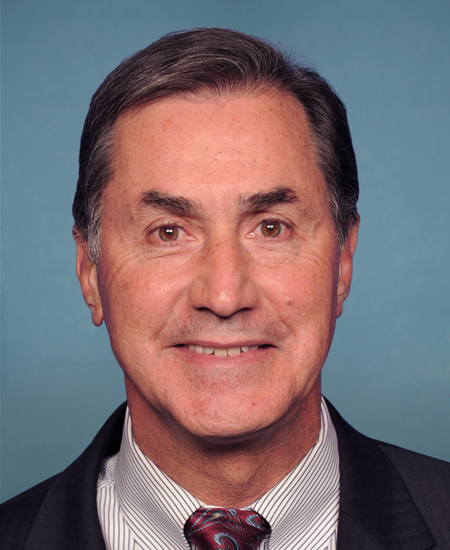
Rep. Gary J. Palmer
Sponsored bills
This bill revises requirements related to voter removal programs. Currently, each state must conduct a general program that makes a reasonable effort to remove the names of ineligible voters from the official lists of eligible voters by reason of (1) the death of the voter, or (2) a change in the residence of the voter. A state may meet this requirement by establishing a program under which change-of-address information is provided by the U.S. Postal Service (USPS). This bill removes the ability of states to rely on this change-of-address information provided by the USPS for the purpose of removing the names of ineligible voters from the official lists of eligible voters.
Maddy summaryHR 4317 requires states to submit annual reports to the Election Assistance Commission (EAC) about voter list maintenance. States must report specific data for each odd-numbered year, including: (1) the number of inactive voters (based on voting history) and how long they've been inactive, (2) voters who participated in two prior federal elections, (3) voters removed from lists under current rules, (4) notices sent to inactive voters, and (5) responses received to those notices. This bill directly affects all states that maintain voter registration lists under the National Voter Registration Act. The reporting requirement begins after the bill's enactment and aims to standardize transparency around voter list management.
Maddy summaryHR 4321 prohibits the U.S. government from providing any federal loans, grants, or financial assistance to state or local governments that enact reparations programs based on slavery, race, ethnicity, national origin, or related historical practices. This bill directly affects state and local governments that pass such reparations laws by blocking access to federal funds for those specific programs. The key provision bans all forms of federal financial aid - including from the Federal Reserve and independent agencies - to the jurisdiction enacting the reparations program, without applying to other government functions. The bill focuses solely on restricting federal funding for these programs, not on creating or funding reparations themselves.
Maddy summaryHR 4300, the Real Emergencies Act, prohibits the President from declaring national emergencies, major disasters, or public health emergencies under three specific federal laws *based on climate change*. It directly affects the President and federal agencies that manage emergency declarations under the National Emergencies Act, the Stafford Act, and the Public Health Service Act. The bill's key provision explicitly bans using climate change as a justification for these emergency declarations, without altering existing emergency powers for other reasons. This is a procedural restriction on executive authority, not a change to climate policy or emergency response mechanisms.
Maddy summaryHJRES 44 is a congressional resolution seeking to block a 2021 rule by the Bureau of Alcohol, Tobacco, Firearms, and Explosives (ATF). The rule classified firearms with stabilizing braces as "short-barreled rifles," which would have required additional licensing and regulation. This resolution uses a specific legal process (under Title 5, U.S. Code) to formally disapprove the ATF rule, meaning the rule would no longer be in effect. It directly affects firearm owners, manufacturers, and dealers who would have been subject to the rule’s requirements.
Maddy summaryHR 277 would require Congress to approve major federal regulations before they take effect. Major rules are defined as those with significant economic impact ($100 million+ annually), major cost increases for consumers or industries, or significant adverse effects on competition, employment, or innovation. Agencies must submit detailed information about these rules to Congress, including cost-benefit analyses, before they can take effect. Congress would have 70 session days to approve the rule with a joint resolution; if they don't act within that timeframe, the rule would not take effect. This would increase congressional oversight of federal regulations and require more detailed information about proposed rules before they become law.
Maddy summaryHJRES 69 is a resolution seeking to disapprove an Environmental Protection Agency (EPA) rule published on June 5, 2023, which established a "Federal Good Neighbor Plan" for the 2015 ozone air quality standards. The rule aimed to address ozone pollution crossing state lines, particularly affecting southeastern states and industries subject to the 2015 ozone standards. This resolution would block the rule from taking effect by invoking the Congressional Review Act, preventing it from being enforced. If enacted, it would directly stop the EPA from implementing this specific plan, impacting states and businesses that would have had to comply with the rule.
Maddy summaryHR 1640, the Save Our Gas Stoves Act, prevents the Department of Energy from implementing energy efficiency standards for gas stoves that would make them unavailable in the U.S. market. It amends federal law to require that any new standard for gas stoves must not result in the unavailability of gas stove types, directly affecting gas stove manufacturers and consumers who rely on these appliances. The bill specifically blocks the implementation of the 2023 proposed rule (Energy Conservation Program: Energy Conservation Standards for Consumer Conventional Cooking Products) and any similar rule. This is a policy change focused on maintaining the availability of gas stoves by altering the criteria for energy standard approval.
Maddy summaryHR 1525, the FAIR Act of 2023, reforms federal civil forfeiture laws to require all property seizures to go through a court process rather than allowing agencies to take property without judicial review. It raises the evidence standard from "preponderance of the evidence" to "clear and convincing evidence" for the government to prove forfeiture, and mandates courts to review cases within 7 days of seizure. The bill also requires courts to appoint attorneys for low-income individuals unable to afford legal representation and ensures property owners receive timely notice of their rights. These changes directly affect individuals whose property is seized in civil forfeiture cases, particularly those with limited financial means.