

Maddy summaryThis bill prohibits federal funding, support, or approval for research using human fetal tissue obtained from induced abortions. It allows research on tissue from miscarriages (under 20 weeks) or stillbirths (20+ weeks) under existing Public Health Service Act rules, and permits development of new cell lines for vaccines or genetic vectors if not derived from abortion tissue. The bill amends the Public Health Service Act to restrict federal research to tissue from miscarriages or stillbirths and clarifies definitions for terms like "miscarriage" and "stillbirth." It directly affects federal agencies like the NIH and researchers relying on federal grants for biomedical studies.
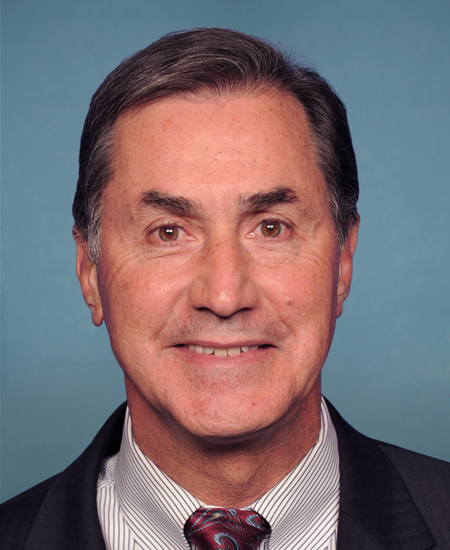
Rep. Gary J. Palmer
Sponsored bills
Maddy summaryHR 1772 designates English as the official language of the United States federal government, requiring all official government functions (like laws, regulations, and public proceedings) to be conducted in English. It directly affects federal agencies, naturalization processes (mandating English ceremonies and language standards for new citizens), and government communications. Key exceptions include language teaching, disability education, national security needs, census activities, and protections for Native American languages under existing law. The bill does not restrict the use of other languages in private settings or ban bilingual services for essential government functions. It amends U.S. Code to establish these requirements, with implementation set for 180 days after enactment.
Maddy summaryThe New Health Options Act of 2025 establishes a federal reinsurance program to lower premiums for certain individual health insurance plans. It provides payments to insurers covering "eligible individuals" enrolled in specific off-Exchange plans, with a $110,000 attachment point and 90% coverage up to $300,000 per claim, funded by $50 per member-month (capped at $6 billion annually). The bill also allows insurers to opt out of the standard risk pool (affecting how premiums are calculated) and removes limits on age-based premium variations for some plans, while maintaining a 3:1 age ratio for others. Additionally, it requires insurers to apply out-of-network costs to deductibles and mandates health care providers to disclose price comparisons for covered services.
Maddy summaryHR 1651 would nullify a specific Environmental Protection Agency (EPA) rule finalized on May 9, 2024. This rule established emissions standards for greenhouse gases from new, modified, and reconstructed fossil fuel power plants, set guidelines for existing plants, and repealed the previous "Affordable Clean Energy Rule." The bill would make this EPA rule unenforceable, directly affecting fossil fuel power plants by removing these federal emissions requirements. It does not create new regulations but cancels an existing EPA rule.
Maddy summaryHRES 166 is a non-binding House resolution expressing U.S. support for the Iranian people's desire for a democratic, secular, and nonnuclear republic. It condemns the Iranian regime's terrorism, regional proxy wars, internal suppression of ethnic and religious minorities, and human rights abuses - including executions and repression of women-led protests. The resolution calls for holding the regime accountable through sanctions, supports the Ten-Point Plan for Iran’s democratic transition, and urges protection for Iranian political refugees in Albania. It does not create new laws but affirms U.S. policy alignment with Iranian protesters' demands.
Maddy summaryThis bill awards a Congressional Gold Medal to the 761st Tank Battalion (known as the "Black Panthers"), the first predominantly Black armored unit in World War II's European Theater. It recognizes their combat service from 1944-1946, including key roles in the Battle of the Bulge and breaking the Siegfried Line, despite facing racial prejudice during and after the war. The medal will be displayed at the National Museum of African American History and Culture, with bronze duplicates available for sale to cover costs. The bill commemorates the battalion's 130,000 enemy casualties inflicted, 50% casualty rate, and their 1978 Presidential Unit Citation. It does not create new laws or affect current policies.
Maddy summaryThis bill prohibits marijuana businesses from deducting ordinary business expenses on their federal tax returns. It amends federal tax law to deny deductions or credits for any costs related to selling marijuana (which remains illegal under federal law), directly affecting state-legal marijuana businesses operating under state law but subject to federal prohibition. The key provision requires these businesses to pay taxes on their full gross income without subtracting standard business costs like rent or supplies. The rule applies to tax years beginning after the bill's enactment date.
Maddy summaryHR 1502 authorizes the creation of a Congressional Gold Medal to honor the volunteers and communities (primarily from Nebraska, Colorado, and Kansas) who supported the North Platte Canteen during World War II. The bill directs the Treasury Secretary to design and strike the medal, which will be presented to the individuals who contributed to the canteen’s operations and then permanently displayed at the Lincoln County Historical Museum in North Platte, Nebraska. It also permits the sale of bronze duplicates to cover production costs, with proceeds going to the U.S. Mint. This is a commemorative measure recognizing historical service, not a policy change affecting current laws or programs.
Maddy summaryThe ELITE Vehicles Act repeals federal tax credits for purchasing new electric vehicles, used clean vehicles, and commercial clean vehicles. It also eliminates the tax credit for installing electric vehicle charging infrastructure. These changes apply to vehicles purchased or with a binding contract entered into 30 days after the bill's enactment. The bill directly affects consumers and businesses that previously used these credits to offset the cost of electric vehicles and charging stations.
Maddy summaryHR 1301, the Death Tax Repeal Act, would eliminate the federal estate tax and generation-skipping transfer tax for estates of individuals dying on or after its enactment date. It directly affects individuals inheriting significant assets, as it removes taxes on estates exceeding $10 million (adjusted for inflation) and repeals taxes on large transfers between generations. The bill modifies the gift tax by establishing a $10 million lifetime exemption with annual inflation adjustments, replacing previous tax brackets. It applies to estates, gifts, and transfers occurring on or after the bill's effective date.