

Nuclear Family Priority Act This bill imposes limits on various types of family-sponsored immigration visas. The non-U.S. national ( alien under federal law) parents of U.S. citizens shall not qualify for visas for immediate relatives, which are not subject to any direct numerical limits. Currently, the spouses, unmarried children under 21, and parents of citizens are considered immediate relatives. The bill also creates a nonimmigrant visa for such parents of citizens. Such non-U.S. nationals shall not be eligible for employment or any public benefits. The bill also reduces the baseline annual cap for family-sponsored visas from 480,000 to 88,000, and revises the methods for calculating the cap. Currently, the 480,000 cap may be adjusted depending on various factors but shall not be less than 226,000. The bill eliminates preference allocations (visa categories subject to various annual caps) for various family-sponsored visas, including those for the siblings and married children of citizens. The bill provides for a preference allocation for the unmarried children under 21 and spouses of permanent residents, subject to the 88,000 annual cap.
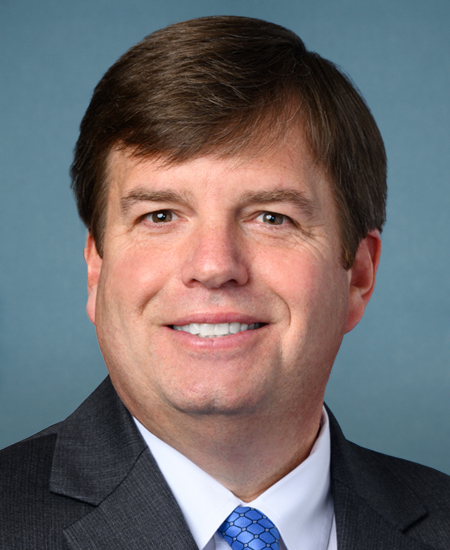
Rep. Dale W. Strong
Sponsored bills
Maddy summaryHR 2740 modifies the boundaries of Talladega National Forest to include specific land shown on a map dated September 6, 2024. The bill authorizes the Secretary of Agriculture to acquire this land through voluntary means - such as purchase, donation, or exchange - using existing land acquisition authorities like the Weeks Law, and requires funds to be used without undue delay. The newly acquired land must be managed as part of the National Forest System under applicable laws and regulations. This change directly affects the forest's geographic scope and landowners within the designated boundary who may sell or donate property.
Maddy summaryThis bill, HR 2102 (Major Richard Star Act), allows veterans with combat-related disabilities to receive both full military retired pay and veterans' disability compensation simultaneously, without the previous offset that reduced retired pay. It directly affects veterans already eligible for both benefits due to combat-related injuries, removing the requirement that their retired pay be reduced by the disability compensation amount. The key provision amends Title 10 and Title 38 to eliminate the offset rule (sections 5304 and 5305 of Title 38) for these veterans. The change applies to payments starting after the bill’s enactment date, effective for all qualifying veterans. This is a policy change to increase financial support for affected veterans, not a new benefit.
Maddy summaryThe Freedom from Unfair Gun Taxes Act of 2025 would prohibit states and local governments from imposing taxes on the sale of firearms, ammunition, or firearm parts during interstate or foreign commerce. This bill directly affects state tax policies and manufacturers or dealers selling these items across state lines. It explicitly states that the bill does not change the existing federal tax on firearms and ammunition that funds wildlife conservation programs. The key provision bans state-level taxes for these sales in interstate transactions while preserving current federal funding mechanisms.
Maddy summaryThe Providing Veterans Essential Medications Act requires the Department of Veterans Affairs to reimburse State homes or provide medications directly for certain high-cost drugs used by veterans in State-run nursing homes. A medication is defined as high-cost if its price (including a 3% fee) exceeds 8.5% of the VA's monthly payment for the veteran's care at that home. This applies specifically to State homes that provide such medications to veterans under VA contracts. The bill ensures veterans receive essential medications without financial burden on the State homes, using clear cost thresholds to determine eligibility.
Maddy summaryThe Safer Skies Act of 2025 requires specific smaller airlines to adopt enhanced security screening protocols currently used by larger carriers. It mandates that "covered air carrier operations" - defined as airlines operating under certain FAA rules, offering individual seats with public schedules, using planes with more than nine passenger seats, and not using TSA checkpoints - to follow the Aircraft Operator Standard Security Program (49 CFR §1544.101(a)) within 360 days of the bill's enactment. The Transportation Security Administration must revise its rules to enforce this requirement. This directly affects regional and private charter airlines that currently skip TSA checkpoint screening but serve the public with scheduled passenger flights.
Maddy summaryThe FOCA Act of 2025 prohibits federal agencies from requiring or banning contractors from using union agreements in construction project bids or contracts. It directly affects federal agencies, contractors, and subcontractors working on federally funded or assisted construction projects (like buildings or infrastructure). The law requires bid documents to not favor or penalize contractors based on whether they have union agreements, aiming to promote open competition and prevent discrimination. This changes how agencies structure bids but does not affect union agreements themselves. The bill applies to all new contracts and subcontracts after enactment, with limited exemptions only for public health/safety emergencies or national security.
Maddy summaryHR 706, the DHS Biodetection Improvement Act, requires the Department of Homeland Security (DHS) to assess its current use of Department of Energy national laboratories for biodetection research and develop a formal strategy within 180 days. The strategy must identify effective biodetection technologies (based on DHS requirements and studies like the 2021 BioWatch network review), create a procurement plan for deploying these technologies to existing BioWatch systems, and establish processes for evaluating gaps and updating contingency plans. This bill directly affects DHS operations and the jurisdictions using BioWatch detection systems. It mandates annual updates to Congress on implementation progress and challenges, aiming to improve coordination with labs and ensure reliable biological threat detection capabilities.
Maddy summaryThis bill requires the Department of Homeland Security (DHS) to create a new department-wide policy and process to protect sensitive research and development projects from unauthorized access or disclosure during acquisitions. It directly affects DHS research programs by mandating specific security safeguards for their work. Key provisions include requiring DHS to develop this policy within one year, submit a GAO report on compliance with existing national security guidelines (NSPM-33), and provide a congressional briefing on implementing the new security framework. The bill focuses on establishing concrete security protocols for DHS research, not on funding or broader policy changes.
Maddy summaryHR 708, the SHIELD Against CCP Act, establishes a DHS working group to coordinate efforts against security threats posed by the Chinese Communist Party. The working group examines DHS programs targeting terrorism, cyber threats, border security, and transportation security, specifically focusing on the CCP's nontraditional tactics (like identity theft and visa exploitation), predatory economic practices, fentanyl trafficking, and illicit financial activity. It requires annual reports to Congress on these threats, identifies gaps in current responses, and ensures privacy compliance and coordination with federal and local partners. The working group expires seven years after its creation.