

Fighting Trade Cheats Act of 2025 This bill increases penalties for, and establishes additional enforcement mechanisms related to, fraudulent and grossly negligent violations of U.S. customs laws. Specifically, the bill increases the maximum civil penalty for a fraudulent violation to three times the domestic value of the merchandise. (Currently, the maximum penalty is the domestic value of the merchandise.) It prohibits a person who commits a fraudulent violation from importing merchandise into the United States for a five-year period. Additionally, the bill increases the maximum civil penalty for a grossly negligent violation to the lesser of (1) 3 times the domestic value of the merchandise; or (2) 10 times the lawful duties, taxes, and fees. (Currently, the maximum penalty is the lesser of the domestic value of the merchandise or four times the lawful duties, taxes, and fees.) It prohibits a person who commits a grossly negligent violation from importing merchandise into the United States for a two-year period. Further, the bill applies these importation bans to an affiliated person (e.g., a family member or employee) of the person who committed the fraudulent or grossly negligent violation. The bill establishes a private right of action for an interested party (e.g., a manufacturer) affected by customs fraud or grossly negligent violations. The bill prohibits any person (or an affiliated person) who commits a fraudulent or grossly negligent violation from participating in the U.S. Customs and Border Protection's Importer of Record program, and further requires revocation of their importer of record numbers.
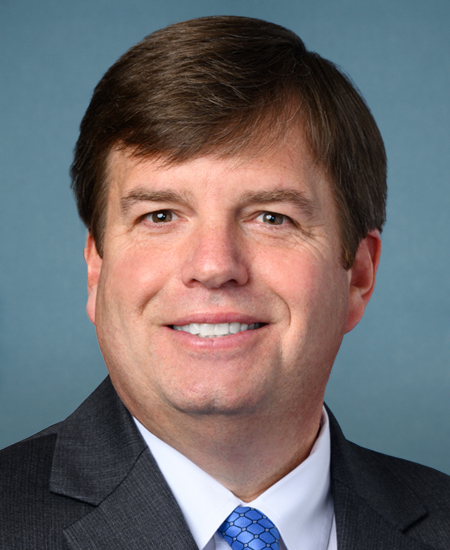
Rep. Dale W. Strong
Sponsored bills
United States-Israel Defense Partnership Act of 2025 This bill requires or authorizes certain actions to increase defense-related cooperation between the United States and Israel. Specifically, the bill requires the Department of Defense (DOD) to establish a cooperative program, with the concurrence of Israel's Ministry of Defense (MOD), to develop and deploy advanced technologies for countering unmanned systems that threaten the United States and Israel; establish in Israel an office of the Defense Innovation Unit (an organization that focuses on rapidly fielding and scaling commercial technology across the U.S. military); and seek to engage Israel's MOD on the ascension of Israel into the national technology and industrial base (currently defined in law as the persons and organizations engaged in research, development, production, integration, services, or information technology activities conducted within the United States, the United Kingdom, Australia, New Zealand, and Canada). The bill authorizes DOD, upon request of Israel's MOD, to jointly conduct research, development, test, and evaluation (RDT&E) of emerging technologies such as artificial intelligence and robotics to meet defense challenges. Additionally, the bill extends the authority for DOD to (1) carry out RDT&E on a joint basis with Israel to establish anti-tunnel and counter unmanned aerial systems capabilities through 2028, and (2) transfer defense articles intended for use as reserve stocks for Israel through January 1, 2029.
Maddy summaryHR 1232, the National Right-to-Work Act, would make union membership voluntary for workers in most private-sector jobs by removing legal requirements for employees to join a union or pay dues as a condition of employment. It directly affects workers in unionized workplaces covered by the National Labor Relations Act (including most private employers) and railroad workers covered by the Railway Labor Act. The key change eliminates provisions that allowed "union security agreements" (requiring dues or membership), meaning workers could no longer be forced to pay union fees to keep their jobs. This bill does not change other labor rights or create new programs - it only modifies existing laws to allow workers to opt out of union membership and financial obligations.
Maddy summaryHR 1146, the "No More Funding for NPR Act of 2025," blocks all federal funding for National Public Radio (NPR) and its successor organizations after the bill's enactment. It prohibits direct or indirect federal support, including funding for public broadcast stations using federal money to pay NPR for programming, and permanently rescinds unobligated funds allocated to NPR for fiscal years 2025 and 2026. The bill does not apply during active FEMA disaster responses when funds are used solely to share urgent public safety information. This legislation directly affects NPR's federal funding stream, which currently supports its operations and programming.
Maddy summaryHR 1046, the Marc Fischer Memorial Act, requires the Bureau of Prisons to implement digital mail scanning technology at all federal prisons to detect fentanyl and other synthetic drugs in inmate mail. It mandates a strategy within 90 days of an evaluation, including 100% scanning of all mail, digital copies of mail to inmates within 24 hours, and physical mail delivery within 30 days for non-contaminated items. The bill directly affects federal prison staff, inmates, and the Bureau of Prisons by aiming to reduce drug-related overdoses and alleviate staff workload tied to mail processing. Implementation must be completed within three years, with annual reports tracking detected drugs and strategy efficiency. The legislation focuses on concrete technological and procedural changes to enhance safety, referencing a successful pilot program at two facilities.
Maddy summaryHR 1057, the Safe Passage on Interstates Act of 2025, creates a new federal criminal offense for intentionally obstructing interstate highways. It makes it illegal to deliberately delay traffic, stand near vehicles, or endanger movement on interstates with the intent to block normal use. The bill directly affects individuals who engage in such obstruction, with penalties including fines up to $15,000 or imprisonment up to 20 years (or life if death results). Exceptions cover lawful activities authorized by federal, state, or local governments. This bill amends Title 18 of the U.S. Code to establish specific penalties for highway obstruction.
Fair Access to Banking Act This bill places restrictions on certain banks, credit unions, and payment card networks if they refuse to do business with a person who complies with the law. Restrictions include prohibiting the use of electronic funds transfer systems and lending programs, termination of an institution's depository insurance, and specified civil penalties. Banks and other specified financial institutions are allowed to deny financial services to a person only if the denial is justified by a documented failure of that person to meet quantitative, impartial, risk-based standards established in advance by the institution. This justification may not be based upon reputational risks to the institution. The bill establishes the right for a person to bring a civil action for a violation of this bill.
Maddy summaryHR 925, the "Dismantle DEI Act of 2025," would eliminate diversity, equity, and inclusion (DEI) programs across federal government operations. The bill requires federal agencies to close DEI offices, rescind related executive orders, and prohibit the use of federal funds for DEI training, offices, or initiatives. It defines "prohibited diversity, equity, or inclusion practice" as any activity that discriminates based on race, ethnicity, religion, biological sex, or national origin, or requires employees to complete training asserting that certain groups are inherently superior or inferior. The legislation also prohibits requiring employees to sign statements about race, ethnicity, or gender, and establishes private lawsuits for violations with potential damages of $1,000 per violation per day. This bill would directly affect federal agencies, contractors, grantees, and advisory committees receiving federal funding.
Life at Conception Act This bill declares that the right to life guaranteed by the Constitution is vested in each human being at all stages of life, including the moment of fertilization, cloning, or other moment at which an individual comes into being. Nothing in this bill shall be construed to authorize the prosecution of any woman for the death of her unborn child.
Maddy summaryHR 709, the National Training Center for Counter-Unmanned Aircraft Systems Act, establishes federal training programs and certification standards for personnel operating counter-drone systems. The bill directly affects federal law enforcement agencies (like the Department of Justice), the Department of Homeland Security, and individuals who operate counter-UAS technology. It requires creating dedicated training facilities, setting initial and recurrent certification standards for operators, and ensuring aviation safety through coordination with the Federal Aviation Administration. The law mandates that training programs address impacts on civilian airspace and aircraft safety before deployment.