

Maddy summaryHR 9376, "Lulu’s Law," requires the Federal Communications Commission (FCC) to update wireless emergency alert regulations within 60 days of enactment. It specifically adds "shark attack" as an event eligible for emergency Alert Messages under FCC rules. This change directly affects how emergency alerts are categorized and transmitted to the public via wireless devices. The bill modifies existing FCC regulations (Title 47, Part 10) to include shark attacks as a triggering event for emergency alerts, without altering other alert types or requirements.
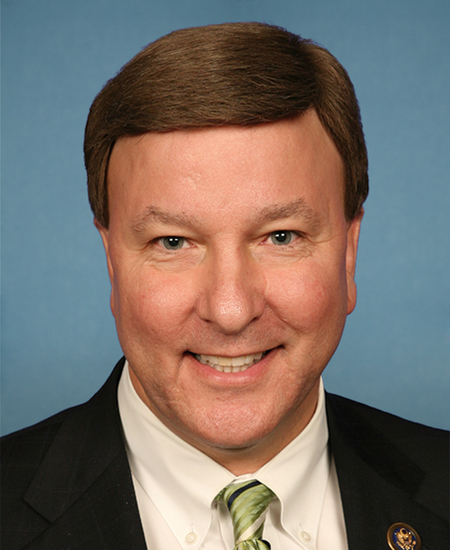
Rep. Mike Rogers
Sponsored bills
Maddy summaryHR 9274, the SHAWL Act, establishes two new Smithsonian museums: the National Museum of the American Latino and the American Women’s History Museum. It authorizes both museums to be located within the National Mall’s "Reserve" area, overriding prior restrictions, and requires federal agencies managing potential sites to transfer jurisdiction to the Smithsonian after notifying congressional committees. The bill mandates that both museums accurately represent diverse cultures, histories, and viewpoints within Latino and women’s communities through exhibits and programs, requiring input from a broad range of community experts. It also requires the Smithsonian to submit biennial reports to Congress detailing compliance with these representation requirements.
Freedom from Unfair Gun Taxes Act of 2024 This bill prohibits states or localities from imposing a levy or collecting an excise tax on the sale of a firearm, ammunition, or any part or component thereof, by a manufacture or retailer.
Maddy summaryHRES 1394 is a non-binding resolution celebrating the U.S.-India partnership based on shared democratic values, religious pluralism, and human rights, while highlighting the contributions of the Indian diaspora in the United States. It specifically recognizes the 50th anniversary of BAPS Swaminarayan Sanstha's community work, including its spiritual centers (mandirs) and volunteer efforts across the country. The resolution does not create legal obligations but formally acknowledges these ties and achievements.
Maddy summaryHJRES 164 is a congressional resolution seeking to block a rule issued by the Department of Commerce regarding firearms license requirements. It directly targets the rule published in the Federal Register (89 Fed. Reg. 34680), which would have revised licensing procedures for firearms dealers. If passed, the resolution would prevent this rule from taking effect by invoking the congressional disapproval process under federal law. The bill does not create new regulations but aims to halt an existing rule affecting gun license applicants and dealers.
Maddy summaryHRES 1355 is a non-binding resolution supporting the designation of July 10 as Journeyman Lineworkers Recognition Day. It honors lineworkers who maintain electrical infrastructure under hazardous conditions, including during disasters, and commemorates Henry Miller, the first president of the International Brotherhood of Electrical Workers, who died on July 10, 1896, while troubleshooting an electrical outage. The resolution encourages public recognition of these workers' contributions but does not create new laws or policies.
Maddy summaryThis bill increases military pay rates for all service members across pay grades and years of service, effective January 1, 2025, with specific rate adjustments detailed in the legislation. It expands eligibility for the basic needs allowance to 200% of current rates and authorizes $1.2 billion for housing allowances in fiscal year 2025. The bill also improves child care access by requiring competitive pay for military child care staff, reducing fees for children of child care employees, and mandating regular reports on child care services. Additionally, it enhances health care access by waiving referral requirements for certain services in military medical facilities and establishes a permanent program to support military spouses' employment.
Maddy summaryThis bill amends the Federal Employees' Compensation Act to include physician assistants and nurse practitioners as eligible providers for injured federal workers. It defines "other eligible provider" as a nurse practitioner or physician assistant within their state-authorized scope of practice. The law updates key sections to replace "physician" with "physician or other eligible provider" for treatment, certification, and claim processes. The Secretary must finalize implementing regulations within six months of enactment.
Maddy summaryThis bill, HR 6180, officially recognizes the Poarch Band of Creek Indians as a federally recognized tribe under the Indian Reorganization Act. It reaffirms all lands previously taken into trust for the tribe by the U.S. government as valid trust lands, ratifying the Secretary of the Interior's actions. The law applies retroactively to June 18, 1934, covering all existing and future legal challenges regarding the tribe's land titles or the validity of trust acquisitions. This directly affects the Poarch Band of Creek Indians' land holdings and legal standing on federal trust lands.
Maddy summaryThis bill (HR 1208) amends the 1934 Indian Reorganization Act to clarify that the Secretary of the Interior can take land into trust for any federally recognized tribe, updating outdated language. It specifically revises Section 19 to replace "any recognized Indian tribe now under Federal jurisdiction" with "any federally recognized Indian Tribe." The bill also ratifies and confirms all past land trust decisions made for federally recognized tribes, protecting those actions from legal challenges based on historical recognition status. This change directly affects federally recognized tribes by ensuring their land trust authority remains valid under current law.