

Maddy summaryThis bill changes how Medicare pays for certain outpatient services provided by off-campus hospital departments. It allows these services to be paid under the hospital outpatient payment system (instead of physician fees) if the previous year's total Medicare payments for that physician specialty were under $2 million. It directly affects hospitals with off-campus outpatient departments offering services in specialties with low physician payment volumes. The change applies to services furnished starting in 2024, aiming to stabilize payments for these specific outpatient services.
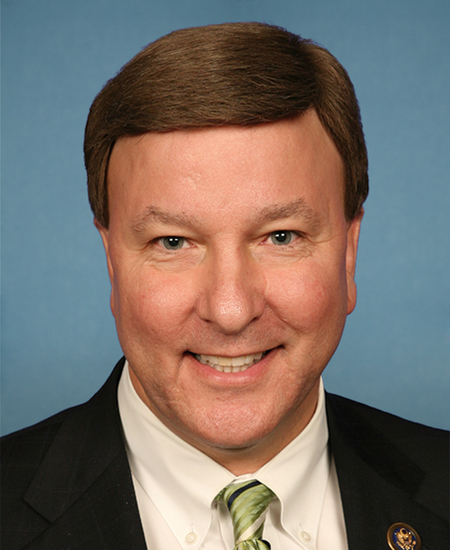
Rep. Mike Rogers
Sponsored bills
Maddy summaryHR 751, the FAIR Act, requires hospitals running medical residency programs to report annual data on applicants and acceptances from both osteopathic (DO) and allopathic (MD) medical schools starting in 2024. Specifically, hospitals must submit the number of applicants and accepted candidates from each medical school type, confirm they accept both DO and MD applicants, and state that COMLEX and USMLE exam scores are equally accepted. The Health Secretary must then publish this data online for public transparency. The bill directly affects hospitals operating residency programs and aims to make their admissions processes more visible, without mandating specific acceptance rates or changing admission criteria.
Maddy summaryThis bill amends Medicare rules to allow nurse practitioners and physician assistants to document medical necessity for diabetic shoes, a requirement currently limited to physicians. It directly affects Medicare beneficiaries with diabetes who need these shoes and expands the pool of providers (nurse practitioners and physician assistants) who can fulfill the documentation requirement. The key change inserts "nurse practitioner, or physician assistant" into Medicare's documentation standards for diabetic shoe coverage. This simplifies access for patients by enabling more healthcare providers to support coverage approval without requiring a physician's signature. The bill does not change coverage eligibility or costs, only the documentation process.
Maddy summaryThis bill extends a temporary COVID-19 emergency waiver that allows nurse aides in training to count hours worked during the pandemic toward their certification requirements at nursing facilities. It specifically permits these hours to satisfy the 75-hour minimum training requirement and allows facilities to conduct competency evaluations on-site if states don’t offer them weekly. The waiver remains in effect for at least 24 months after enactment, with a requirement for the Secretary to study its continued appropriateness within one year. The policy directly affects nurse aides working in skilled nursing facilities and nursing facilities under federal Medicare/Medicaid rules. It does not create new training programs but maintains pandemic-era flexibility for staffing.
Maddy summaryThis bill bans federal funding for abortions in most cases, prohibiting the use of taxpayer money for abortion services or health insurance plans covering abortion. Exceptions allow funding for abortions resulting from rape, incest, or when a pregnancy endangers a woman's life. It requires health insurance plans sold through the Affordable Care Act (ACA) marketplaces to clearly disclose any separate costs for abortion coverage and prohibits ACA subsidies from being used for plans that cover abortion (except in the specified exceptions). The law directly affects federal programs like Medicaid, ACA marketplace plans, and insurers offering health coverage to individuals using federal subsidies.
Maddy summaryThis resolution (HCONRES 134) directs the House Clerk to correct a typographical error in the long title of H.R. 5009, the defense appropriations bill. It specifically amends the title to accurately read: "An Act to authorize appropriations for fiscal year 2025 for military activities of the Department of Defense..." The correction affects only the official enrollment record of H.R. 5009 and has no policy or funding impact. This is a purely administrative fix to the bill's title, not a substantive change to the legislation.
Maddy summaryHR 7438 directs the U.S. Treasury to mint commemorative coins for the 2026 FIFA World Cup, including 100,000 $5 gold coins, 500,000 $1 silver coins, and 750,000 half-dollar coins. The coins will be sold to the public at face value plus surcharges ($35, $10, and $5 per coin, respectively), with all surcharge revenue paid to FWC2026 US, Inc. for U.S. soccer programs. These funds must support soccer initiatives, particularly in underserved communities and youth development, as specified in the bill. The coins are legal tender but will only be issued during 2026, with no net cost to the U.S. government.
Maddy summaryHR 2892, the WARN Act, directs the Comptroller General to study how local alert systems deliver weather emergency information during events like storms or power outages. The study will evaluate different alert methods - including social media - and develop best practices for clearer, faster public notifications. It requires a report to Congress within one year, but the bill itself creates no new laws or directly affects any group. This is a procedural study bill focused on improving future emergency communication systems.
Maddy summaryHR 6751 authorizes the U.S. Mint to produce commemorative coins honoring Roberto Clemente, a Hall of Fame baseball player and humanitarian, including 50,000 $5 gold coins, 400,000 $1 silver coins, and 750,000 half-dollar coins. The coins must feature Clemente's image and inscriptions like "Roberto Clemente" and "2027," with all sales including a surcharge ($5-$35 per coin) paid to the Roberto Clemente Foundation. The foundation, which supports youth sports, education, and disaster relief programs, will use these funds for its mission, while the U.S. Treasury must recover all production costs. The coins will be sold exclusively in 2027, with no net cost to the government.
Maddy summaryHRES 1606 is a ceremonial resolution honoring the 5th anniversary of the U.S. Space Force (established December 20, 2019). It recognizes the Space Force's role in national security, commends its personnel ("Guardians"), and lists 12 specific installations supporting its mission. The resolution has no legal effect or policy changes - it is purely symbolic, expressing congressional support and acknowledging the Space Force's contributions. It directly affects no individuals or entities beyond the symbolic recognition of the service and its facilities.