

Maddy summaryHRES 133 is a symbolic House resolution supporting the designation of February 15-22, 2025, as "National FFA Week." It recognizes the National FFA Organization’s role in developing student leadership through agricultural education and celebrates two milestones: the 90th anniversary of the New Farmers of America (which served Black students until merging with FFA in 1965) and the 75th anniversary of FFA’s federal charter (granted by Congress in 1950). The resolution has no policy impact or funding provisions - it simply expresses congressional support for these observances. It directly affects no individuals or entities, as it is a non-binding gesture honoring an educational organization.
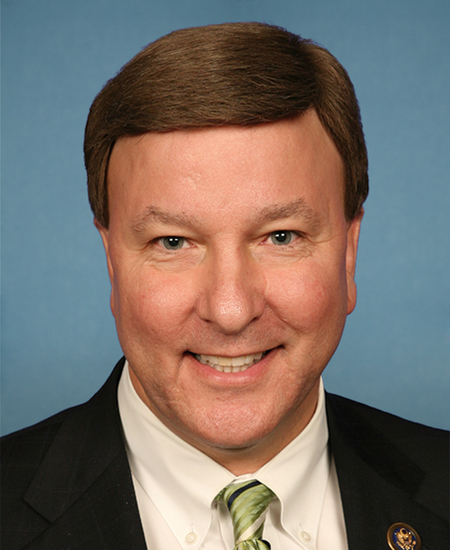
Rep. Mike Rogers
Sponsored bills
Maddy summaryHR 1301, the Death Tax Repeal Act, would eliminate the federal estate tax and generation-skipping transfer tax for estates of individuals dying on or after its enactment date. It directly affects individuals inheriting significant assets, as it removes taxes on estates exceeding $10 million (adjusted for inflation) and repeals taxes on large transfers between generations. The bill modifies the gift tax by establishing a $10 million lifetime exemption with annual inflation adjustments, replacing previous tax brackets. It applies to estates, gifts, and transfers occurring on or after the bill's effective date.
Improving Care and Access to Nurses Act or the I CAN Act This bill allows other health care providers besides physicians (e.g., nurses) to provide certain services under Medicare and Medicaid. Among other changes, the bill (1) allows a nurse practitioner or physician assistant to fulfill documentation requirements for Medicare coverage of special shoes for diabetic individuals; (2) expedites the ability of physician assistants, nurse practitioners, and clinical nurse specialists to supervise Medicare cardiac, intensive cardiac, and pulmonary rehabilitation programs; and (3) allows nurse practitioners to certify the need for inpatient hospital services under Medicare and Medicaid.
Maddy summaryHR 1330 establishes the Smithsonian National Museum of the American Latino, authorizing its location within the National Mall's "Reserve" area. The bill requires the Smithsonian Board to coordinate with federal agencies managing potential museum sites, including notifying relevant congressional committees before land transfers. It mandates that the museum's exhibits and programs accurately represent the diverse cultures, histories, and viewpoints of Hispanic and Latino communities in the U.S., seeking input from a broad range of community experts. The Smithsonian must also submit regular reports to Congress detailing compliance with these representation requirements.
Maddy summaryHR 1351, the "Promoting American Patriotism In Our Schools Act," requires public elementary and secondary schools receiving federal education funds to implement specific patriotism-related practices. The bill mandates that all students, teachers, and staff recite the Pledge of Allegiance daily (with an exception for religious or personal reasons), prominently display the American flag in every classroom and gymnasium, and incorporate age-appropriate flag history and significance into civics or history curricula. Schools must annually certify compliance with these requirements to state education agencies, which then report to the federal government. This bill directly affects all public K-12 schools receiving funds under the Elementary and Secondary Education Act.
Fighting Trade Cheats Act of 2025 This bill increases penalties for, and establishes additional enforcement mechanisms related to, fraudulent and grossly negligent violations of U.S. customs laws. Specifically, the bill increases the maximum civil penalty for a fraudulent violation to three times the domestic value of the merchandise. (Currently, the maximum penalty is the domestic value of the merchandise.) It prohibits a person who commits a fraudulent violation from importing merchandise into the United States for a five-year period. Additionally, the bill increases the maximum civil penalty for a grossly negligent violation to the lesser of (1) 3 times the domestic value of the merchandise; or (2) 10 times the lawful duties, taxes, and fees. (Currently, the maximum penalty is the lesser of the domestic value of the merchandise or four times the lawful duties, taxes, and fees.) It prohibits a person who commits a grossly negligent violation from importing merchandise into the United States for a two-year period. Further, the bill applies these importation bans to an affiliated person (e.g., a family member or employee) of the person who committed the fraudulent or grossly negligent violation. The bill establishes a private right of action for an interested party (e.g., a manufacturer) affected by customs fraud or grossly negligent violations. The bill prohibits any person (or an affiliated person) who commits a fraudulent or grossly negligent violation from participating in the U.S. Customs and Border Protection's Importer of Record program, and further requires revocation of their importer of record numbers.
Maddy summaryHR 1232, the National Right-to-Work Act, would make union membership voluntary for workers in most private-sector jobs by removing legal requirements for employees to join a union or pay dues as a condition of employment. It directly affects workers in unionized workplaces covered by the National Labor Relations Act (including most private employers) and railroad workers covered by the Railway Labor Act. The key change eliminates provisions that allowed "union security agreements" (requiring dues or membership), meaning workers could no longer be forced to pay union fees to keep their jobs. This bill does not change other labor rights or create new programs - it only modifies existing laws to allow workers to opt out of union membership and financial obligations.
Maddy summaryThis bill creates a 10% tax credit for businesses that modernize or replace freight railcars, directly affecting railcar owners and manufacturers. To qualify, railcars must meet an 8% improvement standard in capacity or fuel efficiency, be built or modernized after enactment, and replace two scrapped railcars. The credit is limited to 1,000 qualified railcars per business annually, with reporting requirements for the Treasury to track claimed credits, scrapped railcars, and new railcar production. The credit applies to railcars placed in service after December 2024, ending three years after enactment.
This resolution supports the designation of Career and Technical Education Month to celebrate career and technical education across the United States.
Maddy summaryHR 1076, the WARN Act, requires the Comptroller General to study how well local, state, and federal emergency alert systems share timely weather emergency information during events like storms or power outages. The study will examine alert methods (including social media), the clarity of public messages, and outdoor siren systems, using feedback from emergency managers and community groups. It mandates a report to Congress within 18 months of enactment, focusing on identifying improvements to alert systems for public safety. The bill itself does not change existing policies but directs a review to inform future emergency communication strategies.