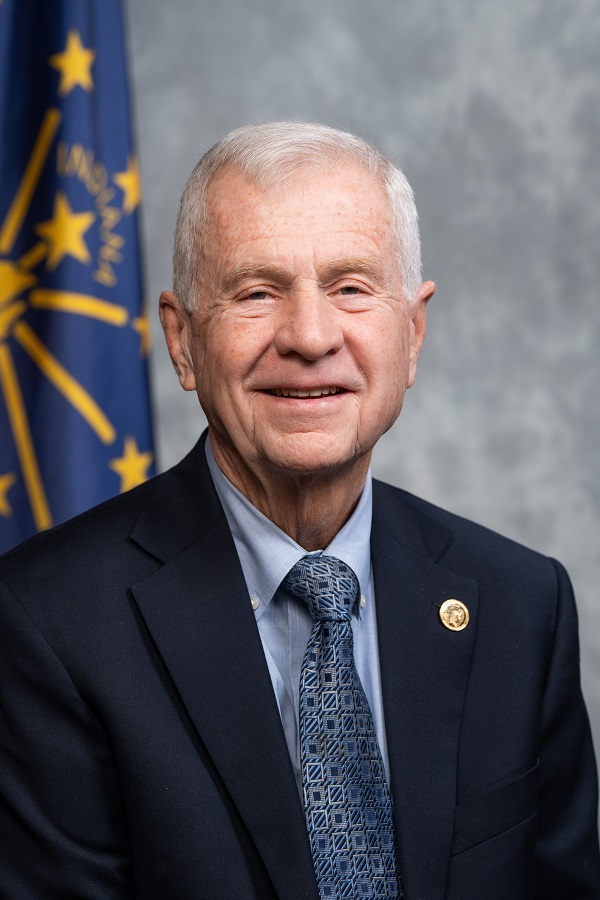
Photo of Ed Charbonneau
R Indiana Senate · District 5

Sen. Ed Charbonneau

Compare
Total votes
2,574
all sessions
Attendance
97%
68 missed
Higher than 83% of chamber peers
With party
99%
of cast votes
Higher than 97% of chamber peers
Bipartisan score
1%
crosses aisle rarely
Among the lowest in the chamber
Sponsored
791
bills & resolutions
Higher than 78% of chamber peers
Committees
5
assignments
791 bills and resolutions

Sponsored bills

Total
791
Primary
425
Co-sponsor
366
This page
791
matching current filters
Co-sponsor HB 1140
Signed into law · Indiana House · Co-sponsor
Medicaid coverage for pregnant women.

Repeals the statute specifying Medicaid eligibility for qualified pregnant women. Increases the Medicaid income eligibility requirements for pregnant women. Removes the Medicaid limitation for pregnant women of medical assistance coverage only for pregnancy related services. Provides that the extension of postpartum Medicaid coverage for pregnant women shall be determined by the office of the secretary of family and social services and must be at least 60 days but not more than 12 months beginning on the last day of the pregnancy.

Signed into law Mar 14, 2022 1 co-sponsor
Primary SB 284
Signed into law · Indiana Senate · Lead sponsor
Telehealth matters.

Consolidates Medicaid telehealth language. Provides that "health care services" does not include certain case management services, care management services, service coordination services, or care coordination services for purposes of telehealth. Adds occupational therapist assistants, school psychologists, specified developmental therapists, peers, clinical fellows, students and graduates of certain professional programs, physical therapist assistants, and certain community mental health center providers to the definition of "practitioner" for purposes of practicing telehealth. Allows behavior health analysts to temporarily perform telehealth during the time when the professional licensing agency is preparing to implement licensure for the profession.

Signed into law Mar 14, 2022 0 co-sponsors
Primary HB 1292
Signed into law · Indiana House · Lead sponsor
Compensation for victims of violent crimes.

Changes, for purposes of the law concerning compensation to victims of violent crime, the definition of "claimant" to include certain family members of a victim. Expands the list of expenses eligible for compensation to include crime scene cleanup and replacement windows or door locks. Allows the victim services division of the Indiana criminal justice institute to accept proof that evidence was collected during a forensic exam as a claimant's cooperation with law enforcement. Specifies that a person who contributed to the injury or death of the victim may not receive benefits.

Signed into law Mar 11, 2022 0 co-sponsors
Primary HB 1193
Signed into law · Indiana House · Lead sponsor
Opioid litigation.

Amends the deadline by which a political subdivision may opt back in to an opioid litigation settlement. Requires a political subdivision to submit a copy of the agreement executed between the political subdivision and the private legal counsel of the political subdivision when opting back into the opioid litigation settlement. Removes language providing that no political subdivision has any claim to any settlement proceeds for litigation against any opioid party not yet filed by the state as of a certain date. Removes certain requirements concerning the payment of costs, expenses, and attorney's fees and costs arising from opioid litigation. Changes the basis by which the agency settlement fund distributes funds to cities, counties, and towns. Reduces the percentage of opioid litigation settlement funds distributed for use of statewide treatment, education, and prevention programs for opioid use disorder. Provides that 35% of opioid litigation settlement funds are to be distributed to cities, counties, and towns for programs for treatment, prevention, and care that are best practices for opioid use disorder. Provides that funds received from the opioid settlement may not be distributed to a city, county, or town that has opted out of the settlement and that the remaining funds shall be distributed to the cities, counties, or towns that have opted into the settlement.


Signed into law Mar 10, 2022 0 co-sponsors
Co-sponsor SB 245
Signed into law · Indiana Senate · Co-sponsor
Statewide sports and tourism bid fund.

Establishes the statewide sports and tourism bid fund (fund) to provide funding for the purpose of organizing and holding sports and tourism events in Indiana. Provides that the Indiana destination development corporation (IDDC) shall administer the fund. Requires the IDDC to distribute to the Indiana Sports Corporation a grant amount equal to the amount appropriated by the general assembly to the fund. Provides that the Indiana Sports Corporation shall manage the funds in accordance with the general laws of the state relating to the handling of public funds. Requires that the Indiana Sports Corporation ensure that not less than 30% of the money received by the Indiana Sports Corporation each biennium is used for events that are conducted outside of Marion County. Authorizes the Indiana Sports Corporation to award grants to other eligible entities for the purpose of organizing and holding an event in Indiana. Requires the Indiana Sports Corporation to annually report to the budget committee on the use of the money received from the fund.

Signed into law Mar 10, 2022 1 co-sponsor
Primary SB 298
Signed into law · Indiana Senate · Lead sponsor
Certificates of public advantage.

Defines "merger" and "merger agreement" for purposes of the certificate of public advantage (certificate) for certain hospital mergers. Requires the state department of health (state department) to actively supervise a merger. Allows the state department to enter into an agreement with a nonprofit organization or a postsecondary educational institution to study the impacts of the certificate of public advantage on the community's health metrics and outcomes. Requires holders of a certificate to pay for reasonable charges incurred by the state department.

Signed into law Mar 10, 2022 0 co-sponsors
Primary SB 273
Signed into law · Indiana Senate · Lead sponsor
Financing of water and wastewater utility assets.

Provides that the IURC may approve periodic tracking mechanisms for water or wastewater utilities to permit such utilities to recover the following: (1) Changes in property taxes. (2) With respect to customers located within the geographic boundaries of local units of government, incremental costs of operation and maintenance resulting from policies or ordinances that are adopted by those local units and that the IURC determines to be unusual but not necessarily unreasonable. Requires the IURC to adopt rules to define what is unreasonable with respect to road cut permits and other specifications or policies established by a local unit that imposes costs on water or wastewater utilities. Amends the statute concerning wholesale water sales between small water utilities by increasing from 5,000 to 8,000 the threshold number of customers served by a water utility (as either a purchaser or supplier) for purposes of the statute. Amends the statute governing infrastructure improvement charges for water or wastewater utilities as follows: (1) Specifies that an "eligible infrastructure improvement" includes: (A) a project to relocate existing utility plant, including projects to accommodate the construction, reconstruction, or improvement of a highway, street, or road; and (B) a project that does not increase revenues by connecting to new customers, even if the project provides greater available capacity with respect to an eligible utility's distribution or collection plant. (2) Sets forth distinctions for public utilities, municipally owned utilities, and not-for-profit utilities with respect to: (A) costs that are eligible for recovery under the statute; (B) the factors the IURC may consider in determining the amount of allowable cost recovery; and (C) the resetting of the adjustment amount after a base rate case. (3) Specifies that the limitation restricting total adjustment revenues to 10% of an eligible utility's most recently approved base revenue level does not apply with respect to property taxes associated with eligible infrastructure improvements. Amends provisions in the Indiana Code chapter concerning a utility company's acquisition of an offered water or wastewater utility, by providing that the rates charged by the acquiring utility company are not considered to increase unreasonably as a result of the acquisition if the net original cost of the acquired assets does not exceed 2% of the acquiring utility company's net original cost rate base as determined in the acquiring utility's most recent general rate case, plus any adjustments to the rate base resulting from: (1) an infrastructure improvement charge; or (2) an adjustment rider for service enhancement improvement costs; that have occurred after the rate case. Makes a similar change to the Indiana Code section concerning the sale of a municipally owned utility's nonsurplus utility property.

Signed into law Mar 10, 2022 0 co-sponsors
Primary HB 1110
Signed into law · Indiana House · Lead sponsor
Annexation of residential development.

Allows a third class city to annex: (1) a noncontiguous residential development; and (2) the right of way of a public highway connecting the development to the city. Provides that annexation is initiated by: (1) the homeowner's association board petitioning the city legislative body for annexation of the development; and (2) the city legislative body adopting a resolution approving initiation of the annexation process. Requires the city to satisfy statutory requirements for annexation including adopting a written fiscal plan and annexation ordinance and conducting an outreach program. Changes population parameters to reflect the population count determined under the 2020 decennial census.

Signed into law Mar 10, 2022 0 co-sponsors
Primary HB 1254
Signed into law · Indiana House · Lead sponsor
Newborn screening requirements.

Provides that beginning July 1, 2022, only a disorder recommended by a perinatal genetics and genomics advisory committee (committee) with expertise in newborn screening, and through protocols prescribed by the state department, may be added to the list of disorders requiring the examination of infants. Provides that beginning July 1, 2022, a committee with expertise in newborn screening, and through protocols established by the state department, may recommend the addition of a disorder to, or deletion of a disorder from, the required examination. Provides that the state department shall adopt rules to add disorders to, or delete disorders from, the required examination. Provides that the state department shall include any disorder added to or deleted from the required examination on a list on the state department's Internet web site. Provides that the committee shall affirm the addition of, or deletion of, any disorder to the examination requirement on an annual basis.

Signed into law Mar 10, 2022 0 co-sponsors
Co-sponsor HB 1361
Signed into law · Indiana House · Co-sponsor
TANF and child care assistance eligibility.

Provides, for purposes of the Temporary Assistance for Needy Families program (TANF), that a TANF assistance group that has qualified for and is receiving assistance under TANF does not cease to qualify for assistance under TANF due solely to an increase in the value of the resources of the TANF assistance group so long as the resources of the TANF assistance group are valued at not more than $10,000. Provides that: (1) the value of a child's primary residence; and (2) $20,000 of total equity value in motor vehicles belonging to members of a child's family; are exempt from consideration for purposes of determining the child's eligibility for TANF. Provides that up to $15,000 in income earned by a household member while the household member is a student participating in or pursuing: (1) the household member's first postsecondary degree; (2) a workforce certificate; (3) a preapprenticeship; or (4) an apprenticeship; may not be considered in determining the amount of assistance for which the household is eligible under the Child Care and Development Fund voucher program.

Signed into law Mar 10, 2022 1 co-sponsor
Showing 331 to 340 of 791 bills
Previous 1 … 33 34 35 … 80 Next