

Defines "alternative residential onsite sewage system" as a system that: (1) is designed for the collection, storage, treatment, and disposal of sewage from the dwelling of one or two families; (2) is installed in a place that is not suitable for a standard septic system; (3) is a replacement for a standard septic system that did not function properly; (4) is based on a design or plan approved by the National Sanitation Foundation; (5) employs advanced treatment components not used in standard septic systems; (6) discharges treated effluent above ground; and (7) requires more frequent testing and maintenance than a standard septic system. Requires the environmental rules board to adopt rules, including emergency rules, to establish standards and specifications, effluent limitations, and inspection, maintenance, testing, service, and repair requirements for alternative residential onsite sewage systems. Requires the department of environmental management (IDEM) to issue a National Pollutant Discharge Elimination System general permit that will authorize the installation and use of alternative residential onsite sewage systems. Requires a local health department to grant a permit for an alternative residential onsite sewage system if certain requirements are met, including: (1) the permit applicant has obtained coverage under the general permit; (2) the applicant affirms in writing that the alternative residential onsite sewage system will be installed and maintained in accordance with the rules of the environmental rules board; and (3) the permit applicant has filed an affidavit for recording in the county recorder's office that will provide notice to any prospective transferee of the applicant's property that the transferee will be subject to the ongoing inspection, maintenance, testing, service, and repair requirements applying to alternative residential onsite sewage systems. Provides that if the owner of property served by an alternative residential onsite sewage system fails to satisfy any inspection, maintenance, testing, service, or repair requirement, the local health department shall have the needed work done and shall bill the property owner for the cost. Provides that these costs, plus fees, if unpaid, become a lien against the property. Provides that septage that originates from a residential or commercial source may be held in one or more holding tanks of not more than 10,000 gallons until removed and transported from the site. Establishes requirements for septage holding tanks. Requires a permit from the local health department for the operation of a septage holding tank. Requires a septage tank owner to enter into a written contract with a septage management vehicle operator for regular removal of septage from the tank, to provide a copy of the contract to the local health department, and to provide proof to the local health department that the tank owner is regularly paying for the removal of septage from the holding tank. Requires a local health department to report to IDEM concerning the septage tanks in its jurisdiction.
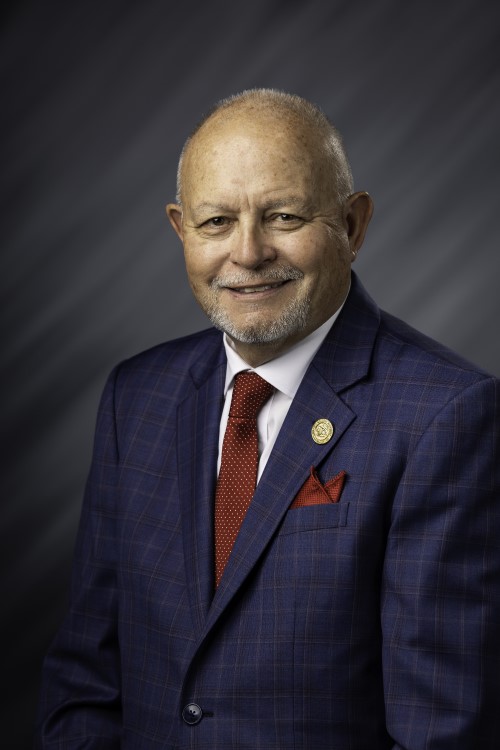
Rep. Doug Miller
Sponsored bills
Allows the judges of the Daviess circuit and superior courts to appoint a full-time magistrate. Allows the judges of the Delaware circuit court to appoint a full-time magistrate. Establishes a second superior court in the Dubois County judicial district. Allows the judges of the Elkhart circuit and superior courts to appoint four full-time magistrates (effective July 1, 2023) and two additional full-time magistrates beginning January 1, 2024. (Current law allows for the appointment of two magistrates.) Allows the judge of the Spencer circuit court to appoint a magistrate. Allows Vigo superior court to appoint six judges. (Current law allows for the appointment of five judges.) Makes conforming changes.
Provides that "The Hoosier State" is designated as the official nickname of the state of Indiana. Provides that the designation is to recognize and memorialize the legacy of Harry Hoosier. Makes certain findings in recognizing Harry Hoosier as the namesake of The Hoosier State.
Provides that to obtain the homestead standard deduction for a desired calendar year in which property taxes are first due and payable, the statement to obtain the deduction must either be completed and dated in the immediately preceding calendar year and filed with the county auditor on or before January 5 of the calendar year in which the property taxes are first due and payable, or, subject to a processing fee of $100, completed, dated, and filed with the county auditor on or before April 30 of the year in which the property taxes are first due and payable.
Prohibits a state educational institution (institution) from taking certain actions against applicants, students, and faculty members of the institution for: (1) pledging allegiance to or making a statement of personal support for or in opposition to any political ideology or movement; or (2) expressing a pledge or statement that describes a commitment to a particular political ideology or movement. Requires an institution to post on the institution's website: (1) all materials used for training provided to students, faculty, or any other employee of the institution on any matter concerning; and (2) all of the institution's policies and guidance on; nondiscrimination, diversity, equity, inclusion, race, ethnicity, sex, or bias. Provides a civil action for a violation of an individual's rights under these provisions. Provides that the attorney general may bring an action to enjoin an institution from violating certain provisions.
Requires a city council to approve all expenditures of a city redevelopment commission.
Requires each public school to provide curricular materials at no cost to each student enrolled in the public school. Establishes the student resource fund (fund) to provide state advancements for costs incurred by public schools in providing curricular materials to students at no cost. Provides that the department of education (department) shall administer the fund. Provides that for state fiscal years beginning after June 30, 2023, money in the fund is continually appropriated. Provides that a governing body or organizer of a charter school: (1) may purchase from a publisher any curricular materials selected by proper officials; (2) may rent curricular materials to certain nonpublic schools; and (3) may not rent the curricular materials to any student enrolled in any public school. Repeals a requirement that a school corporation must offer curricular materials at a reasonable rate to a family that moves during the school term. Repeals a requirement that a township trustee must use specified accounting methods for a curricular materials rental fund. Makes conforming changes. Requests an appropriation in the state budget to the fund for the biennium beginning July 1, 2023, and ending June 30, 2025. Appropriates from the state general fund to the office of the secretary of family and social services an amount sufficient to meet maintenance of effort requirements in the state budget for the biennium beginning July 1, 2023, and ending June 30, 2025.
Allows the judges of the Elkhart circuit and superior courts to appoint four full-time magistrates and beginning January 1, 2024, to appoint two additional full-time magistrates. (Current law allows for the appointment of two magistrates.)
After marijuana is removed as a federal schedule I controlled substance, permits the use of cannabis by: (1) a person at least 21 years of age; and (2) a person with a serious medical condition as determined by the person's physician. Establishes the adult use cannabis excise tax, and requires a retailer to transfer the tax to the department of state revenue for deposit in the state general fund. Exempts veterans from payment of the sales tax on medical or adult use cannabis. Establishes a cannabis program to permit the cultivation, processing, testing, transportation, and sale of cannabis by holders of a valid permit. Establishes the Indiana cannabis commission (ICC) as a state agency to oversee, implement, and enforce the program, and establishes the ICC advisory committee to review the effectiveness of the program. Requires that permit holders take steps to prevent diversion of cannabis to unauthorized persons. Requires that cannabis and cannabis products be properly labeled, placed in child resistant packaging, and tested by an independent testing laboratory before being made available for purchase. Prohibits packaging cannabis in a manner that is appealing to children. Authorizes research on cannabis in accordance with rules set forth by the ICC. Establishes a procedure for the expungement of a cannabis related conviction if the act constituting the conviction becomes legal. Makes conforming amendments.
Repeals the law that requires a person to obtain a license to carry a handgun in Indiana. Specifies that certain persons who are not otherwise prohibited from carrying or possessing a handgun are not required to obtain or possess a license or permit from the state to carry a handgun in Indiana. Prohibits certain individuals from knowingly or intentionally carrying a handgun. Creates the crime of "unlawful carrying of a handgun" and specifies the penalties for committing this crime. Allows particular individuals who do not meet the requirements to receive a handgun license and are not otherwise prohibited to carry a handgun in limited places. Allows a resident of Indiana to obtain in certain circumstances a license to carry a handgun in Indiana. Makes theft of a firearm a Level 5 felony. Defines certain terms. Makes conforming amendments and repeals obsolete provisions.