Enacts an article concerning the retail sale of dogs. Provides that restrictions on ordinances concerning the retail sale of dogs do not apply to a city or incorporated town that adopts an ordinance before January 1, 2023. Defines a "hobby breeder". Provides that restrictions on the retail sale of dogs apply to certain cities and incorporated towns. Defines a "kennel" to include an establishment that is liable for the payment of a county option dog tax.
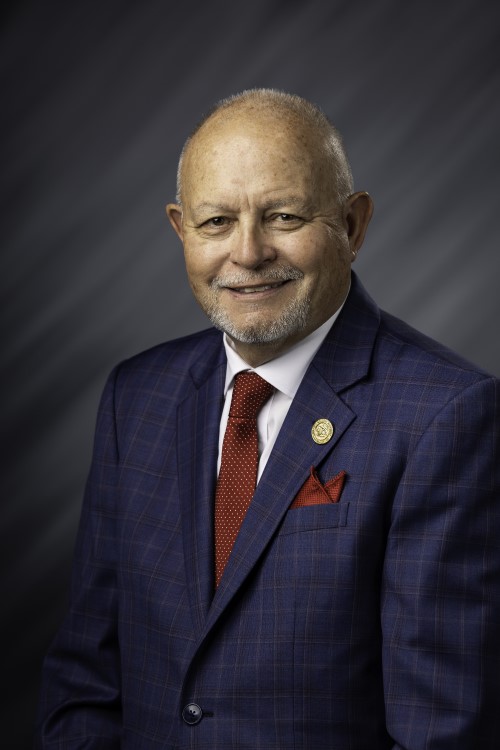
Rep. Doug Miller
Sponsored bills
Establishes a tax credit (credit) for a contribution to an affordable housing organization (organization). Requires the Indiana economic development corporation to approve each organization applicant as an organization for which a taxpayer is eligible to claim a credit for a contribution. Provides that the amount of the credit is equal to 50% of the amount of the contribution that is not more than $20,000 made to the organization. Provides that the credit may be carried forward for five years following the unused credit year. Provides (subject to certain conditions) that the total amount of tax credits awarded may not exceed $100,000 in each state fiscal year. Requires the department of state revenue (department) to post certain information about the credit on a website used by the department to provide information to the public. Allows the department to adopt rules to implement the credit.
Removes the threshold conditions for establishing a residential housing development program and a tax increment allocation area for the program, including the condition that the governing body of each school corporation affected by the program pass a resolution approving the program before the program may go into effect. Provides that the fiscal body of a county may adopt an ordinance to designate an economic development target area.
Urges the legislative council to assign the topic of various housing matters to the appropriate interim study committee.
Allows a state agency to adopt a policy governing electronic meetings conducted by a board or committee of the agency, if the board or committee has not adopted a policy. Allows the reinstatement of a professional license that was retired, inactive, or surrendered (inactive) if the applicant meets the requirements for a delinquent or lapsed license. Provides that provisions regarding reinstatement of a retired license do not apply if the license was retired while a complaint or investigation regarding professional conduct was pending. Provides that the reinstatement law applies to all licenses that were inactive for more than three years. Requires, for purposes of the license reinstatement law, that each board make available a list of standards that require a personal appearance before the board. Requires a provider of a continuing education course to: (1) obtain approval of the course from the licensing board; and (2) provide the licensing board or agency with a certificate showing that a practitioner completed a course. Eliminates random continuing education audits of practitioners. Adds certain nonhealth professions to the professions that an out-of-state applicant may use to apply for license under the general reciprocity law. Provides that if a board does not act on an application within one year for an applicant who holds a provisional license or provisional certificate under the reciprocity law, the professional licensing agency shall issue the applicant a license or certificate. Allows the use of certain titles by an individual who is enrolled in or has graduated from a school of architecture or an accredited curriculum of landscape architecture.
Provides that if an application for a permit or license to construct or repair a seawall or revetment on or near the shore of Lake Michigan is submitted to a local authority and the site or proposed site of the seawall or revetment is on the side of the ordinary high water mark opposite Lake Michigan when the application is submitted but is at other times on the Lake Michigan side of the ordinary high water mark: (1) the applicant shall prepare plans for the construction or repair of the seawall or revetment; (2) the local authority shall refer the application and the applicant's plans to the department of natural resources (department); (3) the department shall study the application and plans and may advise the applicant and the local authority that changes must be made in the plans before the plans may be approved; (4) the department shall approve or disapprove the plans; and (5) if the department approves the plans, the local authority shall grant the application for a permit or license for the construction or repair of the seawall or revetment.
Removes the threshold conditions that apply to a county or municipality for establishing a residential housing development program and a tax increment allocation area for the program.
Recognizing the Elkhart Cowboys Youth Flag Football Team.
Establishes a "regulatory sandbox" program (program). Creates the regulatory relief office within the Indiana economic development corporation. Creates, and establishes duties for, an advisory committee within the program. Directs that the secretary of commerce, who serves as executive director of the regulatory relief office, prepare an annual report on the activities of the office. Provides for program application requirements and describes the scope of the program. Makes consumer protection provisions. Describes requirements for exiting the program and for extensions to remain in the program. Makes record keeping and reporting requirements. Provides requirements for the creation and maintenance of a regulatory relief office web page.
Establishes a "right to start act". Requires the department of administration, the department of workforce development, and the Indiana economic development corporation to annually file reports with the general assembly. Requires the state to encourage 5% of the total number of state contracts to be awarded to businesses that have been in operation for fewer than five years and whose principal place of business is in Indiana. Requires the state to encourage 5% of workforce development funding, including funding allocated by workforce development boards across Indiana, to be used to support organizations or programs for individuals starting new businesses or to those organizations or programs that provide services to businesses established within the previous five years and whose principal place is located within Indiana. Requires the state to encourage 5% of funding budgeted for economic development programs to be allocated to supporting organizations or programs for individuals starting new businesses or to those organizations or programs that provide services to businesses established within the previous five years and whose principal place of business is located within Indiana. Requires the state to encourage the elimination of all first year business fees relating to any license or registration for any new business or person establishing a new business, including home based businesses, whose principal place of business is located within Indiana.