

Provides that if a person changes the exterior color or appearance of their passenger vehicle from the color listed in the vehicle's registration through certain methods, the person must apply to amend their vehicle registration, and that a law enforcement officer shall issue a warning to a person who does not update the person's registration to reflect the color changes. Provides that a person commits a Class C misdemeanor if the person changes the color of a passenger vehicle after it was used in the commission of a crime and fails to amend the vehicle registration. Requires the BMV to require a person renewing a registration to indicate if the vehicle's color has changed.
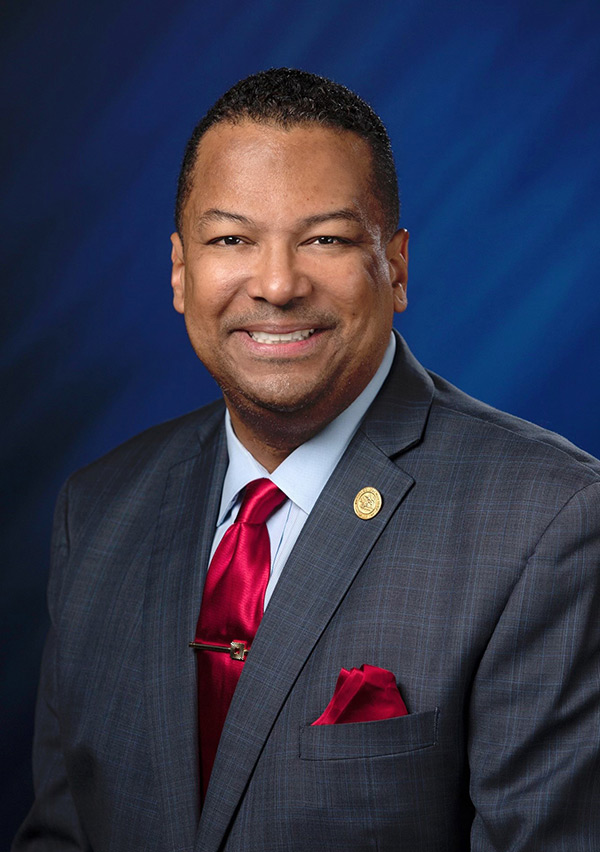
Rep. Earl Harris
Sponsored bills
Establishes the northwest Indiana professional sports development commission. Authorizes the commission to study various plans and recommendations that are proposed with respect to attracting a professional sports franchise to northwest Indiana. Authorizes the commission to prepare a comprehensive master plan for building the facilities and other infrastructure necessary for attracting and developing one or more professional sports franchises in northwest Indiana. Creates the professional sports development fund.
Specifies the timing of annual salary increases for state elected officials. Provides that the state comptroller calculates distributions of financial institutions tax revenue to taxing units. Provides that a taxing unit may deposit a distribution of financial institutions tax revenue in any fund, and the revenue may be used for any purpose allowed by law. Requires the state comptroller to calculate and provide the distribution amounts of commercial vehicle excise tax revenue for each taxing unit in a county to the county auditor. Provides that the county auditor may deposit a distribution of commercial vehicle excise tax revenue in any fund, and the revenue be may used for any purpose allowed by law. Removes a requirement that a prosecuting attorney notify the state comptroller of the prosecuting attorney's election to devote full professional time to the duties of the office. Provides that an individual is not required to file any notification with the state comptroller that the individual has been elected or appointed to a judgeship. Requires the state comptroller and Indiana public retirement system to develop and present to the interim study committee on pension management oversight a proposed plan for a transition from the use of, and contribution of state revenue to, retirement medical benefits accounts to an increased focus on the use of, and additional contributions of state revenue to, the state employees' deferred compensation plan.
Provides that certain licensing requirements relating to vehicle merchandising do not apply to distributors or manufacturers that are not located in Indiana. Provides that if certain persons engage in the business of buying, selling, or trading motor vehicles on a Sunday, those persons commit a Class B misdemeanor. Amends current law that establishes a mandatory training program that applicants for a used motor vehicle dealer license must complete. Provides that except as part of a change in dealer business entity type, a holder of a dealer license or endorsement may not take certain actions with respect to the dealer license or endorsement. Makes conforming changes.
Maddy summaryHCR 36 is a ceremonial resolution honoring the Marion County Bar Association for its 100th anniversary. It formally recognizes the Bar Association's contributions to the legal community and the county over its century-long history. The resolution has no policy impact or financial implications - it is purely symbolic, expressing legislative appreciation. This type of resolution does not affect any laws, regulations, or individuals.
Maddy summarySCR 8 is a non-binding concurrent resolution expressing strong disapproval of religious persecution globally. It does not create new laws or affect any specific groups, as resolutions like this serve only to state legislative sentiment. The measure passed unanimously in the Senate (90-0) and was adopted by committee, but it has no legal effect. This type of resolution is symbolic and intended to publicly condemn violations of religious freedom worldwide.
Maddy summaryHR 49 is a symbolic resolution recognizing International Women's Day and honoring women's historical contributions during Women's History Month. It does not create new laws or alter policies; instead, it formally acknowledges these observances through a congressional resolution. The bill was introduced by Rep. Boy and co-sponsored by multiple representatives, and referred to the Committee on Employment, Labor and Pensions for consideration. As a procedural resolution, it has no direct impact on citizens, government programs, or funding.
Provides that a household is eligible for assistance under the Child Care and Development Fund (CCDF) program if the household includes a foster parent at the time of the office of the secretary of family and social services' initial determination regarding the household's CCDF eligibility. Requires the office of the secretary of family and social services to allocate 200 CCDF vouchers to be used for a child who is placed with a licensed foster parent.
Maddy summaryHB 1297 establishes the "yellow dot" motor vehicle medical information program, creating a voluntary system for drivers with certain medical conditions. Participants can add a yellow dot indicator to their license plates to signal to emergency responders that they have a medical condition requiring special attention. This program directly affects drivers who choose to enroll and impacts first responders during traffic incidents. The law takes effect upon the governor's signature, making it Public Law 59 as of April 10, 2025.
Maddy summarySCR 36 is a ceremonial concurrent resolution honoring the Indiana Mental Health Roundtable. It does not create new laws or policies, nor does it directly affect any individuals or organizations. The resolution serves as a formal expression of recognition for the Roundtable's work in mental health advocacy. As a procedural resolution, it has no binding effect or concrete policy changes.