

Prohibits the bureau of motor vehicles (BMV) from selling the personal information of an individual who: (1) is less than 21 years of age; (2) is 65 years of age or older; or (3) opts out of the sale of the individual's personal information. Prohibits a person to which the BMV provides such information from selling or disclosing the information (sales prohibition). Requires the BMV to provide an easily understandable and easily accessible means by which an individual may opt out of the sale of the individual's personal information. Permits the state board of finance, upon approval by the governor, to transfer funds to the BMV to offset a shortfall in funding for the BMV that occurs in a state fiscal year beginning before July 1, 2028, as a result of the sales prohibition.
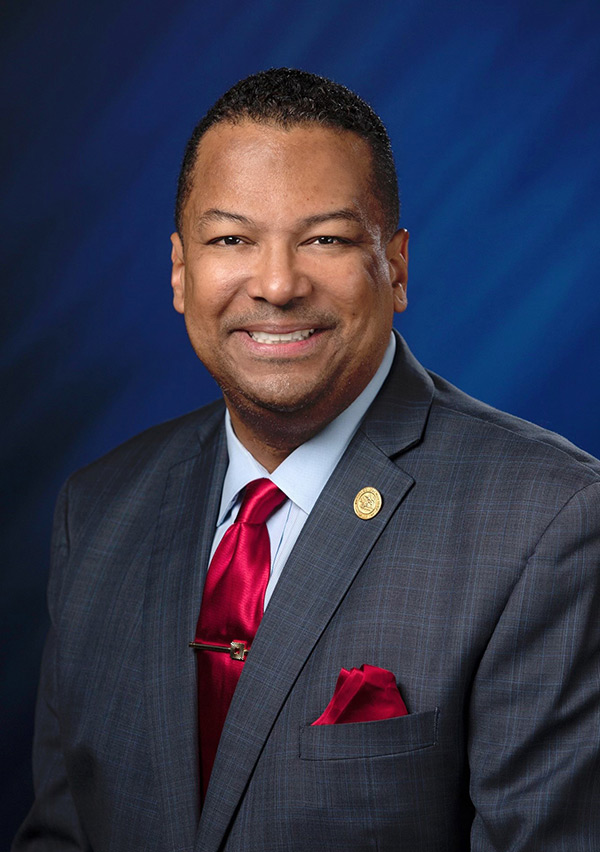
Rep. Earl Harris
Sponsored bills
Maddy summaryHCR 6 is a symbolic resolution designating January as National Human Trafficking Prevention Month. It does not create new laws, allocate funds, or directly affect individuals or organizations - its purpose is solely to raise public awareness about human trafficking through official recognition. The resolution was introduced in the Senate and referred to committee in early 2026. As a concurrent resolution, it requires no legislative action to take effect.
Provides that a person may circulate a petition to create a tourism improvement district (district) within the territory of a county, city, or town (local unit). Specifies the contents of the tourism improvement district plan that must be filed with a petition to establish a district. Provides that the legislative body of the local unit may require in the district plan that the boundaries of the district be drawn to: (1) exclude businesses; or (2) prevent overlap of the district with another area or district in which a special assessment is imposed. Provides that owners of businesses located within a district may be charged a special assessment to fund improvements and other district activities. Provides that, after a hearing on a petition to establish a district, a local unit's legislative body may adopt the ordinance establishing the district only if it determines that the petition has been signed by: (1) at least 50% of the owners of businesses within the proposed district; and (2) the owners of businesses within the proposed district that constitute more than 50% of the revenue to be collected from the special assessments. Requires the county, city, or town legislative body, at the public hearing on the establishment of a district, to hear from each individual business owner that wishes to make a request for exclusion from the district. Specifies the contents of the ordinance establishing a district and the length of time for which a district may exist. Allows a district to issue bonds and specifies the term of any bonds issued. Provides that a district may be renewed. Sets forth an annual 30 day period in which the owners of the businesses in the district may request disestablishment of the district under specified conditions. Requires the local unit to contract with a private nonprofit district management association to administer and implement the district's activities and improvements. Excludes from inclusion within a district: (1) property that receives a homestead standard deduction; (2) property used for single family residential housing; and (3) property used for multi-unit residential housing.
Maddy summaryThis bill (HR 4) is a ceremonial resolution to formally recognize and commemorate Dr. Martin Luther King Jr. Day. It does not create new laws or affect any specific group; instead, it serves as a symbolic gesture by Congress to honor Dr. King's legacy and contributions to civil rights. The resolution was introduced and adopted in the House on January 12, 2026, with multiple co-sponsors. As a procedural measure, it has no direct policy impact beyond acknowledgment.
Prohibits an employer from: (1) relying exclusively on an automated decision system in making an employment related decision with respect to a covered individual; (2) using an automated decision system output in making an employment related decision with respect to a covered individual unless certain conditions are met; and (3) discriminating or retaliating against a covered individual for exercising rights under these provisions. Sets forth disclosure requirements for an employer that uses or intends to use an automated decision system output in making an employment related decision. Allows the department of labor to take certain enforcement actions. Allows a covered individual or labor organization to bring a civil action for a violation.
Provides that the commission for higher education may allow a student who does not meet full-time enrollment or credit hour requirements under the twenty-first century scholars program to be eligible or to maintain eligibility for a twenty-first century scholarship award if the student is a student with a disability and meets certain other requirements. Provides that a scholarship may be renewed for the student for the number of academic terms that constitute eight undergraduate academic years. Makes conforming changes.
Establishes the housing down payment assistance fund. Establishes a transfer tax equal to 50% of the fair market value of a single family residence for each single family residence acquired by an applicable taxpayer after the applicable date. Establishes a maximum number of single family residences that may be owned by an applicable taxpayer after the applicable date for purposes of calculating an annual excise tax on any excess single family residences.
Requires the governing body of each school corporation to conduct vision testing for prekindergarten children. Allows for the use of electronic eye charts.
Establishes the hunger-free campus grant program (grant program) to provide grants to state educational institutions for purposes of addressing food insecurity among students enrolled in state educational institutions. Provides that the commission for higher education (commission) shall provide a grant under the grant program to a state educational institution if at least one campus is designated by the commission as a hunger-free campus. Establishes criteria that a campus of a state educational institution must meet in order to be designated as a hunger-free campus. Makes an appropriation.
Provides that the commission for higher education shall determine a tuition rate and mandatory fee cost of living adjustment for specified postsecondary educational institutions. Requires that, except for cost of living adjustments, the tuition rate and mandatory fees at specified postsecondary educational institutions may not increase from the time the student initially enrolls until the student graduates for an undergraduate student who is an Indiana resident.