

Maddy summaryThis bill lowers the market value threshold for companies to qualify as "well-known seasoned issuers" (WKSI) under securities law, from $700 million to $400 million. Companies with at least $400 million in total market value of their shares held by outside investors would now qualify for WKSI status, allowing them to use simplified SEC registration processes for new stock offerings. The bill also requires the Securities and Exchange Commission to annually report on withdrawn applications related to WKSI eligibility. This change directly affects public companies seeking streamlined access to capital markets by reducing the size barrier for WKSI status. The policy shift aims to expand eligibility for smaller public companies under existing securities regulations.
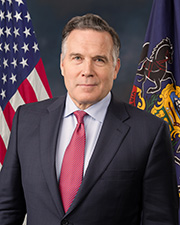
Sen. David McCormick
Sponsored bills
Maddy summaryThis bill requires the U.S. Senate to provide advice and consent for any international climate agreement that involves legally binding domestic emissions reductions (like the Paris Agreement), treating such agreements as treaties under the Constitution. It directly affects the executive branch and federal agencies by blocking the use of federal funds to implement or comply with these agreements unless Senate approval is first obtained. The key mechanism is changing the process for entering climate agreements from executive action to a formal treaty ratification process. This would prevent the U.S. government from joining or rejoining international climate deals without Senate confirmation. The bill does not alter the content of climate agreements but changes how they are approved and funded.
Maddy summaryThe SAVE Moms and Babies Act of 2026 prohibits the FDA from approving new abortion drugs or granting investigational exemptions for them. It requires existing approved abortion drugs to be dispensed only in-person by certified healthcare providers in clinics or hospitals (not pharmacies), mandates providers to verify pregnancy duration and handle complications, and enforces strict adverse event reporting to the FDA. The bill directly affects healthcare providers prescribing abortion drugs, patients seeking these medications, and the FDA’s regulatory authority over such drugs. Key provisions include banning use after 70 days gestation, requiring provider certification for specific medical capabilities, and mandating documentation of risks to patients.
Maddy summaryS 3627, the Pregnant Students’ Rights Act, requires colleges and universities participating in federal student aid programs to provide clear information about pregnancy-related resources and accommodations to all enrolled students. The bill mandates annual email notifications, inclusion in student handbooks and orientations, and availability at health centers and websites, detailing campus/community resources, available accommodations, and how to file Title IX complaints. It specifically covers students planning to or currently pregnant who wish to carry a baby to term. The law focuses solely on disseminating existing information and does not create new rights or accommodations. (Bill text amended under Section 485 of the Higher Education Act.)
Maddy summaryS 3674, the Stop Citizenship Abuse and Misrepresentation Act (SCAM Act), expands grounds for revoking U.S. citizenship (denaturalization) for naturalized citizens who commit specific offenses within 10 years of becoming citizens. It targets individuals convicted of fraud against government programs (over $10,000), affiliation with foreign terrorist organizations, or certain aggravated felonies/espionage offenses, treating these as proof they lacked required moral character, loyalty to the Constitution, and commitment to U.S. order at the time of naturalization. If enacted, convictions would automatically trigger revocation of citizenship, treating the naturalization as void from the original date and making the person subject to deportation. The bill directly affects naturalized citizens who commit these offenses within the 10-year window, with no requirement for new evidence of pre-naturalization misconduct.
Maddy summarySRES 585 is a commemorative resolution honoring Ben Nighthorse Campbell, a former U.S. Senator from Colorado and the first Native American to chair the Senate Committee on Indian Affairs. It recognizes his military service, Olympic judo career, legislative work (including authoring the National Museum of the American Indian Act), and advocacy for tribal communities. The resolution has no policy impact - it formally expresses the Senate’s respect for his legacy, requests transmission to his family, and directs a moment of silence. It directly affects Campbell’s legacy and family, not any current policy or population. (Note: This is a procedural resolution, not a bill with legislative provisions.)
Maddy summaryThe SECURE Minerals Act of 2026 establishes a new Strategic Resilience Reserve Corporation to secure U.S. supply chains for critical minerals and materials essential to technology, defense, and energy sectors. The Reserve will finance domestic and partner country production, acquire critical minerals for strategic stockpiling, and develop market data to support responsible production practices. With $2.5 billion in initial funding, the Reserve aims to reduce U.S. dependence on foreign sources, particularly China, by developing alternative supply chains and ensuring production rates meet specific targets. The legislation includes provisions for transparency, oversight, and annual reporting to Congress, with the Reserve prioritizing domestic projects, recycling, and repurposing of critical minerals.
Maddy summaryS 3661, the PATH to Education Act, creates new grants for public transit providers to partner with community colleges, Head Start programs, minority-serving institutions, career schools, and rural colleges to improve transportation access. Grants fund specific projects like adding bus stops/routes, increasing service frequency for student commutes, or covering operating costs for transit connecting to eligible institutions. The bill allocates $1 million in 2027 (rising to $5 million by 2031) for these grants, with priority given to partnerships involving schools where over 25% of students receive federal Pell Grants. This directly affects transit agencies, educational institutions serving low-income students, and Head Start participants needing reliable transportation.
Maddy summaryThe ACCESS Act of 2026 amends the Securities Act of 1933 to raise the crowdfunding offering threshold requiring public accountant reviews from $100,000 to $250,000. This directly affects small businesses seeking to raise capital through crowdfunding, reducing the regulatory burden for smaller funding rounds. The bill also allows the Securities and Exchange Commission to potentially increase this threshold further (up to $400,000) based on recommendations from small business and investor advocacy offices. These changes aim to streamline capital access for small businesses by adjusting the point at which more rigorous financial reviews are mandated.
Maddy summaryThis bill allows closed-end investment companies (like certain mutual funds and business development companies) to invest their assets in private investment funds without SEC restrictions. It prevents the SEC from blocking such investments or imposing conditions on the sale or listing of these companies' securities, except for unrelated requirements. The bill updates definitions to align with existing terms for "private funds" (e.g., hedge funds) and clarifies that it doesn’t change fiduciary duties or valuation rules for these companies. This directly affects investment firms seeking greater flexibility in portfolio management.