

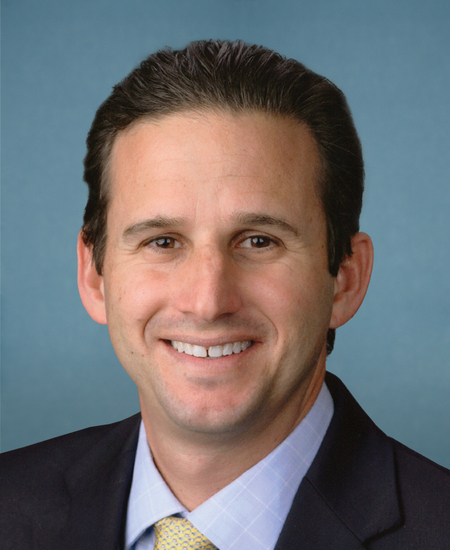
Photo of Brian Schatz
D United States Senate · Hawaii

Sen. Brian Schatz

Compare
Total votes
1,037
all sessions
Attendance
99%
6 missed
Near the chamber average
With party
96%
of cast votes
Lower than 76% of chamber peers
Bipartisan score
2%
crosses aisle rarely
Near the chamber average
Sponsored
1,057
bills & resolutions
Near the chamber average
Committees
18
assignments
1,057 bills and resolutions

Sponsored bills

Total
1,057
Primary
215
Co-sponsor
842
This page
1,057
matching current filters
Primary S 5193
In committee · Illinois Senate · Lead sponsor
Expanding Capacity for Health Outcomes Act of 2026

Maddy summaryThe Expanding Capacity for Health Outcomes Act of 2026 authorizes the Secretary of Health and Human Services to award grants to networks of organizations that use technology to improve health outcomes. These networks must consist of at least three entities with experience in collaborative learning and capacity building models. Recipients are required to use a shared dataset at the end of the grant period to demonstrate the impact of their work on significant public health issues such as infectious or chronic diseases. Additionally, the act extends the funding period for these grants from 2022 through 2026 to 2027 through 2031.

In committee Jul 30, 2026 0 co-sponsors
Co-sponsor S 5186
In committee · Illinois Senate · Co-sponsor
ASSET Act

Maddy summaryThe ASSET Act prohibits states from using asset limits to determine eligibility for several federally funded assistance programs, including Temporary Assistance for Needy Families, SNAP, LIHEAP, and Supplemental Security Income. By removing these financial thresholds, the bill aims to allow low-income families to save money and build financial stability without risking their benefits. Additionally, the legislation updates the resource limit for SSI recipients to $20,000 for individuals and $10,000 for couples in 2026, with future increases tied to inflation. While the bill generally eliminates these limits, it includes a grace period for states that must pass their own laws to comply with the new rules.

In committee Jul 30, 2026 1 co-sponsor
Primary S 5168
In committee · Illinois Senate · Lead sponsor
Comprehensive Paid Leave for Federal Employees Act

Maddy summaryThis bill expands paid family and medical leave benefits for a wide range of federal workers, including those in the Executive Office of the President, the Postal Service, and the District of Columbia courts. It primarily increases the amount of paid leave available for specific events, such as the birth or adoption of a child, by allowing employees to take up to 26 workweeks of leave in total, which includes a separate 12-week portion for other family and medical needs. The legislation also clarifies that leave for adoption can begin before the child is placed with the family to support necessary pre-placement activities. Additionally, it updates the rules for various federal agencies to ensure their leave programs align with these new standards and covers employees who might have previously received different types of paid leave under separate laws.

In committee Jul 29, 2026 0 co-sponsors
Primary S 4610
In committee · Illinois Senate · Lead sponsor
Pacific POWER Act

Maddy summaryThe Pacific POWER Act directs the U.S. State Department to launch an international program aimed at expanding geothermal energy use in Indo-Pacific allies to strengthen national security ties and reduce reliance on Chinese energy technology. This initiative involves selecting at least five partner countries, including several in the Indo-Pacific region, to collaborate on developing geothermal resources and next-generation technologies like enhanced geothermal systems. The bill authorizes the creation of public-private partnerships, financial tools, and technical assistance to help these partners build geothermal capacity while establishing standards for community engagement and environmental safety. To oversee this effort, the legislation requires the Secretary of State to submit detailed reports to Congress outlining the strategy, resource needs, and progress of the program over a five-year funding period.

In committee Jul 27, 2026 0 co-sponsors
Co-sponsor S 2252
In committee · Illinois Senate · Co-sponsor
Saving Lives and Taxpayer Dollars Act

Maddy summaryS 2252, the "Saving Lives and Taxpayer Dollars Act," prohibits the U.S. government or its partners from destroying foreign aid commodities like food, medicine, vaccines, or family planning products before they spoil or expire. Instead, it requires agencies to urgently deliver these items to intended beneficiaries - such as people in disaster zones, refugee camps, or communities facing health crises - through donation, sale, or other means. The bill mandates annual reports to Congress detailing any expired, spoiled, or destroyed aid, including reasons for failure to deliver and associated costs. This directly affects U.S. agencies managing global health and food aid (like USAID and the State Department) and aims to prevent waste while supporting health outcomes and U.S. agricultural exports.

In committee Jul 27, 2026 1 co-sponsor
Primary S 5131
In committee · Illinois Senate · Lead sponsor
CORE Pacific Act

Maddy summaryThe CORE Pacific Act directs the Secretary of State to submit a report within 120 days analyzing the feasibility of assigning consular officers to Coast Guard and Navy missions in Pacific Island countries. This report will assess the current demand for consular services, potential cost savings, and logistical challenges such as space, security, and technology needed to provide these services aboard military vessels. The analysis will also evaluate how often these missions occur and the impact on existing naval operations to determine if this approach can better serve citizens of nations that do not host U.S. embassies.

In committee Jul 23, 2026 0 co-sponsors
Co-sponsor S 5110
In committee · Illinois Senate · Co-sponsor
Improving America's Literacy Act

Maddy summaryThe Improving America's Literacy Act amends the Elementary and Secondary Education Act to provide grants to states that implement specific reading instruction methods. These funds are restricted to programs that use evidence-based strategies focusing on phonics and other core literacy skills while explicitly prohibiting the use of the "three-cueing model," an approach that relies on context and pictures for word recognition. The bill also requires states receiving these grants to undergo annual reviews of student outcomes and mandates that school improvement funds be directed only to districts utilizing approved literacy activities. Additionally, the legislation directs the Institute of Education Sciences to conduct research on effective literacy strategies and submit findings to Congress within five years. Finally, the act includes a provision ensuring that these new requirements do not limit protections for students with disabilities or allow the federal government to dictate specific local curriculum content.

In committee Jul 23, 2026 1 co-sponsor
Co-sponsor S 5108
In committee · Illinois Senate · Co-sponsor
Right to IVF Act of 2026

Maddy summaryThe Right to IVF Act of 2026 establishes federal protections to ensure individuals can access assisted reproductive technology and intrauterine insemination without state-imposed restrictions, while also mandating that health insurance plans, Medicare, Medicaid, and the Federal Employees Health Benefits program cover these services. The bill defines these procedures broadly to include treatments like egg and embryo freezing and requires coverage regardless of whether a patient has been diagnosed with infertility. It further directs the Department of Defense and the Department of Veterans Affairs to provide fertility preservation and reproductive assistance to uniformed service members and veterans, including funding for egg or sperm retrieval and storage. Additionally, the legislation grants federal courts the authority to challenge and block any state laws that limit access to these reproductive treatments or discriminate against providers and patients based on protected characteristics.

In committee Jul 23, 2026 1 co-sponsor
Co-sponsor S 5094
In committee · Illinois Senate · Co-sponsor
Real Courts, Rule of Law Act of 2026

Maddy summaryThe Real Courts, Rule of Law Act of 2026 restructures the United States immigration court system by creating a new, independent judicial branch under Article I of the Constitution, separate from the executive branch. This new system consists of three divisions: an appellate division with judges appointed by the President and Senate for 15-year terms, a trial division with judges appointed by the appellate division for 15-year terms, and an administrative division that manages operations and advises on court needs. The bill establishes specific qualifications for judges, sets their salaries at levels comparable to federal district court judges, and defines their powers to conduct hearings, issue rulings, and manage court resources. Additionally, the legislation transfers all existing immigration functions from the Department of Justice to this new court system while ensuring that pending cases continue without interruption.

In committee Jul 22, 2026 1 co-sponsor
Co-sponsor S 5076
In committee · Illinois Senate · Co-sponsor
Supreme Court Biennial Appointments and Term Limits Act of 2026

Maddy summaryThis bill would fundamentally change how Supreme Court justices are appointed and how long they serve by establishing a fixed schedule of biennial appointments. Under the new rules, the President could only nominate one justice every two years, specifically within the first 120 days of their term or following a rejected nomination, ensuring that the total number of justices hearing appellate cases never exceeds nine. Additionally, the legislation sets a 14-year term limit for each justice, meaning their service would end automatically when their term expires rather than continuing for life. These changes aim to reduce the impact of single appointments on the court's composition for decades while maintaining the current nine-justice quorum for most cases.

In committee Jul 22, 2026 1 co-sponsor
Showing 11 to 20 of 1,057 bills