

Maddy summaryHRES 843 is a symbolic resolution supporting the designation of October 30 as an "International Day of Political Prisoners" in the United States. It expresses the House's solidarity with global political prisoners - estimated at 1 million - including journalists, activists, and dissidents detained for political reasons without credible charges. The resolution urges the U.S. government to continue efforts to condemn political imprisonment, secure releases through diplomacy, and raise international awareness. It does not create new laws or directly affect specific individuals, as it is a non-binding expression of support for an existing international observance.
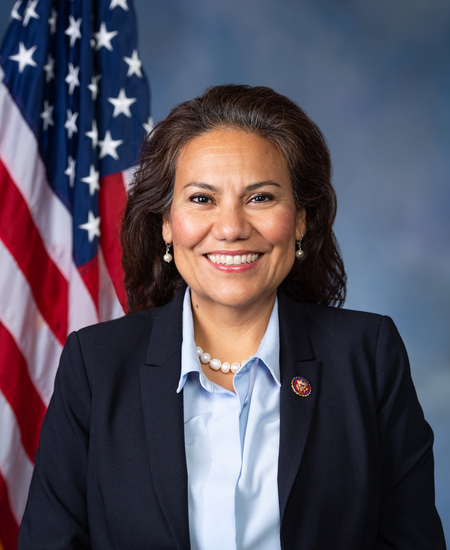
Rep. Veronica Escobar
Sponsored bills
Maddy summaryThis bill prevents states from redrawing congressional district maps more than once per decade. It prohibits states from changing district boundaries after their initial post-2020 census redistricting until the next census, unless a court orders it or state law specifically requires it. The law directly affects all states responsible for creating congressional maps, aiming to limit frequent redistricting cycles. It applies to all redistricting occurring after the 2020 census. The bill does not alter how states conduct elections for state or local offices.
Maddy summaryHR 5867, the Plant-Powered School Meals Pilot Act, creates a federal grant program to help schools serve 100% plant-based meal options. It authorizes $10 million for grants to school food authorities (specifically those serving 50%+ students eligible for free/reduced-price meals) over three years to cover staff training, meal preparation, community partnerships, and procurement from underserved farmers. The bill also establishes a separate $2 million pilot to reimburse schools for nondairy beverage substitutions for students with dietary needs, prioritizing schools with high lactose intolerance rates. Both pilots require annual reporting on participation, meal counts, and fund usage, with final reports submitted to Congress.
Maddy summaryThe EGG SAVE Act of 2025 creates a federal tax credit for U.S. commercial egg hatcheries that install equipment to identify the sex of chicken embryos before hatching. The credit covers 50% of qualified equipment costs in 2026, 40% in 2027, and 30% in 2028, provided the equipment achieves at least 95% accuracy. It applies only to equipment purchased, installed, or used in U.S. hatcheries for commercial egg production. The credit expires for property placed in service after December 31, 2028.
Maddy summaryThis bill restores the pre-January 20, 2025, administrative structure of the Head Start program within the Department of Health and Human Services. It establishes a central Office of Head Start with 12 regional offices, requiring the Secretary to maintain all prior staffing levels, organizational structure, and functions. The bill prohibits the Secretary from restructuring the office or reducing staff without providing 60 days' notice to Congress and the public, ensuring continuity in program oversight. It directly affects the Office of Head Start, its regional offices, and HHS staff managing Head Start operations.
Maddy summaryThis resolution requires the House of Representatives to hold daily meetings and recorded attendance checks during government shutdowns. Members must electronically confirm their presence each day via a "quorum call," with fines of $500 for a first offense and $2,500 for repeat failures. Fines cannot be paid using campaign or official funds, and the rules apply to all House members, including delegates and the Resident Commissioner. The bill aims to ensure continuous House operations during shutdowns but does not alter the cause or duration of shutdowns.
Maddy summaryHCONRES 56 is a symbolic congressional resolution recognizing the persistent wage gap faced by Latina women in the U.S. It specifically highlights that, as of 2024, Latina workers earn just 58 cents for every dollar paid to White, non-Hispanic men working full-time year-round. The resolution designates October 8, 2025, as "Latina Equal Pay Day" to raise awareness about this disparity, which affects over 14 million Hispanic women in the labor force. It does not create new laws or policies but formally acknowledges the economic impact of this gap on Latina families and the broader economy.
Maddy summaryThis bill adds Medicare coverage for multi-cancer early detection screening tests (blood or biological tests analyzing cell-free DNA) starting January 1, 2028. It directly affects Medicare beneficiaries aged 68 and older (starting in 2028, with the age limit increasing by 1 year annually), requiring tests to be FDA-cleared and deemed reasonable/necessary by the Secretary for early cancer detection across multiple organ sites. Payment will initially match current stool DNA test rates before 2031, then shift to a lower rate or new payment system after 2031, with limits preventing more than one test per year. The bill explicitly states it does not alter coverage for existing cancer screenings like breast, colorectal, or prostate cancer tests.
Fair Pay for Federal Contractors Act of 2025 This bill provides back pay to employees of federal contractors who lost pay due to a lapse in appropriations (i.e., government shutdown) in FY2026. Specifically, the bill provides appropriations for federal agencies that are subject to a lapse in appropriations in FY2026 to adjust the price of contracts to compensate federal contractors for providing back pay to employees who were affected by the lapse in appropriations. The agencies must adjust the price of any contract for which the contractor stopped, suspended, delayed, or interrupted all or part of the work under the contract due to the lapse in appropriations. The price adjustment must compensate the contractor for reasonable costs incurred to (1) compensate employees who were furloughed or laid off, were not working, or experienced a reduction of hours or compensation due to the lapse in appropriations; or (2) restore paid leave taken by employees during the lapse in appropriations if the contractor required or permitted employees to use paid leave as a result of the lapse in appropriations. The maximum amount of weekly compensation of an employee for which an adjustment may be made under this bill may not exceed the lesser of (1) the employee's actual weekly compensation, or (2) $1,442 (or a lesser amount pro-rated for an employee who works less than 40 hours per week). The bill also requires the Office of Federal Procurement Policy to submit a report to Congress on the adjustments made under this bill.
Maddy summaryHR 5660, the Pay Our Military Act, ensures military personnel and support staff receive pay during a government funding gap in fiscal year 2026. It appropriates funds from the Treasury to cover pay and allowances for active-duty troops, reservists, Department of Defense civilian employees, and contractors supporting military operations, if Congress hasn’t passed regular funding by then. The funding remains available until either regular appropriations are enacted or January 1, 2027, whichever comes first. This is a temporary measure to prevent disruptions in military pay during budget negotiations.