

Maddy summaryThis bill redefines which minerals fall under federal leasing rules for acquired lands. It specifically adds "hardrock minerals" (including base metals, precious metals, and gemstones) to the Mineral Leasing Act for Acquired Lands, while excluding coal, oil, gas, and other minerals covered by separate laws. The change clarifies that mining companies seeking to extract these hardrock minerals on federal lands must now follow the established leasing process. This directly affects mineral extraction companies operating on federal lands and the Bureau of Land Management, which administers these leases. The bill makes no new financial or operational requirements but updates the legal definition governing these leases.
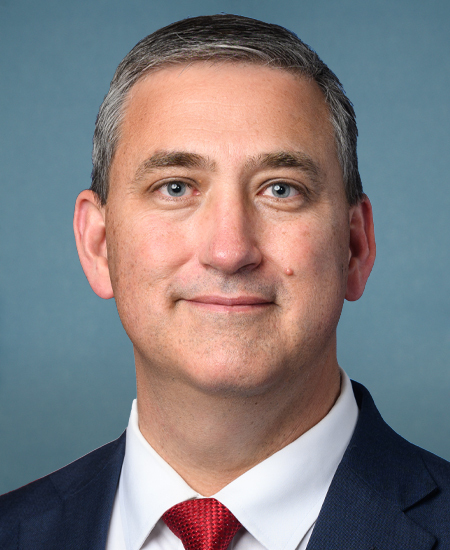
Rep. Nathaniel Moran
Sponsored bills
Maddy summaryThis resolution expresses the House of Representatives' opposition to foreign countries imposing digital services taxes that discriminate against U.S. companies. It highlights that these taxes unfairly target gross revenues rather than actual profits and penalize businesses that do not have a physical presence in the taxing country. The bill calls on other nations to repeal such measures and engage in fair trade negotiations based on international tax principles. Additionally, it supports the use of trade tools like Section 301 investigations to protect American businesses from these discriminatory practices.
Maddy summaryThe CONSENT Act establishes a federal civil remedy for individuals who receive unsolicited intimate visual depictions, such as non-consensual deepfakes, sent via interstate commerce. It defines consent as a voluntary authorization free from coercion and specifically prohibits the transmission of intimate digital forgeries created using artificial intelligence or other technological means. Victims can sue senders for up to $1,000 in statutory damages, emotional distress compensation, and court-ordered injunctions to stop the behavior, while also allowing minors to file under a pseudonym for privacy. The law explicitly excludes good faith transmissions for medical, educational, or law enforcement purposes and states that it does not override existing criminal laws or First Amendment rights.
Maddy summaryThis bill, titled the Medicaid Financing Clarification Act of 2026, aims to clarify federal rules regarding how states and local governments can fund their Medicaid programs. It directly affects state and local officials by explicitly defining "public funds" to include various local revenue sources such as taxes, fees, and tobacco settlement money. The legislation amends the Social Security Act to ensure that money held by local entities like counties or cities counts as eligible public funding for Medicaid matching purposes. Additionally, it provides clear definitions for terms like "political subdivision" and "public agency" to remove ambiguity in existing laws. By updating these definitions, the bill seeks to establish a clearer legal framework for how local governments contribute to Medicaid financing.
Maddy summaryThe Precious Metals Parity Act amends tax rules to treat precious metals the same way as foreign currencies for regulated investment companies. Specifically, it updates the Internal Revenue Code to include gold, silver, platinum, and palladium bullion when calculating how these companies report income. This change ensures that investment funds holding these specific metals are taxed consistently with those holding foreign currency assets. The provision applies to taxable years starting after the law is enacted.
Maddy summaryThis bill, titled the Protect Domestic Oil and Gas Small Business Act of 2026, exempts small oil and gas wells from specific environmental regulations under the Clean Air Act. It directly affects owners and operators of marginal wells, defined as sites producing 15 barrels of oil or less per day, or 90,000 cubic feet of natural gas or less per day. The legislation removes requirements for monitoring, reporting, and leak detection for these smaller operations, while also mandating that the EPA approve any state plan revisions granting this exemption within 180 days. Additionally, the bill requires the EPA to update its regulations to reflect these changes and to terminate any ongoing enforcement actions against marginal wells that were initiated before the law takes effect.
Maddy summaryThis bill would add pharmacist services to Medicare Part B coverage for beneficiaries, specifically covering pharmacist-led testing and treatment for illnesses like flu, COVID-19, or strep throat during public health emergencies. It defines covered services as those performed under state law, often requiring collaboration with a physician, and sets payment at 80% of the lesser of the actual charge or 85% of physician payment rates. Pharmacists would be prohibited from balance billing for these services, ensuring Medicare beneficiaries pay only their standard copayment. The changes would take effect January 1, 2026.
Maddy summaryThis bill authorizes the U.S. Mint to produce commemorative $5 gold and $1 silver coins marking the 25th anniversary of the September 11, 2001, terrorist attacks. The coins must feature designs honoring victims and first responders (including the inscription "Never Forget") and will be sold only during 2027-2028. All surcharges ($35 per gold coin, $10 per silver coin) collected from sales will fund the National September 11 Memorial and Museum at the World Trade Center, with no net cost to the federal government. The coins are legal tender but primarily intended for collectors, not circulation.
Maddy summaryThe No Tax on Border Patrol Agent Overtime Act modifies federal tax laws to exclude specific overtime earnings from border patrol agents from taxation. This change directly affects U.S. Customs and Border Protection officers by allowing them to keep more of their extra pay without paying income tax on those amounts. The bill defines "qualified overtime compensation" to include various forms of extra pay, such as premiums for working on holidays or weekends, but explicitly excludes hazardous duty pay. These tax benefits will only become effective for work performed in taxable years starting after December 31, 2025.
Maddy summaryThe NO FAKES Act of 2026 grants individuals and their heirs a new property right to control the creation and use of digital replicas of their voice or visual likeness, preventing unauthorized use in computer-generated media. This right lasts for the individual's lifetime plus 10 years after death, with potential extensions for continued commercial use, and applies to both living and deceased people. Online platforms and companies distributing such content must register with the Copyright Office, remove unauthorized replicas upon receiving valid notices, and face civil penalties of up to $750,000 per work if they fail to comply or knowingly distribute unauthorized replicas. The law also preempts most existing state laws protecting voice and likeness rights, though it preserves protections for sexually explicit content and election-related uses.