

Maddy summaryThe PREVAIL Act (HR 3160) reforms U.S. patent procedures to strengthen patent protection and reduce inefficiencies in the patent system. It requires 3-member panels for patent reviews, establishes a code of conduct for Patent Trial and Appeal Board members, and introduces new certification requirements for petitioners to prevent frivolous challenges. The bill also aims to eliminate repetitive patent challenges by requiring transparency about financial contributors to patent challenges and preventing duplicate proceedings across courts. This affects patent owners, challengers, and the USPTO, with the goal of making the patent system more reliable for innovators. Additionally, it changes how patent fees are handled, creating a dedicated fund to support patent and trademark operations.
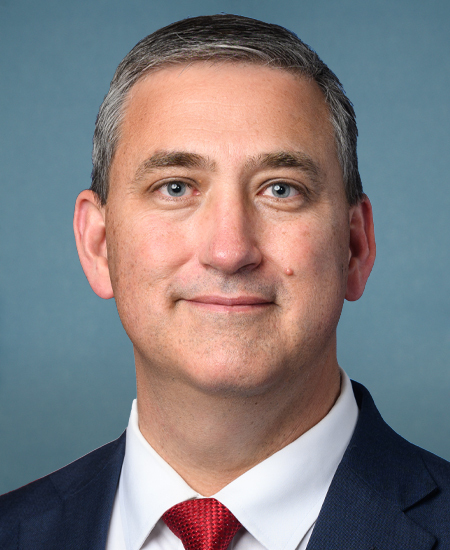
Rep. Nathaniel Moran
Sponsored bills
Maddy summaryHR 3118, the "No Tax on Overtime Act," creates a new tax deduction for workers who earn overtime pay under the Fair Labor Standards Act (FLSA). It allows taxpayers to deduct up to $100 per 100 hours of overtime (capped at 300 hours yearly) from their taxable income, with a phaseout for higher earners ($100 reduction for every $1,000 over $100,000 AGI). Employers must report overtime amounts on W-2 forms, and taxpayers must include the recipient’s Social Security number to claim the deduction. The deduction applies to tax years beginning after December 31, 2024.
Maddy summaryThis bill expands access to employee ownership by modifying the Small Business Act to allow S corporations owned by employee stock ownership plans (ESOPs) to retain small business status, even when an ESOP owns over 49% of the company. It creates a new Treasury Department office to provide education and technical assistance for S corporations establishing ESOPs, and establishes a Labor Department Advocate for Employee Ownership to coordinate outreach and resolve disputes. These changes directly affect S corporations transitioning to ESOP ownership and their employees, who gain retirement benefits through ESOP accounts. The bill aims to increase employee ownership by removing eligibility barriers and improving support for businesses adopting this model.
Maddy summaryThe Clean Slate Act of 2025 automatically seals federal criminal records for individuals convicted of nonviolent marijuana offenses (under 21 U.S.C. 844) or arrested without conviction, after they complete all sentence requirements. It also creates a petition process for individuals convicted of other nonviolent federal offenses who have completed their sentences, requiring courts to balance public safety concerns against the individual's rehabilitation when deciding whether to seal records. Sealed records cannot be accessed for most background checks, employment, or housing applications, with limited exceptions for law enforcement, national security positions, or firearm-related employment. The bill directly affects individuals with certain nonviolent federal convictions or arrests who have completed their sentences, excluding those with violent offenses, sex offenses, or national security convictions.
Maddy summaryThis bill temporarily allows doctors to prescribe and dispense certain Medicare-covered medications directly to seniors in their offices from 2026 to 2030, under specific conditions. It requires prior in-person visits, limits dispensing to group practices, and mandates billing through the physician’s practice. The bill also directs the GAO to study whether physician-owned pharmacies are becoming common and how such arrangements might affect prescribing. It directly affects seniors receiving Medicare Part D drugs and physician practices participating in these arrangements. The exception expires in 2030, with no changes to Medicare Part D program rules.
Maddy summaryHRES 337 is a symbolic House resolution honoring linemen for their critical role in maintaining power infrastructure and responding to emergencies. It recognizes them as first responders who work in dangerous conditions 24/7 to keep electricity flowing, supporting schools and businesses during storms. The resolution formally supports designating April 18, 2025, as "National Lineman Appreciation Day" to publicly acknowledge their contributions. As a non-binding resolution, it has no direct policy impact or effect on affected individuals.
Maddy summaryHR 2930, the PROTECT the Second Amendment Act, prevents landlords and housing authorities from banning or imposing extra restrictions on lawfully possessed firearms in specific federally assisted housing. It directly affects tenants living in properties covered by HUD or USDA housing programs, including public housing, Section 8 voucher recipients, and other subsidized rental units. The bill explicitly allows residents to possess firearms within their own dwelling units or while moving through common areas to reach their unit, without additional prohibitions. This changes existing policies in these housing programs by mandating that firearm possession cannot be restricted solely based on housing type.
Maddy summaryThis bill increases the federal tax credit for rehabilitating historic buildings. It raises the standard credit rate from 20% to 30% for qualifying small projects (with a $3.75 million expenditure cap) and further increases the cap to $5 million for projects in rural areas. The bill also allows taxpayers to transfer all or part of this credit to another taxpayer, creating a new market for the credit. These changes apply to properties placed in service after the bill's enactment date. The bill directly affects developers and owners of historic properties seeking tax incentives for rehabilitation projects.
Maddy summaryThe Neighborhood Homes Investment Act creates a new tax credit for developers who build or rehabilitate affordable homes in distressed communities. The credit is calculated as the lesser of (1) the difference between development costs and sale price, (2) 40% of development costs, or (3) 32% of the national median home price. It applies only to homes sold to qualified homeowners with income up to 140% of area median income in designated "qualified census tracts" (areas with high poverty rates, low median home values, and low median family income). Developers must meet quality standards and repay the credit if the home is sold within 5 years of the affordable sale. This credit aims to address the "value gap" that prevents housing development in distressed communities by incentivizing affordable home construction and rehabilitation.
Maddy summaryThis bill repeals a restriction that previously prevented individuals from rolling over funds directly from their Individual Retirement Accounts (IRAs) to donor-advised funds (DAFs) for charitable giving. It directly affects IRA account holders who wish to make tax-advantaged charitable contributions through DAFs. The key provision amends the Internal Revenue Code to remove the specific language barring such rollovers, allowing these transfers to occur without triggering taxable distributions. The change becomes effective after the bill's enactment, streamlining a pathway for donors to support charities via DAFs using IRA assets.