

Maddy summaryThis bill, known as the Halo Act, creates a new federal crime for intentionally approaching or staying within 25 feet of immigration enforcement officers after receiving a verbal warning, if the person intends to interfere with their work, threaten them, or harass them. It directly affects individuals who may attempt to block or disrupt immigration officers performing their duties, such as during arrests or investigations. The law defines harassment as conduct that causes substantial emotional distress to an officer and serves no legitimate purpose, and it carries penalties of up to five years in prison, a fine, or both. This provision adds to existing Title 18 United States Code by establishing specific boundaries for behavior near federal immigration officials.
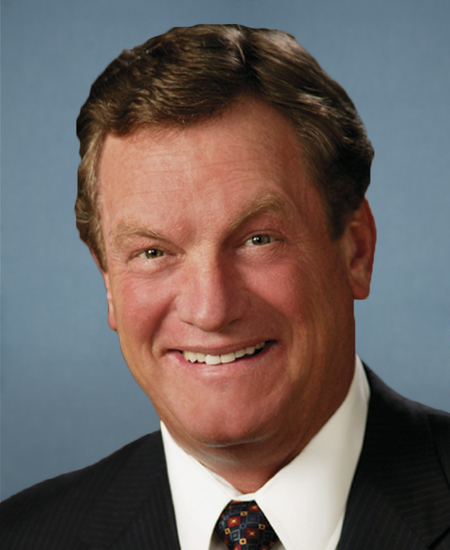
Rep. Michael K. Simpson
Sponsored bills
Maddy summaryThis bill, known as the Tribal Firearm Access Act, would allow members of federally recognized Tribes to use their Tribal government identification documents instead of state-issued IDs when purchasing firearms from federally licensed dealers. The legislation amends federal law to officially recognize Tribal government IDs as valid forms of identification for firearm transactions, while defining "Tribal government" to include the governing bodies of federally recognized Indian and Alaska Native Tribes. The changes would take effect 90 days after the bill is enacted, directly affecting Tribal members seeking to exercise their right to purchase firearms under current federal regulations.
Law-Enforcement Innovate to De-Escalate Act This bill removes less-than-lethal projectile devices (e.g., certain TASERs) from regulation under the Gun Control Act. The term less-than-lethal projectile device means a device that (1) is not designed or intended to expel (and may not be readily converted to discharge) commonly used ammunition or projectiles exceeding a velocity of 500 feet per second; (2) is designed and intended to be used in a manner not likely to cause death or serious bodily injury; and (3) does not accept (and cannot be readily modified to accept) an ammunition feeding device. The bill also requires the Bureau of Alcohol, Tobacco, Firearms and Explosives to determine whether a device satisfies the definition of a less-than-lethal projectile device within 90 days of a request.
Maddy summaryThe PART Act requires new vehicles to have catalytic converters marked with a unique identification number that links directly to the vehicle's identification number, stored in a law enforcement-accessible database. It establishes a $7 million grant program to help repair shops, dealers, law enforcement, and fleet owners purchase equipment for marking converters with visible, durable identifiers (using die or pin stamping and high-visibility paint). The bill also mandates that businesses buying catalytic converters keep detailed seller records (including vehicle information) for two years and use traceable payments, banning cash or cryptocurrency transactions. Additionally, it creates new federal criminal penalties for stealing or trafficking in catalytic converters, with potential sentences of up to five years in prison.
Maddy summaryHRES 1044 is a non-binding resolution expressing the House of Representatives' support for designating 2026 as the "National Year of the Volunteer." It aims to honor volunteers who contribute to community safety, health, education, and civic life, while encouraging nationwide efforts to boost volunteerism ahead of the U.S. 250th anniversary. The resolution does not create new laws or funding but serves as a symbolic gesture to highlight the value of volunteer service and inspire greater community engagement.
Maddy summaryThis bill prevents state or local governments from banning or restricting energy connections (like installation, modification, or access) based on the type or source of energy, such as electricity, natural gas, or renewable fuels. It directly affects consumers choosing energy providers and energy companies seeking to offer services. The key provision prohibits local laws, regulations, or policies that limit energy services sold in interstate commerce, covering all energy types listed in the bill’s definitions. It does not create new programs but limits regulatory authority at the state or local level. The law aims to ensure open access to diverse energy sources without source-based restrictions.
Safeguard American Voter Eligibility Act or the SAVE America Act This bill requires individuals to provide documentary proof of U.S. citizenship when registering to vote, and requires photo identification to vote, in federal elections. Specifically, the bill prohibits states from accepting and processing an application to register to vote in a federal election unless the applicant presents documentary proof of U.S. citizenship. The bill specifies what documents are considered acceptable proof of U.S. citizenship, such as identification that complies with the REAL ID Act of 2005 that indicates U.S. citizenship. Further, the bill (1) prohibits states from registering an individual to vote in a federal election unless, at the time the individual applies to register to vote, the individual provides documentary proof of U.S. citizenship; and (2) requires states to establish an alternative process to demonstrate U.S. citizenship. Each state must take affirmative steps on an ongoing basis to ensure that only U.S. citizens are registered to vote, which shall include establishing a program to identify individuals who are not U.S. citizens using information supplied by certain sources. Additionally, states must remove noncitizens from their official lists of eligible voters. The bill (1) provides for a private right of action for certain violations, and (2) establishes criminal penalties for certain offenses. Individuals voting in federal elections must present an eligible photo identification document. An individual who votes by absentee ballot must submit a copy of their identification document with both the request for, and the submission of, the absentee ballot.
Maddy summaryThis bill requires the Secretary of the Interior to collaborate with tribes within one year of enactment to identify seeds of cultural significance and support tribal efforts to protect them. It mandates federal support for tribal seed banks, traditional agriculture systems, and the confidentiality of culturally sensitive seed information provided by tribes. The bill explicitly prohibits disclosure of such confidential information and states that existing funding must cover these activities - no new funds are authorized. It directly affects tribal nations by safeguarding their traditional seed knowledge and agricultural practices.
Maddy summaryHR 909, the Crime Victims Fund Stabilization Act of 2025, modifies how funds from the False Claims Act are deposited into the Crime Victims Fund. It specifies that from 2025 through 2029, certain False Claims Act proceeds (specifically those for qui tam plaintiff payments and government damage reimbursements) cannot be deposited into the fund. This change directly affects the composition of the Crime Victims Fund by excluding these specific revenue streams during the specified period. The bill does not create new benefits or alter victim services; it only adjusts fund allocation rules for existing False Claims Act revenues.
Maddy summaryHRES 984 is a symbolic resolution designating January 9, 2026, as "National Law Enforcement Appreciation Day." It directly honors all federal, state, local, and tribal law enforcement officers across the United States for their service and sacrifices. The resolution expresses the House's support and gratitude, encourages public observance through ceremonies, and recognizes officers who have made the ultimate sacrifice. As a non-binding resolution, it does not create new laws or policies but serves as a formal expression of appreciation.