Maddy summaryThe Freedom from Unfair Gun Taxes Act of 2025 would prohibit states and local governments from imposing taxes on the sale of firearms, ammunition, or firearm parts during interstate or foreign commerce. This bill directly affects state tax policies and manufacturers or dealers selling these items across state lines. It explicitly states that the bill does not change the existing federal tax on firearms and ammunition that funds wildlife conservation programs. The key provision bans state-level taxes for these sales in interstate transactions while preserving current federal funding mechanisms.
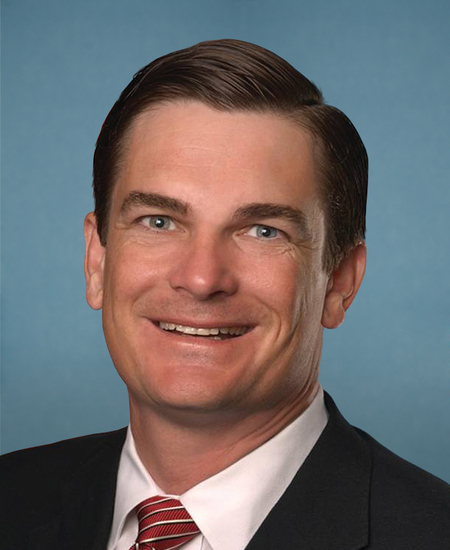
Rep. Austin Scott
Sponsored bills
Maddy summaryHRES 254 is a non-binding resolution recognizing the 250th anniversary of the United States Marine Corps, to be observed on November 10, 2025. The resolution honors the Corps' founding at Tun Tavern in Philadelphia on November 10, 1775, its history of service in major conflicts, and its values of honor, courage, and commitment. It encourages public participation in commemorative events and local recognition of Marines' contributions to national defense.
Maddy summaryThis bill redesignates the existing Ocmulgee Mounds National Historical Park as Ocmulgee Mounds National Park and establishes a separate Ocmulgee Mounds National Preserve in Georgia. It allows voluntary land acquisition (via purchase, donation, or exchange) for both areas without eminent domain, and requires the Secretary of the Interior to develop a management plan prioritizing cultural resource preservation for the Muscogee (Creek) Nation. The bill mandates tribal consultation, provides hiring preferences for tribal members, and ensures protection of sacred sites. It also places 126 acres of tribal land into federal trust for the Muscogee (Creek) Nation.
Maddy summaryHR 1596 renames the U.S. National Poultry Research Center in Athens, Georgia, as the "Abit Massey Poultry Research Center" for all official government references. This naming bill updates the facility's official designation without changing its operations, funding, or policies. It directly affects the center's administrative and legal documentation but does not alter its research activities or impact any individuals or groups.
Maddy summaryThis bill modifies SNAP (food stamp) program rules to prevent potential misuse. It requires states to suspend SNAP benefits for households making all card transactions out-of-state for over 60 days, unless they prove continued residency in their state through evidence or an investigation. It also prohibits households where members own retail or wholesale food stores from using SNAP benefits at those businesses, with exceptions for publicly owned or government-run stores. These changes directly affect SNAP recipients who move without updating their address or own participating food businesses, aiming to ensure benefits are used by eligible residents. The rules take effect one year after enactment.
Maddy summaryThis bill modifies Medicare's physician self-referral rules to improve access for rural communities. It creates a new exemption for "covered rural hospitals" (defined as facilities in rural areas more than 35 miles from another hospital or critical access hospital) from certain restrictions on physicians owning hospitals. The bill also removes a prohibition on expanding existing physician-owned hospitals, allowing such expansions after the law's enactment. These changes directly affect rural hospitals seeking Medicare participation and physicians who own or operate hospitals in underserved areas.
Maddy summaryHR 2197, the "No 340B Savings for Transgender Care Act," prohibits covered entities participating in the federal 340B drug pricing program from using savings from discounted drug purchases to pay for specific transgender healthcare services. The bill amends the Public Health Service Act to ban using 340B savings for sex reassignment surgeries or hormone treatments provided "for the purpose of gender alteration" of transgender individuals. This directly affects hospitals and clinics enrolled in the 340B program, restricting how they allocate funds saved through the program’s discounted drug pricing. The key provision is a targeted restriction on fund usage, not a ban on providing the medical services themselves. The bill focuses on reallocating program savings away from these specific care types.
This bill treats Kenya, Mali, Burkina Faso, and Chad as combat zones for purposes of determining eligibility for certain federal tax benefits available to members of the U.S. Armed Forces. (Conditions apply.) Specifically, under the bill, a qualified hazardous duty area is treated as a combat zone for purposes of determining the filing status of an individual whose spouse is missing in action; excluding compensation received by a member of the Armed Forces serving in a combat zone from gross income and wages subject to withholding; forgiving the income tax liability of a member of the Armed Forces who dies in a combat zone; certain estate tax rules applicable to a member of the Armed Forces who dies in a combat zone or as a result of an injury, wound, or disease suffered while in a combat zone; the exemption from the federal excise tax imposed on certain telephone services for telephone calls originating from a combat zone by a member of the Armed Forces; and postponing certain federal tax deadlines (e.g., filing a tax return, paying taxes, and claiming a tax refund) for a member of the Armed Forces serving in a combat zone. The bill defines a qualified hazardous duty area as Kenya, Mali, Burkina Faso, and Chad if any member of the U.S. Armed Forces is entitled to special pay (e.g., hostile fire pay and imminent danger pay) for services performed in such locations.

Maddy summaryThe FOCA Act of 2025 prohibits federal agencies from requiring or banning contractors from using union agreements in construction project bids or contracts. It directly affects federal agencies, contractors, and subcontractors working on federally funded or assisted construction projects (like buildings or infrastructure). The law requires bid documents to not favor or penalize contractors based on whether they have union agreements, aiming to promote open competition and prevent discrimination. This changes how agencies structure bids but does not affect union agreements themselves. The bill applies to all new contracts and subcontracts after enactment, with limited exemptions only for public health/safety emergencies or national security.
Maddy summaryThe Credit for Caring Act of 2025 creates a federal tax credit for family caregivers of elderly or disabled relatives. It allows eligible caregivers (with over $7,500 in earned income) to claim a credit equal to 30% of qualified caregiving expenses exceeding $2,000, capped at $5,000 per year. Qualified expenses include human assistance, home modifications, respite care, counseling, lost wages for unpaid time off, and transportation, all requiring certification from a licensed healthcare provider that the care recipient has long-term needs. The credit phases out for higher earners (over $75,000 single/$150,000 joint) and requires documentation of expenses and care recipient certification.