

Maddy summaryThe SALUTE Act establishes a 5-year pilot program to provide supplemental insurance for military members and their TRICARE-eligible dependents who face uncovered cancer-related costs. It requires the Secretary of Defense to partner with up to two insurance companies to offer fixed indemnity plans that pay direct cash benefits for cancer screening, diagnosis, and treatment expenses not covered by standard military health benefits. These plans must operate separately from existing coverage, be available through TRICARE's online portal, and be funded entirely by enrollee premiums with no government subsidies. The program targets active-duty service members (Army, Navy, Marine Corps, Air Force, Space Force) and their TRICARE-enrolled dependents facing out-of-pocket cancer costs.
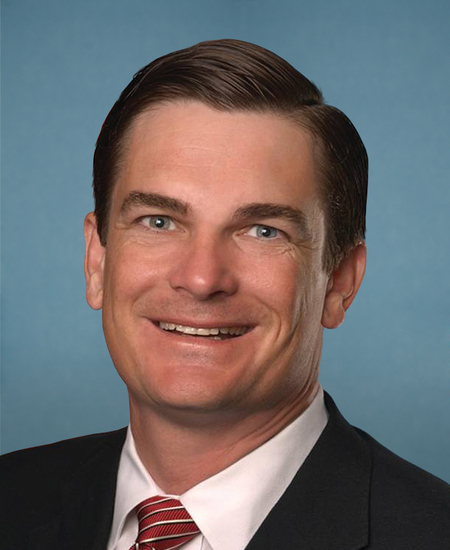
Rep. Austin Scott
Sponsored bills
Maddy summaryThis bill establishes the Ralph David Abernathy, Sr. National Historic Site in Atlanta, Georgia, to preserve the West Hunter Street Baptist Church (where Dr. Abernathy served as pastor during the civil rights movement) and honor his legacy as a civil rights leader. It defines the site's boundary using a specific map and requires the Secretary of the Interior to acquire land (primarily through donation) before formally establishing the site. The bill is procedural, creating a National Park System unit with standard administrative rules and requiring a management plan within three years of funding. It directly affects the preservation of this historic church and its surrounding area in Georgia.
Maddy summaryThis bill requires the U.S. Postal Service to seek an advisory opinion from the Postal Regulatory Commission (PRC) at least 180 days before implementing any nationwide or significant district postal service change. It prohibits the Postal Service from spending funds or moving forward with such changes until the PRC issues its opinion. If the Postal Service skips this step, the PRC can suspend the change and require service levels to return to their pre-change state. The bill also gives Congress a 60-day window after the PRC’s opinion to disapprove the change via a joint resolution.
Maddy summaryThis bill requires the Secretaries of Health and Human Services and Defense to develop a 10-year strategy within 180 days of enactment to maintain stockpiles of anthrax countermeasures (like treatments and vaccines) in the Strategic National Stockpile and for military personnel and families on U.S. bases. It mandates annual reports to Congress detailing anthrax threats from foreign adversaries and terrorist groups, government programs addressing these threats, and efforts to ensure countermeasures are available for military dependents abroad. The strategy must prioritize sustainable cooperation with manufacturers and address multidrug-resistant strains. The bill directly affects military personnel, their families, and civilians on military installations by strengthening anthrax defense capabilities.
Fair Access to Agriculture Disaster Programs Act This bill waives the adjusted gross income limitations for payments or benefits under specific Department of Agriculture (USDA) disaster assistance programs for a person or legal entity that derives a portion of their income from agriculture. Currently, a person or entity is not eligible to receive certain benefits during a crop, fiscal, or program year if their average gross income exceeds $900,000. Specifically, in the case of an excepted payment or benefit, the adjusted gross income limitation is waived if 75% or more of the average adjusted gross income for the person or entity is derived from farming, ranching, or silviculture activities. These activities include agritourism, direct-to-consumer marketing of agricultural products, and the sale of agricultural equipment owned by such person or entity. The bill applies to the USDA Livestock Indemnity Program; Livestock Forage Disaster Program; Emergency Assistance for Livestock, Honey Bees, and Farm-Raised Fish Program; Tree Assistance Program; and Noninsured Crop Disaster Assistance Program.
Sanctioning Russia Act of 2025 This bill imposes penalties on certain persons (individuals and entities) if the President determines that the Russian government or a person acting at Russia's direction is involved with (1) refusing to negotiate a peace agreement with Ukraine; (2) violating a negotiated peace agreement; (3) initiating another invasion of Ukraine; or (4) overthrowing, dismantling, or seeking to subvert the Ukrainian government. If the President makes such a determination, the bill requires certain actions including the President must impose visa- and property-blocking sanctions on specified persons such as the Russian president, certain Russian military commanders, and any foreign person that knowingly provides defense items to the Russian armed forces; the President must increase the rate of duty on all goods and services imported from Russia into the United States to at least 500% relative to the value of such goods and services; the President must increase the rate of duty on all goods and services imported into the United States from countries that knowingly engage in the exchange of Russian-origin uranium and petroleum products to at least 500% relative to the value of such goods and services; the Department of the Treasury must impose property-blocking sanctions on any financial institution organized under Russian law and owned wholly or partly by Russia, and any financial institution that engages in transactions with those entities; and the Department of Commerce must prohibit the export, reexport, or in-country transfer to or in Russia of any U.S.-produced energy or energy product.
Securing Our Lands and Resources Act or the SOLAR Act This bill prohibits the Department of Agriculture from providing financial assistance for certain projects that would result in the conversion of covered farmland for solar energy production. Under the bill, covered farmland generally refers to prime farmland, unique farmland, and farmland that is of statewide or local importance. Conversion means any activity that results in the covered farmland no longer meeting certain requirements for agricultural production, activity, or use. The bill includes an exception for certain smaller projects that result in the conversion of (1) less than 5 acres of covered farmland, or (2) less than 50 acres of covered farmland if the majority of the energy produced by the project is for on-farm use. The bill also includes an exception for projects that have the approval or support from the local county and municipality. For these projects, the applicant must (1) develop a farmland conservation plan for the project (e.g., implementing best practices to protect future soil health and productivity), and (2) ensure that sufficient funds are provided for the decommissioning of the solar energy production system and the remediation and restoration of the farmland.
Maddy summaryHR 1417 establishes a new program within the U.S. Department of Agriculture to provide tailored technical assistance to rural health care facilities. The program directly supports facilities like hospitals, clinics, and health centers in rural areas by helping them identify operational needs, improve financial management, and access USDA loan and grant programs. Key provisions include prioritizing facilities in medically underserved areas or facing financial vulnerability, with a $2 million annual funding limit for fiscal years 2026-2030. The program requires annual reports on outcomes and effectiveness to Congress, focusing on preventing facility closures and strengthening rural health care delivery.
Maddy summaryHRES 260 designates March 27, 2025, as "National Women in Agriculture Day" to recognize women's contributions to U.S. agriculture. The resolution highlights that women represent over 1.2 million agricultural producers (more than one-third of all U.S. producers) and generated $222 billion in agricultural sales in 2022. It encourages citizens to recognize women working in agriculture and supports their roles in leading the industry, mentoring future agricultural workers, and advancing food production. This is a symbolic resolution with no new policies or funding, solely celebrating existing contributions during National Women’s History Month and National Ag Week.
Maddy summaryThe SHORT Act (HR 2395) redefines federal firearm definitions to exclude antique and collector firearms from being classified as firearms, and removes distinctions between short-barreled rifles and shotguns in federal regulations. It prevents state laws from imposing taxes or registration requirements on short-barreled rifles and shotguns, requiring state rules to align with federal compliance instead. The bill also mandates the federal government to destroy specific records related to these firearms within one year of enactment.