

Maddy summaryThe SAFER Act of 2026 establishes federal standards for when financial institutions can transfer certain unclaimed securities, digital assets, and investment accounts to state governments under unclaimed property laws. It directly affects individuals and entities holding these assets, as well as the financial institutions that custody them. Under the bill, financial institutions generally cannot turn over assets from natural persons unless their death is confirmed at least three years prior with no fiduciary interest, or after five years of no contact for other entities. The bill also requires financial institutions to periodically check death databases for inactive accounts of individuals at retirement age and preempts conflicting state escheatment laws regarding these assets.
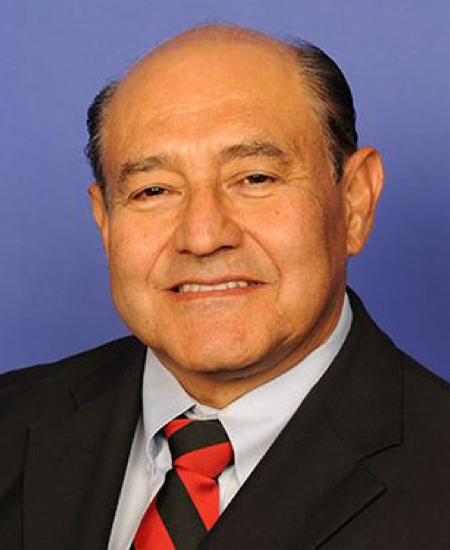
Rep. J. Luis Correa
Sponsored bills
Maddy summaryThis resolution formally recognizes April 10 as Dolores Huerta Day to honor the civil rights and labor leader's legacy. It does not create a federal holiday or change laws but expresses the House of Representatives' support for the designation. The text highlights Huerta's contributions to farm workers' rights, women's equality, and Latino political representation through a series of "whereas" clauses detailing her achievements. The resolution serves as a commemorative statement rather than a policy change, directing no new actions or funding.
Maddy summaryThis bill establishes a 17-member Commission on Presidential Capacity to Discharge the Powers and Duties of the Office. This commission, composed primarily of medical professionals and former high-ranking executive officials, would be activated by a concurrent resolution of Congress. Its duty would be to conduct a medical examination of the President to determine if they are mentally or physically unable to discharge the powers and duties of the office due to conditions such as illness, disability, or substance use. Following the examination, the commission would report its findings and a declaration on the President's capacity to Congress and the Vice President, with any refusal by the President to undergo examination taken into consideration.
Maddy summaryThis bill directs the Comptroller General to conduct a study on the 1-800-MEDICARE hotline within one year of enactment. The study will examine customer wait times, satisfaction levels, staffing competency, contractor performance, and any changes in service quality since previous reports. It also requires the report to include recommendations for improving the hotline and describe actions taken in response to past recommendations. The bill affects Medicare beneficiaries who use the hotline and the contractors and government officials responsible for managing it.
Maddy summaryThis resolution expresses support for recognizing April as National Language Access Month to highlight the importance of language services for individuals with limited English proficiency. It directly affects millions of Americans who speak languages other than English at home and rely on translation and interpretation services to access public services. The bill does not create new laws or funding but serves as a symbolic gesture to raise awareness about existing federal requirements for language access in areas like healthcare, employment, and voting. It encourages federal agencies, state and local governments, and community organizations to promote awareness of language access rights and resources during the designated month.
Maddy summaryThis concurrent resolution formally recognizes the ongoing disparity between wages paid to men and women in the United States and reaffirms Congress's commitment to supporting equal pay. It highlights statistical data showing that women earn approximately 81 cents for every dollar earned by men, with significant variations across racial and ethnic groups, and notes that the gender wage gap has widened over the past two years. The document also identifies contributing factors such as occupational segregation, lack of family-friendly workplace policies, and workplace harassment, while emphasizing the economic impact on women's retirement security and family incomes.
Maddy summaryThis bill amends the Americans with Disabilities Act to require a 30-day notice period before lawsuits can be filed over inaccessible public accommodations. It mandates that individuals denied access due to architectural barriers must first provide businesses with specific written notice identifying the exact barrier. Businesses then have 30 days to either provide a written plan for removal or make substantial progress on fixing the barrier. This directly affects disabled individuals seeking access and businesses operating public spaces like restaurants or stores. The change delays legal action until after this notice-and-cure period, aiming to encourage voluntary compliance before litigation.
Maddy summaryThe Military Financial Literacy Act of 2026 expands personalized financial and housing counseling services for members of the Armed Forces. It requires the Department of Defense to establish a one-on-one counseling program within one year that covers credit management, budgeting, anti-predatory lending, rental planning, VA home loans, and legal protections under the Servicemembers Civil Relief Act. The program must partner with HUD-approved, tax-exempt Veteran Service Organizations that have expertise in financial literacy and housing stability. The Secretary of Defense must submit a report to Congress within two years detailing the number of service members who received counseling, completion rates, and indicators of financial stress or housing instability among participants.
Maddy summaryHR 7522, the Improving Access to Nutrition Act of 2026, removes work requirements from the Supplemental Nutrition Assistance Program (SNAP). It directly affects approximately 6.1 million SNAP recipients currently subject to these requirements, including people with health issues, Black Americans disproportionately impacted by such rules, families with children, and individuals experiencing homelessness. The bill amends the Food and Nutrition Act of 2008 by striking subsection (o) and related provisions that mandate work requirements for SNAP eligibility. This change would eliminate a barrier that studies show reduces participation without reducing poverty and increases administrative burdens. The bill does not create new benefits but removes an existing eligibility requirement affecting vulnerable populations.
Maddy summaryThis bill exempts H-1B visa holders working in healthcare from a presidential restriction that requires a $100,000 payment for entry into the United States. It directly affects foreign medical professionals and healthcare workers who hold H-1B nonimmigrant visas. The legislation removes the additional fee requirement for these workers while limiting any fees that may be charged to the standard amount already established under immigration law. The bill defines healthcare workers using the existing definition from the Affordable Care Act and was introduced in the 119th Congress in March 2026.