

Maddy summaryThis bill requires the U.S. Postal Service to provide written proposals to supervisors' organizations 60 days before pay/benefit decisions expire or after new collective bargaining agreements are reached. It directly affects postal supervisors and managers covered by collective bargaining agreements regarding their pay policies, schedules, and fringe benefits. The key mechanism establishes clear timelines for negotiations and mandates that any dispute resolution panel must issue a binding final decision within 15 days of receiving input from both parties. This aims to streamline the process for resolving pay and benefits disputes between the Postal Service and supervisory staff organizations.
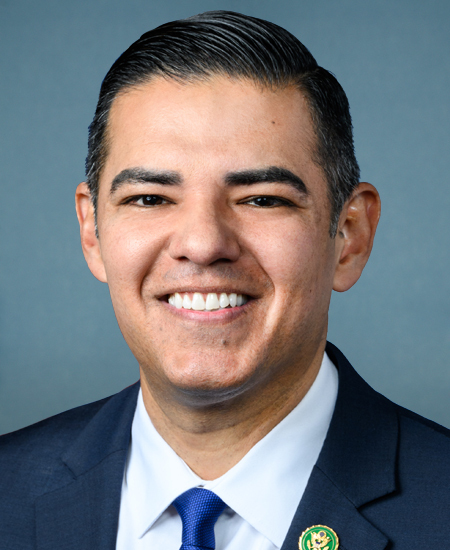
Rep. Robert Garcia
Sponsored bills
Maddy summaryThis bill requires all ammunition sales to occur in person with identity verification, banning online or mail-order purchases for unlicensed individuals. It adds new licensing requirements for ammunition dealers and modifies existing firearm laws to explicitly include ammunition in sales, shipping, and recordkeeping rules. Licensees must report bulk sales of over 1,000 rounds to unlicensed buyers within one business day. The law directly affects ammunition sellers (both licensed and unlicensed) and buyers, making online ammunition transactions impossible without in-person verification.
Maddy summaryThis bill adjusts federal employee pay rates for 2024. It increases basic pay for all federal workers under statutory pay systems and prevailing rate systems by 4.7%, and raises locality pay adjustments by 4.0%. These changes directly affect all federal employees covered by the specified pay systems, including those in wage areas and under sections 5348/5349 of Title 5. The bill implements these raises without altering existing pay system structures or requirements.
Maddy summaryHR 516, the *Fighting Homelessness Through Services and Housing Act*, establishes a federal grant program to fund local and tribal efforts addressing homelessness. It provides $1 billion annually for five-year implementation grants (up to $25 million each) and one-year planning grants (up to $100,000) to eligible entities like cities, counties, or tribal organizations. These grants require recipients to offer housing, mental health services, job training, and child-specific support (like education and trauma-informed care), maintain a 1:20 case manager-to-client ratio, and report on outcomes like housing stability and health improvements. The bill mandates that at least 5% of funds target tribal communities and requires non-Federal matching for implementation grants (25% of costs).
Maddy summaryHR 286, the Health Care Providers Safety Act of 2023, provides federal grants to healthcare providers to improve security at their facilities. The bill authorizes the Secretary to fund security services and physical/cyber security enhancements, including video surveillance, data privacy measures, and structural improvements. These grants directly help healthcare facilities, personnel, and patients by addressing safety concerns. The law specifies that funds must be used for necessary security costs to ensure safe access to healthcare services. It does not create new mandates but offers financial support for security upgrades.
Maddy summaryHR 396, the Closing the Bump Stock Loophole Act of 2023, defines "bump stock" as any device or modification that increases the firing rate of a semi-automatic weapon to mimic a machine gun. The bill amends federal tax and firearms laws to classify bump stocks as prohibited devices under the National Firearms Act, requiring existing owners to register them within one year of enactment. It directly affects individuals who currently own bump stocks by mandating registration to avoid future possession prohibitions. The law takes effect immediately for new sales but provides a one-year grace period for existing owners to comply with registration requirements.
Maddy summaryHR 345, the TRUST in Congress Act, requires Members of Congress, their spouses, and dependent children to place certain investments into a "blind trust" within 90 days of taking office or after the bill's enactment. It directly affects current and future lawmakers and their immediate family members by mandating that covered investments - such as stocks, commodities, or derivatives (excluding Treasury bonds and some mutual funds) - be placed in a trust they cannot manage. Members must certify the trust setup to House or Senate officials within 15 days, and trusts cannot be dissolved until 180 days after leaving office. The law excludes investments providing primary income (e.g., from a spouse's job) but requires transparency through public website disclosures of certifications.
Maddy summaryHR 350, the SANTOS Act, requires candidates for the U.S. House of Representatives or Senate to disclose their educational background, military service (if any), and employment history as part of their official campaign filings. This directly affects all federal election candidates by mandating these specific personal details be included in their required campaign designations. Candidates who knowingly provide false information about these details face penalties of up to $100,000 in fines, one year in prison, or both. The law applies to elections held on or after its enactment date.
This resolution condemns all acts of political violence, as well as attacks on health care facilities, health care personnel, and patients. The resolution also states that all people have the freedom to access reproductive health care services and medical advice without fear of violence, intimidation, or harassment. Finally, the resolution calls on the Biden Administration to use all appropriate authorities to uphold public safety, protect health care facilities, and safeguard health care personnel and patients.
This joint resolution proposes a constitutional amendment authorizing Congress and the states to (1) regulate and impose reasonable viewpoint-neutral limitations on the raising and spending of money by candidates and others to influence elections; and (2) regulate and enact public campaign financing systems, including those designed to restrict the influence of private wealth by offsetting the raising and spending of money by candidates and others with increased public funding. The amendment grants Congress and the states the power to implement and enforce this amendment by legislation. They are allowed to distinguish between natural persons and corporations or other artificial entities created by law, including by prohibiting such entities from spending money to influence elections.