

This joint resolution proposes a constitutional amendment prohibiting total outlays for a fiscal year from exceeding total receipts for that fiscal year unless Congress authorizes the excess by a three-fifths roll call vote of each chamber. The prohibition excludes outlays for repayment of debt principal and receipts derived from borrowing. The amendment requires roll call votes of (1) three-fifths of each chamber of Congress to increase the public debt limit, and (2) a majority of each chamber for legislation increasing revenue. It also requires the President to submit a balanced budget to Congress annually. Congress is authorized to waive these requirements when a declaration of war is in effect or if the United States is engaged in a military conflict which causes an imminent and serious military threat to national security.
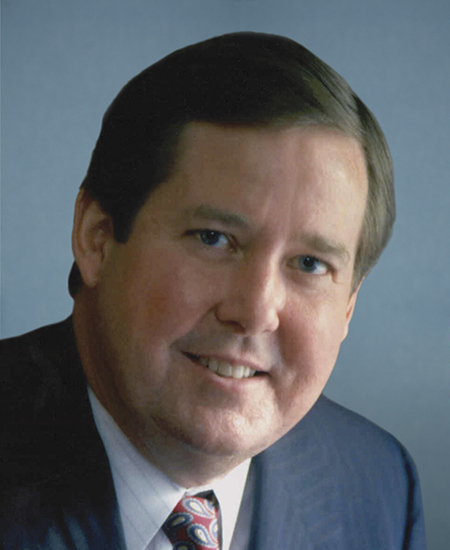
Rep. Ken Calvert
Sponsored bills
This joint resolution proposes an amendment to the Constitution to require that the Supreme Court consist of nine Justices.
This resolution honors Officers Brian Sicknick and Howard Liebengood of the U.S. Capitol Police, and it commends the bravery and service demonstrated by officers of the U.S. Capitol Police, the Metropolitan Police Department of the District of Columbia, and the other law enforcement agencies and protective entities that assisted in responding to the January 6, 2021, attack on the U.S. Capitol.
Federally Integrated Species Health Act or the FISH Act This bill gives the Fish and Wildlife Service (FWS) the sole authority to protect endangered or threatened species that are anadromous species (species of fish that spawn in fresh or estuarine waters and that migrate to ocean waters) or catadromous species (species of fish that spawn in ocean waters and migrate to fresh waters). Currently, the FWS shares this authority with the National Marine Fisheries Service.
Stop the High-Speed Money Pit Act This bill prohibits the use of federal funds for a high-speed rail corridor development project in California that is the same or substantially similar to the project that is the subject of a cooperative agreement entered into on December 16, 2009, between the California High-Speed Rail Authority and the Federal Railroad Administration.
Access to Credit for Small Businesses Impacted by the COVID-19 Crisis Act of 2021 This bill temporarily provides credit unions with an exception to limits on outstanding member business loans. Specifically, a loan does not count towards this limit if (1) it is used for recovery from the COVID-19 (i.e., coronavirus disease 2019) emergency, (2) it is made by an insured credit union that has received a specified soundness rating, (3) it is made during a specified time period, and (4) it does not threaten the safety and soundness of the insured credit union.
Protecting American Energy Production Act This bill prohibits the President from declaring a moratorium on the use of hydraulic fracturing unless Congress authorizes the moratorium. The bill also expresses the sense of Congress that states should maintain primacy for the regulation of hydraulic fracturing for oil and natural gas production on state and private lands.
Jurists United to Stop Trafficking Imitation Child Exploitation Act of 2021 or the JUSTICE Act of 2021 This bill broadens the prohibition on importation or transportation of obscene materials. Specifically, the bill makes it a crime to import, or knowingly use a common carrier or interactive computer service to transport, a child sex doll.
ADA Compliance for Customer Entry to Stores and Services Act or the ACCESS Act This bill addresses access to public accommodations for persons with a disability. The bill requires the Department of Justice (DOJ) to develop a program to educate state and local governments and property owners on strategies for promoting access to public accommodations for persons with a disability. The bill authorizes an aggrieved person, after taking specified actions, to commence a civil action based on the failure to remove an architectural barrier to access an existing public accommodation. Specifically, the aggrieved person must have provided the owners or operators a written notice specific enough to identify the barrier and specify the circumstances under which public accommodation access was denied. The owners or operators must have (1) failed to provide the person a written description outlining improvements that will be made to improve the barrier, or (2) failed to remove the barrier or make substantial progress after providing such a description. The Judicial Conference of the United States must develop a model program to promote alternative dispute resolution mechanisms to resolve claims involving architectural barriers to access for public accommodations. Finally, the bill requires DOJ to complete a study of whether certain web content standards or information services for individuals with disabilities provided telephonically provide the same accommodations as would be available on a website.
Legal Workforce Act This bill directs the Department of Homeland Security (DHS) to create an electronic employment eligibility confirmation system modeled after and to replace the E-Verify system, which allows employers and recruiters to verify the immigration status of individuals. The bill also mandates the use of such a system, where currently only some employers, such as those with federal contracts, are required to use E-Verify. The bill specifies documents that can establish an individual's identity and employment authorization. During the period starting when a job offer is made until three business days after hiring, the individual must attest to his or her employment authorization, and the employer or recruiter must attest that it has examined the individual's required documents. Employers shall reverify certain types of employees who were not previously verified using E-verify. The Social Security Administration shall notify employees if their Social Security number has been used multiple times in an unusual manner. DHS shall establish programs for blocking and suspending misused numbers. Employers that are required to use the verification system shall not be liable for any employment-related action based on a good-faith reliance on the information from the system. The bill establishes a phased-in participation deadline for different categories of employers, including agricultural employers. The bill increases civil penalties related to hiring individuals without work authorization. It also preempts state laws relating to hiring and employment eligibility verification, but states may use their authority of business licensing to penalize employers for failing to comply with the bill's provisions.