

Maddy summaryThe REAADI for Disasters Act aims to improve inclusion of individuals with disabilities and older adults in all phases of disaster management. It requires accessible communication (including American Sign Language, captions, and plain language), accessible shelters, and ensures these individuals are included in planning and decision-making processes. The bill establishes a Disaster Human Services Emergency Fund to rapidly respond to human services needs during disasters, and creates training centers to provide disability-inclusive emergency management expertise. It mandates compliance with disability laws and requires centers for independent living to be involved in disaster planning and response.
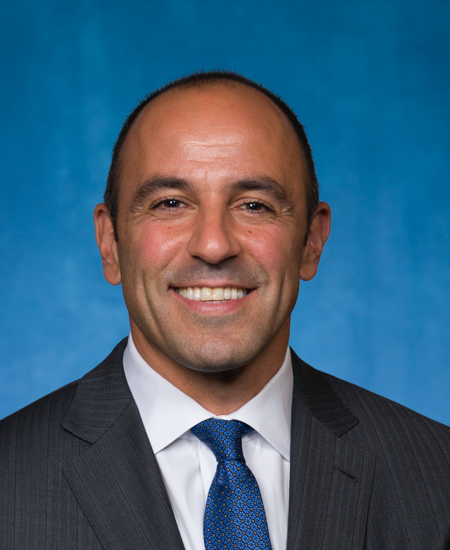
Rep. Jimmy Panetta
Sponsored bills
Maddy summaryHRES 995 is a symbolic resolution supporting Korean American Day, commemorating January 13 as the anniversary of the 1903 arrival of the first large wave of Korean immigrants to the U.S. It urges all Americans to recognize Korean Americans' contributions to U.S. society, economy, and U.S.-South Korea relations, honoring their historical journey and ongoing impact. The resolution has no legal effect or policy changes - it serves solely as a formal acknowledgment of cultural heritage.
Maddy summaryThe Fiscal State of the Nation Act requires the chairs of the House and Senate Budget Committees to hold an annual joint hearing within 45 days after the Treasury submits its annual financial report. At this hearing, the Comptroller General must present a nonpartisan analysis of the federal government's financial condition, including budget deficits, surpluses, and long-term fiscal projections, based on the Treasury's report. The hearing must be open to the public and media, and all members of Congress may participate, regardless of committee membership. This requirement applies to financial reports submitted on or after the bill's enactment date.
Maddy summaryHR 6088, the *Restoring Food Security for American Families and Farmers Act of 2025*, repeals specific sections (10101-10108) from a prior reconciliation law. This action revives previous provisions related to food security programs that were modified by those repealed sections. The bill directly affects federal food assistance and agricultural support programs by restoring their prior legal framework. It does not create new policies but reverses recent changes to existing food security measures.
Maddy summaryHR 5059 creates a new grant program to boost sales of U.S.-grown specialty crops (like fruits, vegetables, and nuts) within the domestic market. The U.S. Department of Agriculture will award grants to eligible organizations - such as agricultural trade groups, cooperatives, or nonprofit associations - to fund marketing and promotion activities. Organizations must contribute at least 25% of the grant amount from non-Federal sources and cannot use funds to directly assist large for-profit corporations (except cooperatives or specific associations). The program is authorized to receive $75 million annually starting in fiscal year 2026, with strict reporting and evaluation requirements to track how funds develop domestic markets.
Maddy summaryThis bill establishes a federal grant program to boost domestic sales of U.S.-grown specialty crops (like fruits, vegetables, nuts, and nursery products). It authorizes $75 million annually to fund grants for eligible organizations - such as agricultural trade groups, cooperatives, or state agencies - that develop marketing plans for domestic promotion. Grantees must provide at least 25% non-Federal matching funds (including in-kind support) and cannot use funds to promote foreign products or most for-profit corporations. The program includes strict oversight, requiring annual reviews, spending audits, and evaluations to ensure funds effectively expand domestic markets for specialty crops.
Maddy summaryHR 4782, the Local Farmers Feeding our Communities Act, establishes a USDA program to connect local farmers with food distribution networks. It requires eligible entities (like state agriculture agencies) to use funds to purchase unprocessed or minimally processed local foods from covered producers - including at least 25% from small-size, mid-size, beginning, or veteran farmers - while providing technical assistance for food safety and supply chains. The bill allocates $200 million annually (2026-2030) from the Commodity Credit Corporation, mandating 10% for Tribal governments and 1% per state before distributing remaining funds. This directly supports regional food security by boosting economic opportunities for local farmers and improving access to fresh, nutritious food through established distribution channels.
Maddy summaryHR 909, the Crime Victims Fund Stabilization Act of 2025, modifies how funds from the False Claims Act are deposited into the Crime Victims Fund. It specifies that from 2025 through 2029, certain False Claims Act proceeds (specifically those for qui tam plaintiff payments and government damage reimbursements) cannot be deposited into the fund. This change directly affects the composition of the Crime Victims Fund by excluding these specific revenue streams during the specified period. The bill does not create new benefits or alter victim services; it only adjusts fund allocation rules for existing False Claims Act revenues.
Maddy summaryHR 7016, the "No Funds for NATO Invasion Act," blocks federal funding for any U.S. military invasion of a North Atlantic Treaty Organization (NATO) member country or territory covered by NATO's Article 5 mutual defense clause. The bill prohibits using any federal funds for such invasions and bans U.S. officials from executing these actions. It directly affects U.S. military operations and funding decisions involving NATO members. The law applies to all federal spending, preventing the use of existing budgets for this specific purpose.
Maddy summaryThis concurrent resolution (HCONRES 69) commemorates the 15th anniversary of the January 8, 2011, Tucson shooting that killed six people and injured 13, including former Congresswoman Gabby Giffords. It honors the victims, survivors, and Giffords - now a prominent advocate for gun violence prevention - and recognizes her leadership in promoting civility and reducing gun violence. The resolution also commends Tucson residents and first responders for their resilience and reaffirms Congress’s commitment to respectful dialogue and opposing political violence. As a ceremonial resolution, it does not create new laws or policies.