

Amends the Lobbyist Registration Act. Provides that a lobbyist or lobbying entity may not promise anything of value to an official, State employee, or a candidate for a State executive or State legislative office for the person's support, action, or inaction for a specific legislative action or executive action, including, but not limited to, campaign contributions, endorsement of candidacy, or any in-kind contributions supporting an official, State employee, or candidate for a State executive or State legislative office. Prohibits a lobbyist or lobbying entity from soliciting an official or State employee to violate similar provisions of the State Officials and Employees Ethics Act. Provides that nothing in the provisions prevents the making or accepting of voluntary contributions otherwise in accordance with law.
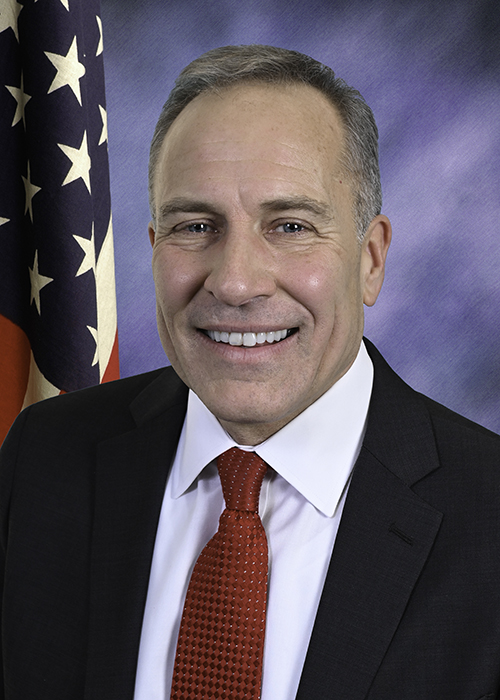
Sen. Chris Balkema
Sponsored bills
Amends the Illinois Income Tax Act. Creates a deduction in an amount equal to the amount paid by the taxpayer during the taxable year as monthly premiums for a health insurance plan bought through the Affordable Care Act (ACA) Marketplace, plus an amount equal to the qualified out-of-pocket medical expenses paid by the taxpayer during the taxable year.
Amends the Illinois Estate and Generation-Skipping Transfer Tax Act. Provides that no tax shall be imposed under the Act for persons dying on or after the effective date or for transfers made on or after the effective date. Effective immediately.
Appropriates $15,000,000 to the Southern Illinois University Board of Trustees for the expansion of the National Corn-to-Ethanol Research Center at Southern Illinois University at Edwardsville to expand its research capabilities and to increase biomanufacturing workforce training. Effective July 1, 2026.
Amends the Illinois Income Tax Act. Creates an income tax deduction in an amount equal to the difference between (i) the homeowner's insurance premiums paid on the taxpayer's principal residence during the calendar year that begins during the taxable year for which the deduction is claimed and (ii) the homeowner's insurance premiums paid on the taxpayer's principal residence during the immediately preceding calendar year. Provides that the deduction applies only if the taxpayer has the same principal residence for the entirety of the current taxable year and the immediately preceding taxable year. Provides that, if 2 or more taxpayers are liable for the payment of homeowner's insurance on the same residence during a taxable year, only one such taxpayer may claim a deduction for that single property. Effective immediately.
Amends the Property Tax Code. Provides that, beginning in taxable year 2029, the maximum income limitation for the low-income senior citizens assessment freeze homestead exemption shall be increased each year by the percentage increase, if any, in the Consumer Price Index. Effective immediately.
Amends the Public Utilities Act. Sets forth procedures for the processing of interconnection requests from applicants for distributed renewable generation projects on public school land. Provides that, for all net metering credits or other credits owed to a customer who has elected to install a distributed renewable generation project on public school land, all credits intended for the benefit of the consumer must be credited by the public utility or retail energy supplier within 90 days after the public utility or retail energy supplier determines that the criteria for the credit have been met. Provides that the Illinois Commerce Commission shall adopt revisions to its standards for the interconnection of eligible renewable generating equipment and net metering credit rules to conform with the requirements of the provisions of the amendatory Act. In provisions concerning customer self-generation of electricity, provides that, for distributed renewable generation projects on public school land, any fees for interconnection applications charged by the electric cooperative or municipal system must be substantially similar to the fees charged by public utilities for the interconnection of the same or similar projects and must not exceed 150% of the cost of the base interconnection fees of the other public utilities. Effective immediately.
Creates the Transparency in Downcoding Act. Provides that the Act applies to certain policies of health insurance amended, delivered, issued, or renewed on or after the effective date of the Act, except for employee or employer self-insured health benefit plans under the federal Employee Retirement Income Security Act of 1974 and health care provided pursuant to the Workers' Compensation Act or the Workers' Occupational Diseases Act. Prohibits a health insurance issuer from using an automated process, system, or tool to downcode a claim; from downcoding a claim based solely on the reported diagnosis codes; and from using downcoding practices in a targeted or discriminatory manner against physicians who routinely treat patients with complex or chronic conditions. Requires downcoding decisions to be made by a physician licensed to practice medicine in all its branches in any United States jurisdiction and of the same or similar specialty as a physician who typically manages the medical condition or disease. Sets forth provisions concerning notification requirements for downcoded claims; the appeal process for downcoded claims; enforcement by the Department of Insurance; and penalties. Provides that any pattern or practice of discriminatory downcoding identified by the Director of Insurance or another regulatory authority shall be subject to enforcement actions, including fines, restitution, or suspension of the health insurance issuer's license in this State. Effective immediately.
Creates the Chemicals in Cosmetic Products Act. Prohibits the manufacture, sale, delivery, holding, or offering for sale of a cosmetic product that contains specific intentionally added chemical ingredients. Exempts cosmetic products that were manufactured with an intent to comply with the Act and contain a technically unavoidable trace quantity of a prohibited chemical ingredient due to certain reasons. Defines terms.
Amends the Nurse Practice Act. Makes changes to the requirements for a registered professional nursing education program in provisions concerning the establishment of a new program, program policies, faculty members, training and development, the program's curriculum, the program's use of simulation, the accreditation process, approval by the Board of Nursing, and the program closure process. Makes a conforming change. Provides that the Department of Financial and Professional Regulation may, without hearing, rescind the license of any person who obtain a license after completing a program or obtaining credit from a program that does not meet the requirements of the provisions regarding registered professional nursing education programs. In provisions concerning nursing licensure by examination, removes the provision regarding the good standing period for professional nursing programs on probationary status.