Amends the Illinois Income Tax Act. Creates an income tax checkoff for donations to the 100 Club of Illinois Fund. Amends the State Finance Act to create the Fund. Provides that moneys deposited into the Fund shall be used to make grants to the 100 Club of Illinois for services in Illinois. Effective immediately.
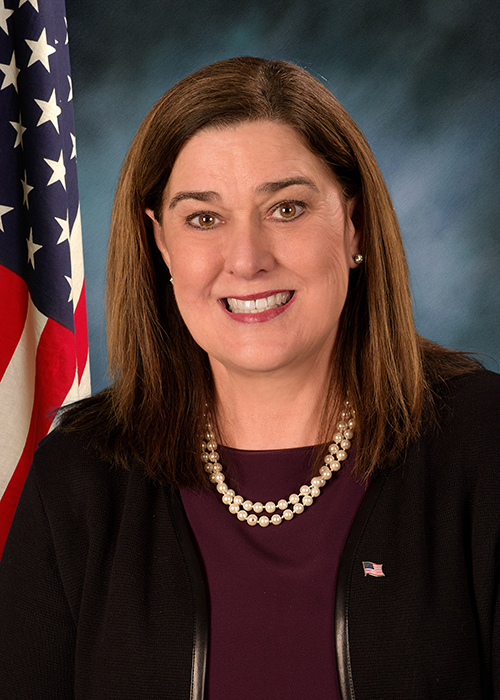
Sen. Jil Tracy
Sponsored bills
Amends the State Commemorative Dates Act. Provides that August 1 of each year is designated as Sweet Corn Appreciation Day, to be observed throughout the State as a day to celebrate the importance of sweet corn to Illinois agriculture, and in recognition of family farmers.
Amends the Grant Accountability and Transparency Act. Provides that the requirements established under the Act do not apply to awards, including capital appropriated funds, made by the Department of Transportation to units of local government for the purposes of surface transportation projects utilizing State and federal funds. Provides that the Act shall recognize that federal and federal pass-through awards from the Department of Transportation to units of local government are governed by and must comply with specified federal guidelines. Effective immediately. House Committee Amendment No. 1 Provides that the requirements established under the Grant Accountability and Transparency Act do not apply to awards, including capital appropriated funds, made by the Department of Transportation to units of local government for the purposes of transportation (rather than surface transportation) projects utilizing State and federal funds. Senate Floor Amendment No. 1 Makes changes to the engrossed bill to provide that the requirements do not apply to awards made by the Department of Transportation to units of local government for the purposes of transportation projects utilizing State funds, federal funds, or both State and federal funds (rather than State and federal funds).
Amends the Invest in Kids Act. Makes a formatting change to create a first priority group for eligible students who received a scholarship from a scholarship granting organization during the previous school year. Provides that qualified schools may establish a maximum scholarship amount, which may not exceed the necessary costs and fees for attendance at the qualified school. Provides that the qualified school shall notify the scholarship granting organization of its necessary costs and fees as well as any maximum scholarship amount set by the school. Effective immediately. Senate Committee Amendment No. 1 Replaces everything after the enacting clause. Reinserts the provisions of the engrossed bill with the following changes. Specifies that the maximum scholarship amount set by a qualified school is subject to the limitations provided under existing law.
Amends the Illinois Lottery Law. Provides that the Illinois Veterans Assistance Fund shall make grants, fund additional services, or conduct additional research projects relating to veterans' behavioral health services (rather than veterans' post traumatic stress disorder) and veterans' emergency financial assistance, including, but not limited to, past due utilities, housing, and transportation costs.
Creates the Illinois Industrial Biotechnology Partnership Act. Establishes the Industrial Biotechnology Public-Private Partnership as a State-sponsored board consisting of specified members to promote and market Illinois as a destination for research, development, and commercialization for industrial biotechnology. Provides for the appointment of members to the Partnership. Provides requirements concerning meetings and compensation. Provides for administrative and other support to the Partnership. Provides for duties and funding of the Partnership. Provides reporting requirements. Provides for the adoption of rules. Defines terms. Amends the Department of Commerce and Economic Opportunity Law. Creates the Industrial Biotechnology Workforce Development Grant Program. Provides that the Program shall provide grants for the purpose of fostering a well-trained and well-skilled industrial biotechnology workforce. Provides funding and eligibility requirements. Provides reporting requirements. Provides for the adoption of rules. Amends the State Finance Act. Creates the Industrial Biotechnology Human Capital Fund and Industrial Biotechnology Capital Maintenance Fund as special funds in the State treasury for specified purposes. Provides for funding of each Fund. Allows the use of Fund moneys for specified grants. Provides reporting requirements. Provides for the adoption of rules. Amends the Economic Development for a Growing Economy Tax Credit Act. Requires the Department of Commerce and Economic Opportunity to evaluate the tax credit program regarding employment and investment criteria to ensure that the program is applicable to both small startup firms as well as existing companies in the industrial biotechnology field. House Committee Amendment No. 2 Deletes reference to: 20 ILCS 605/605-1055 new 30 ILCS 105/6z-124 new 30 ILCS 105/6z-125 new 35 ILCS 10/5-75 Adds reference to: 20 ILCS 605/605-1095 new 30 ILCS 105/6z-130 new 30 ILCS 105/6z-131 new Replaces everything after the enacting clause. Reinserts the provisions of the engrossed bill with changes. Makes changes to the membership of the Industrial Biotechnology Public-Private Partnership. Provides that members shall be appointed within 90 days (instead of 30 days) after the effective date of the Act. Provides that the Partnership shall develop and direct efforts to attract companies to use existing Illinois facilities for research, development, and pre-commercialization activities. Provides that the Department of Commerce and Economic Opportunity, or a non-profit organization designated by the Department of Commerce and Economic Opportunity, shall provide administrative and other support to the Partnership (instead of the Department of Commerce and Economic Opportunity alone). Provides that the Partnership is dissolved on December 31, 2025. Provides that certain grant programs created in the engrossed bill are subject to appropriation. Contains provisions concerning private matching funds necessary for the expenditure of funds appropriated to the Department of Commerce and Economic Opportunity for the use of the Industrial Biotechnology Public-Private Partnership. Provides that reports concerning the grant programs established in the bill are due on or before January 31 of the year following the fiscal year in which the moneys are allocated. Removes amendatory provisions requiring the Department of Revenue to evaluate the Economic Development for a Growing Economy Tax Credit Program. Makes conforming and other changes.
Amends the Code of Criminal Procedure of 1963. Provides that in a prosecution for a criminal offense defined in the Sex Offense Article of the Criminal Code of 1961 or the Criminal Code of 2012 or for criminal sexual assault, aggravated criminal sexual assault, predatory criminal sexual assault of a child, criminal sexual abuse, or aggravated criminal sexual abuse when the alleged victim of the offense was under 18 years of age at the time of the offense, the court may exclude from the proceedings while the victim is testifying, regardless of the alleged victim's age at the time of the victim's courtroom testimony, all persons, who, in the opinion of the court, do not have a direct interest in the case, except the media. Effective immediately. Senate Committee Amendment No. 1 Provides that for the purposes of excluding disinterested parties, the court shall enter its finding that parties are disinterested and the basis for that finding into the record. House Floor Amendment No. 3 Provides that when the court publishes to the trier of fact videos, photographs, or any depiction of a minor under 18 years of age engaged in a sex act, the court may exclude from the proceedings all persons, who in the opinion of the court, do not have a direct interest in the case, except the media.
Creates the Music Therapy Licensing and Practice Act. Provides for licensure of professional music therapists and clinical music therapists by the Department of Financial and Professional Regulation. Establishes the Music Therapy Advisory Committee. Establishes the powers and duties of the advisory committee, including advising the Department on all matters pertaining to licensure, education, and continuing education requirements for licensees. Establishes the powers and duties of the Department, including prescribing rules defining what constitutes an appropriate curriculum for music therapy, reviewing the qualifications of applicants for licenses, investigating alleged violations of the Act, conducting hearings on disciplinary and other matters, and establishing a schedule of fees for the administration and enforcement of the Act. Establishes qualifications for licensure as a professional music therapist and clinical music therapist. Establishes grounds for discipline of a license. Provides for civil and criminal penalties for violations of the Act. Creates provisions concerning formal hearings, including transcripts of proceedings, appointment of hearing officers, subpoenas and depositions, and rehearings. Provides for judicial review of all final administrative decisions of the Department. Preempts home rule. Effective immediately. Senate Committee Amendment No. 2 Replaces everything after the enacting clause. Reinserts the provisions of the introduced bill with the following changes: Removes all references to licensed clinical music therapists. Changes references to the "Music Therapy Advisory Committee" and "Advisory Committee" to "Music Therapy Advisory Board" and "Advisory Board". Changes the definition of "music therapy". Adds provisions concerning applicants' and licensees' addresses of record and email addresses of record. Makes changes concerning composition and powers and duties of the Music Therapy Advisory Board. Makes changes in provisions concerning exemptions from the Act, collaboration with audiologists and speech-language pathologists, the practice of psychotherapy by licensed music therapists, the powers and duties of the Department of Financial and Professional Regulation, qualifications for licensure, license renewal, grounds for discipline, violations, investigations, hearings, and findings. Removes provisions concerning restrictions and limitations. Makes other changes. Effective immediately. Senate Floor Amendment No. 3 Replaces everything after the enacting clause. Reinserts the provisions of Senate Amendment No. 2 with the following changes. Provides that "music therapy intervention" as defined occurs during a therapist-client relationship and includes collaborating with and educating the client and the family, caregiver of the client, or any other appropriate person regarding the needs of the client that are being addressed in music therapy and the manner in which the music therapy treatment addresses those needs in compliance with state and federal law. Provides that the Music Therapy Advisory Board shall advise the Department of Financial and Professional Regulation on all matters pertaining to disciplinary actions for practice of music therapy in the State. Removes a provision that provides that nothing in the Act may be construed to prohibit the practice of a person whose training and national certification attests to the individual's preparation and ability to practice the individual's certified profession or occupation. Provides that the Secretary of Financial and Professional Regulation shall issue a license to an applicant for a professional music therapist license if the applicant is of good moral character. Provides that in determining moral character under the provisions of qualifications for licensure, the Department may take into consideration whether the applicant has engaged in conduct which would constitute grounds for discipline under the Act. Removes as a ground for discipline the failure to file a return, or to pay the tax, penalty, or interest shown in a filed return, or to pay any final assessment of tax, penalty, or interest, as required by a tax Act administered by the Department of Revenue. Adds that whenever the Secretary believes substantial justice (rather than only justice) has not been done in the revocation, suspension, or refusal to issue or renew a license or the discipline of a licensee, the Secretary may order a rehearing. Removes provisions concerning: the suspension of a license for failure to pay restitution; the surrender of a license; and any conflict with the Act and any other law. Makes other and conforming changes. House Floor Amendment No. 1 Adds reference to: 5 ILCS 80/4.38 Repeals the Music Therapy Licensing and Practice Act on January 1, 2028.

Amends the Community Mental Health Act. Makes a technical change in a Section concerning the short title. Senate Floor Amendment No. 1 Deletes reference to: 405 ILCS 20/0.1 from Ch. 91 1/2, par. 300.1 Adds reference to: 410 ILCS 50/3.2 from Ch. 111 1/2, par. 5403.2 Replaces everything after the enacting clause. Amends the Medical Patient Rights Act. Removes language providing that nothing in the Act shall restrict the ability of a health care facility to regulate the hours of visitation, the number of visitors per patient or the movement of visitors within the facility. Provides that, during a period for which the Governor has issued a proclamation declaring that a disaster exists or in the event of an outbreak or epidemic of a communicable disease in the community in which the health care facility is located, a health care facility shall ensure an opportunity for at least one visitor, not counting a clergy person, to visit a resident or patient of the health care facility. Requires visitation to be subject to the guidelines, conditions, and limitations of the health care facility's visitation policy and any rules or guidelines established by the U.S. Centers for Medicare and Medicaid Services and the Centers for Disease Control and Prevention. Provides that visitors may be required by the health care facility to submit to health screenings necessary to prevent the spread of infectious disease. Provides that a health care facility may restrict a visitor who does not pass its health screening requirement and require a visitor to adhere to infection control procedures. Provides that a health care facility may deny visitation under the Act if the situation demands. Makes other changes. Effective immediately. House Floor Amendment No. 2 Replaces everything after the enacting clause. Reinserts the provisions of the engrossed bill with the following changes. Authorizes a skilled nursing home, extended care facility, or intermediate care facility to prohibit an individual from visiting a resident or patient of the nursing home or facility if specific facts demonstrate that the individual would endanger his or her physical health or safety or the health or safety of a resident, patient, or health care worker of the nursing home or facility. Requires such a denial to be in writing and provided to the individual and the resident or patient with whom the individual was denied visitation. Requires each skilled nursing home, extended care facility, and intermediate care facility to inform each resident of the nursing home or facility (or that individual's representative) of the resident's visitation rights and the facility's visitation-related policies and procedures. Specifies that these nursing homes and facilities must not restrict, limit, or otherwise deny visitation privileges on the basis of race, color, national origin, religion, sex, gender identity, sexual orientation, or disability. Requires the nursing homes and facilities to ensure that all visitors enjoy full and equal visitation privileges, consistent with the residents' preferences.
Amends the Technology Advancement and Development Act. Makes a technical change in a Section concerning the short title. Senate Floor Amendment No. 1 Deletes reference to: 20 ILCS 700/1001 Adds reference to: 20 ILCS 505/21.6 new Replaces everything after the enacting clause. Amends the Children and Family Services Act. Provides that a child protective investigator is authorized to carry and use personal protection spray devices, such as mace, pepper mace, or pepper gas, for self-defense purposes while investigating a report of child abuse or neglect if the child protective investigator has been trained on the proper use of such personal protection spray devices by the Illinois State Police. Requires the Illinois State Police to establish a training program for child protective investigators on the proper use of personal protection spray devices for self-defense purposes. Requires the Department of Children and Family Services to provide funding for the training program. Effective immediately. House Floor Amendment No. 3 Replaces everything after the enacting clause. Amends the Children and Family Services Act. Provides that a front-line staff member is authorized to carry and use personal protection spray devices, as defined, for self-defense purposes while investigating a report of child abuse or neglect if the front-line staff member has been trained on the proper use of such personal protection spray devices by the Department of Children and Family Services, in consultation with the Illinois State Police. Provides that by January 1, 2023, the Department, in consultation with the Illinois State Police, shall (i) identify a list of approved personal protection spray devices and (ii) jointly develop and approve a training curriculum and program for front-line staff members on the proper use of such personal protection spray devices for self-defense purposes. Requires the Department to provide funding for the training program. Sets forth specific circumstances under which a front-line staff member may use a personal protection spray device including if the front-line staff member: (i) reasonably believes that use is necessary to protect the staff member from an imminent physical assault posed by another person; (ii) uses the device to incapacitate a person attempting a physical assault in order to avoid imminent physical harm and to facilitate escape from danger when there is no other alternative available to the front-line staff member; and (iii) except in exigent circumstances, has issued a verbal warning to persons in close proximity to the spray area. Provides that a front-line staff member's use of personal protection spray devices during the performance of his or her professional duties in any manner other than as expressly authorized under the amendatory Act shall be prohibited by Department policy. Provides that whenever a front-line staff member discharges a personal protection spray device, the front-line staff member shall complete an incident report. Provides that, following the discharge of a personal protection spray device that results in exposure, the front-line staff member shall notify his or her supervisor and, if appropriate, call 9-1-1 for emergency response or responders as soon as reasonably practical and when safe to do so. Requires the Department to annually report and publish on its website, beginning January 1, 2024, the number of front-line staff members trained to carry personal protection spray devices, the number of front-line staff members reporting personal protection spray devices and the make or model of the devices, and the number of reported uses of personal protection spray devices by service region. Provides that, in addition, the Department shall report each incident involving the deployment of a personal protection spray device that occurred during the preceding calendar year, including: (1) the estimated age, gender, and race of the intended target of the personal protection spray device; (2) whether there were injuries to the intended target resulting from the deployment of the personal protection spray device; (3) the age, gender, and race of the front-line staff member who utilized the personal protection spray device; and (4) whether there were injuries to the front-line staff member resulting from the incident. Requires the Department to also report yearly data on the number of personal protection spray device deployments found to be against Department policy. Effective immediately.