

Amends the Criminal Code of 2012. Provides that when the victim is under 18 years of age at the time of the offense or a person with a disability, a prosecution for grooming may be commenced within 10 years after the discovery of such an offense by a person or agency having the legal duty to report the offense or in the absence of such discovery, within 10 years after the proper prosecuting officer becomes aware of the offense. In the definition provisions of the Sex Offenses Article of the Code, includes "sibling" in the definition of "family member" and includes in the definition of "unconscious of the nature of the act", incapable of resisting because the victim was asleep, unconscious, or surprised such that the victim could not give voluntary, intelligent, and knowing agreement to the sexual act. In the definition of "family member" deletes provision that if the victim is a child under 18 years of age, an accused must have resided in the household with the child continuously for at least 6 months. Provides that a person also commits grooming when he or she knowingly engages in a pattern of conduct that entices, persuades, induces, or coerces a child to engage or participate in criminal sexual activity or is for the purpose of sexual gratification or arousal of the victim, the accused, or another. Increases the penalty for grooming from a Class 4 to a Class 3 felony. Changes references in the Code from "child pornography" to "child sexual abuse images". Defines "pattern" and "sexual activity". Amends the Code of Criminal Procedure of 1963. Provides that the court may set any conditions it finds just and appropriate on the taking of testimony of a victim or witness who is under 18 years of age or an intellectually disabled person or a person affected by a developmental disability (rather than a victim who is a child under the age of 18 years or a moderately, severely, or profoundly intellectually disabled person or a person affected by a developmental disability), involving the use of a facility dog in any criminal proceeding (rather than in a prosecution of criminal sexual assault, predatory criminal sexual assault of a child, aggravated criminal sexual assault, criminal sexual abuse, aggravated criminal sexual abuse, or any violent crime). Makes changes concerning the admissibility of evidence in prosecutions for involuntary servitude, involuntary sexual servitude of a minor, or trafficking in persons. House Floor Amendment No. 1 Adds reference to: 20 ILCS 4026/10 110 ILCS 57/5 225 ILCS 10/3.3 325 ILCS 5/4.5 325 ILCS 5/11.1 from Ch. 23, par. 2061.1 325 ILCS 15/3 from Ch. 23, par. 2083 325 ILCS 40/2 from Ch. 23, par. 2252 325 ILCS 47/10 705 ILCS 135/15-70 705 ILCS 405/3-40 725 ILCS 5/124B-10 725 ILCS 5/124B-100 725 ILCS 5/124B-420 725 ILCS 5/124B-500 725 ILCS 215/2 from Ch. 38, par. 1702 725 ILCS 215/3 from Ch. 38, par. 1703 730 ILCS 5/3-1-2 from Ch. 38, par. 1003-1-2 730 ILCS 5/3-12.5-10 730 ILCS 5/5-5-3 730 ILCS 5/5-5-3.2 730 ILCS 5/5-8-1 from Ch. 38, par. 1005-8-1 730 ILCS 5/5-8-4 from Ch. 38, par. 1005-8-4 730 ILCS 5/5-9-1.7 from Ch. 38, par. 1005-9-1.7 730 ILCS 5/5-9-1.8 730 ILCS 150/2 from Ch. 38, par. 222 740 ILCS 128/10 Replaces everything after the enacting clause. Reinserts the provisions of the introduced bill, except: (1) changes the statute of limitations for grooming to provide that when the victim is under 17 years of age at the time of the offense or is a person with a disability, a prosecution for grooming may be commenced within 10 years after the victim or the person with a disability attains 17 years of age; (2) changes the name of the offenses of child sexual abuse material and aggravated child sexual abuse material to child sexual abuse material and aggravated child sexual abuse material; (3) retains the Class 4 felony penalty for grooming; (4) deletes references to criminal transmission of HIV in various statutes; (5) in the definitions provisions of the Sex Offenses Article of the Criminal Code of 2012, provides that "family member" also means, if the victim is a child under 18 years of age, an accused who has resided in the household with the child continuously for at least 3 (rather than 6) months; (6) provides that a person also commits sexual exploitation of a child if in the presence or virtual presence, or both, of a child and with knowledge that a child or one whom he or she believes to be a child would view his or her acts, that person knowingly entices, coerces, or persuades a child to participate in the production of the recording or memorializing a sexual act of persons ages 18 or older; provides that a violation is a Class 4 felony for a first offense; and a Class 3 felony for a second or subsequent offense, or if the person has been previously convicted of a sex offense; and (7) amends various Acts to change references to "child pornography" to "child sexual abuse material".
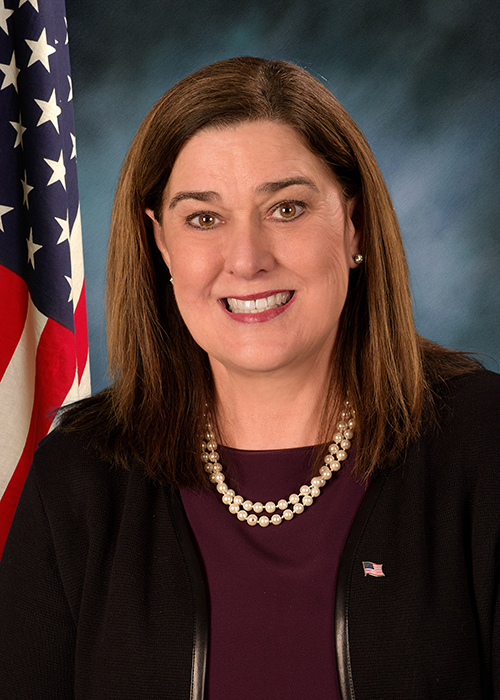
Sen. Jil Tracy
Sponsored bills
Amends the Election Code. Provides that, not more than 90 days nor less than 45 days before a general election (currently, before a general or consolidated election), each election authority shall notify all qualified voters, except voters who have enrolled in permanent vote by mail status and voters who have opted out of permanent vote by mail notices, of the option to obtain permanent vote by mail status (currently, notice is required for all qualified voters). Adds an opt-out option to the application for permanent vote by mail status, and makes other conforming changes.
Amends the Property Tax Code. Provides that, if an applicant who qualifies for the senior citizens assessment freeze homestead exemption moves to a different residence in the State and continues to qualify for the exemption, then the new residence shall qualify for the exemption beginning with the taxable year in which the qualified applicant takes ownership of the new residence. Provides that the base year shall be the year prior to the year in which the qualified applicant takes ownership of the new residence. Effective immediately.
Amends the Telehealth Act. Provides that the Act applies to all health insurance coverage offered by health insurance issuers regulated by the Department of Insurance or the Department of Healthcare and Family Services and the medical assistance program authorized under the Illinois Public Aid Code. Provides that any policy, contract, or certificate of health insurance coverage that does not distinguish between in-network and out-of-network providers shall be subject to the Act as though all providers were in-network. Provides that health insurance issuers shall cover all telehealth services rendered by a health care professional to deliver any clinically appropriate, medically necessary covered services. Restricts health insurance issuers from engaging in specified activities. Provides that health care professionals and facilities shall determine the appropriateness of specific sites, technology platforms, and technology vendors for a telehealth service, as long as delivered services adhere to privacy laws. Changes the term "telehealth" to "telehealth services". Makes corresponding changes. Defines terms. Amends the Illinois Insurance Code. In provisions concerning coverage for telehealth services, makes changes to definitions. Provides that coverage and reimbursement for telehealth services delivered by health care professionals and facilities shall comply with the Telehealth Act. Makes other changes. Amends the Illinois Public Aid Code. Provides that the Department and managed care organizations shall comply with the Telehealth Act and removes provisions concerning behavioral health and medical services via telehealth. Makes other changes. Amends the Illinois Administrative Procedure Act to provide for emergency rulemaking. Effective immediately. House Floor Amendment No. 1 Deletes reference to: 5 ILCS 100/5-45.10 new 225 ILCS 150/20 new 225 ILCS 150/25 new 225 ILCS 150/30 new 225 ILCS 150/35 new Replaces everything after the enacting clause. Amends the Illinois Insurance Code. Provides that an individual or group policy of accident or health insurance or a managed care plan that is amended, delivered, issued, or renewed on or after the effective date of the amendatory Act shall cover all telehealth services rendered by a health care professional to deliver any clinically appropriate, medically necessary covered services, and shall not engage in specified activities. Provides that any policy, contract, or certificate of health insurance coverage that does not distinguish between in-network and out-of-network providers shall be subject to the Act as though all providers were in-network. Provides that health care professionals and facilities shall determine the appropriateness of specific sites, technology platforms, and technology vendors for a telehealth service, as long as delivered services adhere to privacy laws. Provides that there shall be no restrictions on originating site requirements for telehealth coverage or reimbursement to the distant site. Defines terms. Amends the Telehealth Act. Changes the term "telehealth" to "telehealth services". Amends the Illinois Public Aid Code. Provides that the Department of Healthcare and Family Services and managed care organizations shall comply with specified provisions of the Illinois Insurance Code and removes provisions concerning behavioral health and medical services via telehealth. Amends the Illinois Administrative Procedure Act to provide for emergency rulemaking. In provisions concerning coverage for telehealth services, removes language that provides that coverage and reimbursement for telehealth services delivered by health care professionals and facilities shall comply with the Telehealth Act. Removes changes to the Telehealth Act. Makes other changes. Effective immediately. House Floor Amendment No. 2 In provisions in the Illinois Administrative Procedure Act concerning emergency rulemaking, provides that provisions allowing the Department of Insurance and the Department of Healthcare and Family Services to adopt emergency rules are repealed on January 1, 2022 (rather than January 1, 2026). In provisions concerning coverage for telehealth services, provides that an individual or group policy of accident or health insurance or a managed care plan that is amended, delivered, issued, or renewed on or after the effective date of the amendatory Act shall not require that in-person contact occur between a health care professional and a patient (rather than in-person contact shall not occur between a health care professional and a patient, except before an initial e-visit or virtual check-in in order to establish a patient relationship).
Mourns the passing of Judge Ramón Manuel Escapa of Rushville.
Mourns the death of Thomas Oakley of Quincy.
Mourns the passing of Gerald Evans Gill of Michigan, formerly of Virginia, Illinois.
Mourns the death of Richard Henry "Rich" Niemann Sr.
Creates the Ensuring a More Qualified, Competent, and Diverse Community Behavioral Health Workforce Act. Requires the Department of Human Services, Division of Mental Health, to award grants or contracts to licensed community mental health centers or behavioral health clinics to establish or enhance training and supervision of interns and behavioral health providers-in-training pursuing licensure as a licensed clinical social worker, licensed clinical professional counselor, and licensed marriage and family therapist. Creates the Mental Health Assessment Reform Act to remove barriers to care in the Medicaid mental health assessment and treatment planning process. Creates the Recovery and Mental Health Tax Credit Act. Requires the Department to establish and administer a recovery tax credit program to provide tax incentives to qualified employers who employ eligible individuals in recovery from a substance use disorder or mental illness in part-time and full-time positions. Creates an Advisory Council to advise the Department regarding employment of persons with mental illnesses and substance use disorders in minority communities. Amends the Illinois Income Tax Act to make conforming changes. Amends the Department of Healthcare and Family Services Law of the Civil Administrative Code. Requires the Department of Healthcare and Family Services to take all necessary action to ensure that proposed modifications, additions, deletions, or amendments to the healthcare and behavioral healthcare (mental health and substance use disorder) provisions of the Illinois Public Aid Code are announced, shared, disseminated, and explained prior to the Department undertaking such proposed modifications, if legally possible and subject to federal law. Amends the Clinical Social Work and Social Work Practice Act. Provides that an individual applying for licensure as a clinical social worker who has been licensed at the independent level in another jurisdiction for 5 (rather than 10) consecutive years without discipline is not required to submit proof of completion of education and supervised clinical professional experience. Makes similar changes to the Marriage and Family Therapy Licensing Act and to the Professional Counselor and Clinical Professional Counselor Licensing and Practice Act. Effective immediately. Senate Committee Amendment No. 1 Adds reference to: 225 ILCS 15/13 from Ch. 111, par. 5363 225 ILCS 20/11 from Ch. 111, par. 6361 225 ILCS 107/50 Reinserts the provisions creating the Recovery and Mental Health Tax Credit Act with the following changes: Requires the Department of Human Services to maintain an electronic listing of the tax credit certificates it issues under the recovery tax credit program so that the Department of Revenue may confirm the eligibility of qualified employers for the tax credit. Provides that the tax credit authorized under the Act may not be carried forward. Contains provisions concerning tax credits for partners, shareholders of S corporations, and owners of limited liability companies. Makes other changes. Amends the Illinois Income Tax Act. Provides that a taxpayer who has been awarded a credit under the Recovery and Mental Health Tax Credit Act is entitled to a credit against the tax imposed under specified provisions of the Illinois Income Tax Act. Amends the Clinical Psychologist Licensing Act, the Clinical Social Work and Social Work Practice Act, and the Professional Counselor and Clinical Professional Counselor Licensing and Practice Act. Provides that notwithstanding any other provision of law certain requirements set forth in those Acts to restore an inactive or expired license of 5 years or less are suspended for specified licensed clinicians who have had no disciplinary action taken against their licenses in this State or in any other jurisdiction during the entire period of licensure. Senate Floor Amendment No. 2 Deletes reference to: 5 ILCS 100/5-45.21 new Removes provisions creating the Mental Health Assessment Reform Act. Removes amendatory changes made to the Illinois Administrative Procedure Act permitting the Department of Healthcare and Family Services to adopt emergency rules to implement the Mental Health Assessment Reform Act. Senate Floor Amendment No. 3 Reinserts the provisions creating the Recovery and Mental Health Tax Credit Act with the following changes: Requires the Department of Human Services to maintain an electronic listing of the certificates of tax credit issued by which the Department of Revenue may verify tax credit certificates issued to qualifying employers. Provides that the tax credit authorized under the Act may not be carried forward. Provides that a taxpayer who is a qualified employer who has received a certificate of tax credit from the Department shall be allowed a credit against the tax imposed equal to the amount shown on such certificate of tax credit. Provides that if the taxpayer is a partnership or Subchapter S corporation the credit shall be allowed to the partners or shareholders in accordance with the determination of income and distributive share of income as provided under specified provisions of the Internal Revenue Code. Makes other changes. Amends the Illinois Income Tax Act. Provides that for taxable years beginning on or after January 1, 2023, a taxpayer who has been awarded a credit under the Recovery and Mental Health Tax Credit Act is entitled to a credit against the tax imposed under specified provisions of the Illinois Income Tax Act. Senate Floor Amendment No. 5 Deletes reference to: 20 ILCS 2205/2205-40 new Removes the amendatory changes made to the Department of Healthcare and Family Services Law requiring the Department of Healthcare and Family Services to take all necessary action to ensure that proposed modifications, additions, deletions, or amendments to the healthcare and behavioral healthcare (mental health and substance use disorder) provisions of the Illinois Public Aid Code are announced, shared, disseminated, and explained prior to the Department undertaking such proposed modifications, if legally possible. House Floor Amendment No. 1 Further amends the Clinical Psychologist Licensing Act. In a provision suspending the requirements under the Act for restoration of an inactive or expired clinical psychologist license, provides that an individual may not restore his or her license more than once. Further amends the Clinical Social Work and Social Work Practice Act. In a provision suspending the requirements under the Act for restoration of an inactive or expired clinical social worker license, provides that an individual may not restore his or her license more than once. Removes a provision exempting individuals applying for a clinical social worker license who are licensed in another jurisdiction from submitting proof of passage of the examination for the practice of clinical social work as authorized by the Department of Financial and Professional Regulation. Further amends the Professional Counselor and Clinical Professional Counselor Licensing and Practice Act. In a provision suspending the requirements under the Act for restoration of an inactive or expired clinical professional counselor license, provides that an individual may not restore his or her license more than once. Makes other changes. House Floor Amendment No. 3 Adds reference to: 210 ILCS 49/1-102 Further amends the Specialized Mental Health Rehabilitation Act of 2013. Defines the term "APRN". Provides that, for purposes of the Act, any required psychiatric visit to a consumer may be conducted by an APRN or by a physician.
Amends the Food Handling Regulation Enforcement Act. Provides that a food service establishment may not permit employees to use latex gloves in the preparation and handling of food. Provides that, to encourage compliance, a food service establishment shall receive a notification of warning for the first violation. House Floor Amendment No. 1 Deletes reference to: 410 ILCS 625/3.09 new Adds reference to: New Act Replaces everything after the enacting clause. Creates the Latex Glove Ban Act. Provides that, on and after January 1, 2023, a food service establishment may not permit employees to use latex gloves in the preparation and handling of food. Provides that, if latex gloves must be used in the preparation of food due to a crisis that interrupts a food service establishment's ability to source nonlatex gloves, a sign shall be prominently placed at the point of order or point of purchase clearly notifying the public of the temporary change. Provides that, to encourage compliance, the Department of Public Health shall send a notice of warning to a food service establishment for its first violation of specified provisions. Prohibits the use of latex gloves by (1) EMS personnel on and after January 1, 2023 and (2) health care facility personnel on and after January 1, 2024. Provides that, if a crisis exists that interrupts the ability to reliably source nonlatex gloves, EMS personnel and health care facility personnel may use latex gloves upon a patient, but shall prioritize, to the extent possible, using nonlatex gloves for the treatment of specified patients. Defines terms.