

Amends the Criminal Code of 2012. Provides that a person also commits disorderly conduct when he or she knowingly uses a drone to harass or conduct surveillance of another person without the consent of that other person and with the intent to alarm or disturb that other person. Defines "drone". Provides that a violation is a Class A misdemeanor.
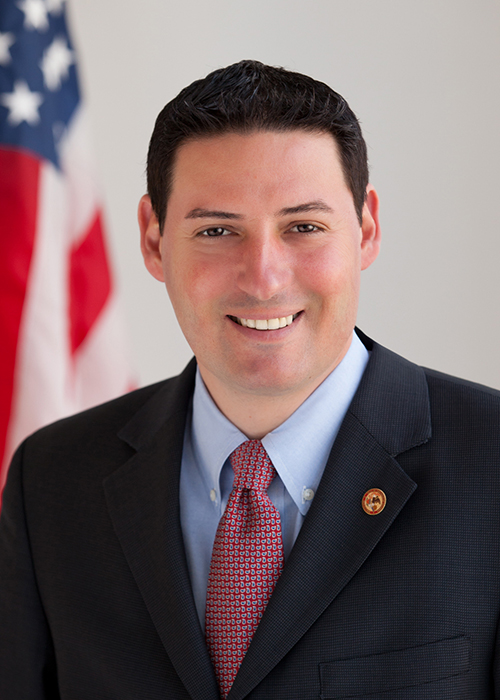
Rep. John Cabello
Sponsored bills
Amends the Criminal Code of 2012 relating to first degree murder. Adds and eliminates aggravating factors for which the death penalty may be imposed. Amends the Code of Criminal Procedure of 1963. Eliminates provision that abolishes the sentence of death. Enacts the Capital Crimes Litigation Act of 2016. Provides that all unobligated and unexpended moneys remaining in the Death Penalty Abolition Fund on the effective date of the amendatory Act shall be transferred into the Capital Litigation Trust Fund. Amends the State Appellate Defender Act. Provides that in cases in which a death sentence is an authorized disposition, the State Appellate Defender shall provide trial counsel with legal assistance and the assistance of expert witnesses, investigators, and mitigation specialists from funds appropriated to the State Appellate Defender specifically for that purpose by the General Assembly. Provides that the Office of State Appellate Defender shall not be appointed to serve as trial counsel in capital cases.
Amends the Cannabis Control Act. Creates the offense of unlawful use of cannabis-based product manufacturing equipment. Provides that a person commits the offense when he or she knowingly engages in the possession, procurement, transportation, storage, or delivery of any equipment used in the manufacturing of any cannabis-based product, including, but not limited to canisters of butane gas with the intent to manufacture, compound, covert, produce, derive, process, or prepare either directly or indirectly by chemical extraction or independently by means of chemical synthesis, any product of cannabis. Provides that a violation is a Class 2 felony.
Amends the Criminal Code of 2012 relating to first degree murder. Adds and eliminates aggravating factors for which the death penalty may be imposed. Amends the Code of Criminal Procedure of 1963. Eliminates provision that abolishes the sentence of death. Enacts the Capital Crimes Litigation Act of 2015. Provides that all unobligated and unexpended moneys remaining in the Death Penalty Abolition Fund on the effective date of the amendatory Act shall be transferred into the Capital Litigation Trust Fund. Amends the State Appellate Defender Act. Provides that in cases in which a death sentence is an authorized disposition, the State Appellate Defender shall provide trial counsel with legal assistance and the assistance of expert witnesses, investigators, and mitigation specialists from funds appropriated to the State Appellate Defender specifically for that purpose by the General Assembly. Provides that the Office of State Appellate Defender shall not be appointed to serve as trial counsel in capital cases.
Amends the Property Tax Code. In a Section concerning the Senior Citizens Homestead Exemption, provides that in all counties (now, in counties with less than 3,000,000 inhabitants), the county board may by resolution provide that if a person has been granted a senior citizens homestead exemption, the person qualifying need not reapply for the exemption. Provides that the county recorder of deeds shall alert the assessor whenever the transfer of ownership of any property receiving a Senior Citizens Homestead Exemption has occurred. Provides that, if such a transfer occurs, the assessor shall remove the exemption and provide the new property owner with information concerning reapplication. Effective immediately.
Appropriates $2 from the General Revenue Fund to the Joint Committee on Administrative Rules for its FY 16 ordinary and contingent expenses.
Mourns the death of United States Air Force Sergeant Jeremie James Kobler.
Amends the Code of Criminal Procedure of 1963. Provides that if the defendant pleads guilty the plea shall not be accepted until the court shall have fully explained to the defendant the following: (1) the maximum and minimum penalty provided by law for the offense which may be imposed by the court (rather than the consequences of the plea and the maximum penalty provided by law for the offense which may be imposed by the court); (2) any possible increased sentence by reason of the fact of a prior conviction or future conviction and any possibility of the imposition of consecutive sentences; (3) any registration requirement that accompanies the plea and the restrictions associated with the registration; and (4) the consequences of the plea on a defendant's ability to: (A) retain or obtain housing in the public or private market; (B) acquire loans for educational or other purposes; (C) enroll in certain degree programs; (D) retain or obtain employment; (E) retain or obtain an occupational or driver's license; (F) possess a firearm; and (G) retain or obtain custody of a child.
Creates the Child Bereavement Leave Act and amends the State Finance Act. Provides that an employee may use specified amounts of bereavement leave to grieve the death of the employee's child, attend services in relation to the death of the employee's child, or make arrangements necessitated by the death of the employee's child. Provides for enforcement by the Department of Labor. Provides for civil penalties. Authorizes the Attorney General to collect penalties. Creates the Child Bereavement Fund as a special fund in the State treasury. Effective immediately.
Amends the Unified Code of Corrections. Makes a technical change in a Section concerning the organization of the Department of Corrections and the Department of Juvenile Justice.