

Amends the Illinois Municipal Code. Requires the concurrence of a majority of all members of the city council for the passage of a motion or resolution that provides for the expenditure of tax dollars on a charitable or non-profit organization. Further provides that any proposal for the expenditure of tax dollars on a charitable or non-profit organization shall be listed as a separate item on the council's agenda. Limits the concurrent exercise of home rule powers. Effective immediately.
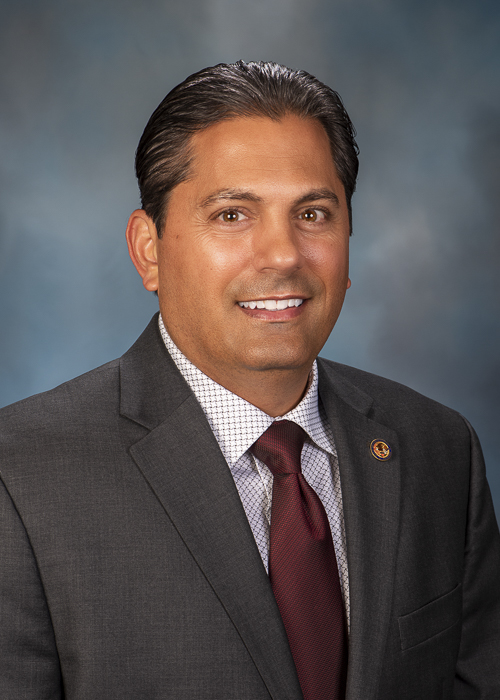
Rep. Anthony DeLuca
Sponsored bills
Amends the Criminal Code of 1961. Creates the offense of falsifying an order of protection or civil no contact order. Provides that a person commits the offense when he or she knowingly makes or causes to be made any false statement intending the statement to be relied upon in issuing or enforcing an order of protection or civil no contact order. Provides that a first offense is a Class A misdemeanor and a second or subsequent offense is a Class 4 felony. Amends the Civil No Contact Order Act and the Illinois Domestic Violence Act of 1986. Provides that whenever any person is found guilty of falsifying an order of protection or civil no contact order and the issuing court materially relied on the false statement when it issued the order, then the issuing court shall vacate that order. Provides that in such case, all records relating to the petition filed under the respective Act shall be expunged. Provides that if the statement was not material to the issuance of the order, then the court shall modify the order to the extent justice requires.
Amends the Code of Criminal Procedure of 1963 and the Illinois Domestic Violence Act of 1986. Provides that upon petition, the court shall order that a person against whom an emergency order of protection was issued shall have all records related to the emergency order expunged (unless the person violated the order) from the court's records and from the Department of the State Police's Law Enforcement Agencies Data System if: (1) the person who sought the emergency order fails to seek a plenary order of protection before the emergency order expires; (2) there is an agreed dismissal; or (3) the court denies the issuance of a plenary order of protection following the emergency order. Provides that the clerk shall immediately file the expungement order and all records to be expunged shall be expunged no later than 3 business days after the order. Effective June 1, 2012.
Amends the Illinois Municipal Code. Provides that any proposal for the expenditure of municipal funds on a charitable or non-profit organization shall be listed as a separate item on the council's agenda. Sets forth requirements concerning notice. Limits the concurrent exercise of home rule powers. Effective immediately.
Honors Rep. Lisa Dugan on her years of service in the General Assembly.
Resolves that there is created a task force to examine the advisability of consolidating the Department of Human Services' Divisions of Mental Health, Alcohol and Substance Abuse, and Developmental Disabilities into a new Division of Behavioral Health within the Department of Healthcare and Family Services as a cost-effective way to create systematic efficiencies within the State's healthcare system.
Amends the Criminal Code of 1961. Creates the offense of making a false statement to obtain an order of protection or civil no contact order. Provides that a person commits the offense when he or she knowingly makes or causes to be made any false statement intending the statement to be relied upon in issuing or enforcing an order of protection or civil no contact order. Provides that a violation is a Class 3 felony. Amends the Civil No Contact Order Act and the Illinois Domestic Violence Act of 1986. Provides that whenever any person is found guilty of making a false statement to obtain an order of protection or civil no contact order and the issuing court materially relied on the false statement when it issued the order, then the issuing court shall vacate that order. Provides that in such case, all records relating to the petition filed under the respective Act shall be expunged. Provides that if the statement was not material to the issuance of the order, then the court shall modify the order to the extent justice requires.
Amends the Illinois Municipal Code to provide that the corporate authorities of each municipality may authorize by ordinance the local liquor control commission to issue smoking licenses to establishments eligible for a smoking license under the Liquor Control Act of 1934. Amends the Liquor Control Act of 1934. Provides that a local liquor control commission, if authorized by ordinance, shall have the power to issue a smoking license to certain eligible establishments. Provides that an eligible establishment must be able to document that (i) it has disclosed to all employees that if a smoking license is granted to the establishment, smoking will be permitted on the premises; (ii) all employees have acknowledged receiving the disclosure; and (iii) it has an air filtration system that meets the size and use standards of the International Mechanical Code. Amends the Smoke Free Illinois Act to provide that smoking is allowed in any eligible establishment that has obtained a license to allow smoking on the premises from the local liquor control commission and that an eligible establishment must post prominent signage notifying the public that the establishment has been designated as a smoking establishment. Effective immediately.
Creates the Commission on Taxpayer Oversight and Reduction of State Spending Act. Creates the Commission on Taxpayer Oversight and Reduction of State Spending. Provides that the Commission shall conduct investigations, review the budget submitted by the Governor in order to make recommendations for reducing expenditures set forth in the budget, review activities of agencies and grant recipients, and consider State and local budgetary reductions by reduction or elimination of mandated expenditures or the consolidation of agencies and instrumentalities to eliminate waste and inefficiency. Sets forth the membership of the Commission. Provides that the Commission shall conduct at least one public hearing and may issue reports. Provides that the Governor shall respond, in writing, within 30 calendar days after the submission of the reports. Contains other provisions. Effective immediately.
Amends the Public Utilities Act. Makes a technical change in a Section concerning delivery services implementation plans.