

Amends the Illinois Insurance Code. Makes a technical change in a Section concerning the short title. House Floor Amendment No. 1 Deletes reference to: 215 ILCS 5/1 Adds reference to: 215 ILCS 5/356z.43 new 215 ILCS 125/5-3 from Ch. 111 1/2, par. 1411.2 Replaces everything after the enacting clause. Amends the Illinois Insurance Code. Provides that an individual or group policy of accident and health insurance or managed care plan that is amended, delivered, issued, or renewed on or after the effective date of the amendatory Act shall provide coverage for medically necessary comprehensive cancer testing and testing of blood or constitutional tissue for cancer predisposition testing as determined by a physician licensed to practice medicine in all of its branches. Provides that the coverage shall be provided without any prior authorization requirements. Defines terms. Makes a corresponding change in the Health Maintenance Organization Act. Senate Committee Amendment No. 1 Replaces everything after the enacting clause with the provisions of the engrossed bill with the following changes. Removes provisions amending the Illinois Insurance Code that provide that coverage for comprehensive cancer testing shall be provided without any prior authorization requirements. Removes a definition of "prior authorization".
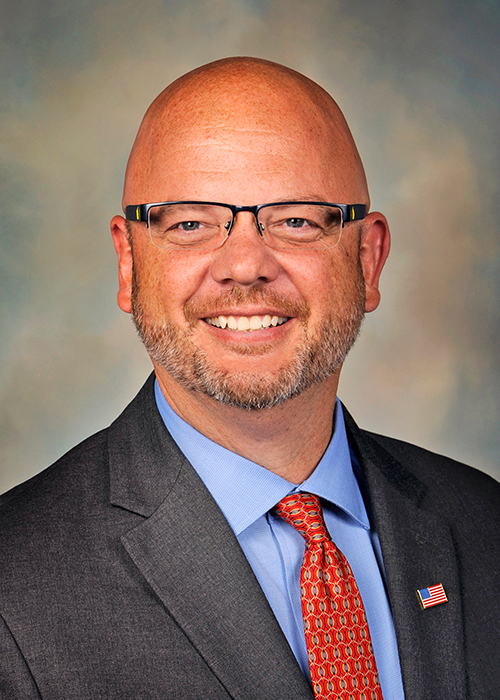
Rep. Jeff Keicher
Sponsored bills
Creates the Pembroke Township Natural Gas Investment Pilot Program Act. Directs the Department of Commerce and Economic Opportunity to create a pilot program for the distribution of grants for the construction of new natural gas pipelines and infrastructure in Pembroke Township. Requires applicants for grants to demonstrate that the grants will result in the construction of a new natural gas pipeline to provide natural gas to the residents of the township. Provides that the Department shall report annually to the Governor and General Assembly beginning in 2022 regarding cost estimates for the Pilot Program, recommendations for improvement to the Pilot Program, and a recommendation as to whether the Pilot Program should be continued. Amends the State Finance Act to create the Pembroke Township Natural Gas Investment Pilot Program Fund as a special fund in the State treasury. Amends the Public Utilities Act. Provides that a gas public utility may apply for a certificate of public convenience and necessity to increase its gas service territory and extend its gas distribution system to serve a designated hardship area. Provides that the Illinois Commerce Commission shall, after notice and hearing, grant a certificate of public convenience and necessity if, based upon the application filed with the Commission and the evidentiary record, the Commission finds that specified criteria are satisfied. Makes other changes. Effective immediately. Senate Committee Amendment No. 1 Replaces everything after the enacting clause. Reinserts the provisions of the introduced bill with the following changes: Replaces provisions concerning the Pembroke Township Natural Gas Investment Pilot Program with language providing that the Department of Commerce and Economic Opportunity shall create the Pembroke Township Natural Gas Investment Pilot Program for a duration of 5 years. Provides that the Department shall distribute grants, subject to appropriation, from moneys in the Pembroke Township Natural Gas Investment Fund for the conversion of appliances to be compatible with natural gas. Provides that the Department shall adopt rules for the administration of the Program. Provides that, at a minimum, the rules shall require that the applicant for the grants demonstrate that the grants will result in the conversion of necessary equipment to have the ability to utilize natural gas. Provides that the rules shall allow for conversion grants awarded to residents of Pembroke Township and to Pembroke Township to provide assistance for the use of natural gas and shall ensure that the applicant complies with all other requirements of the rules. In provisions amending the Public Utilities Act, makes changes concerning what a gas public utility applying for a certificate of public convenience and necessity shall include in the application and the criteria the Illinois Commerce Commission shall consider in granting the certificate. Effective immediately.
Amends the Nursing Home Care Act. Provides that the Department of Public Health shall require each long-term care facility in the State, as a condition of facility licensure, to adopt and implement written policies, provide for the availability of technology to facility residents, and ensure that appropriate staff and other capabilities are in place to prevent the social isolation of facility residents. Contains specified requirements for the social isolation prevention policies. Provides that the Department shall distribute civil monetary penalty funds, as approved by the federal Centers for Medicare and Medicaid Services, and any other available federal and State funds, upon request, to facilities for communicative technologies and accessories needed for the purposes of the provisions. Provides that whenever the Department conducts an inspection of a long-term care facility, the Department's inspector shall determine whether the long-term facility is in compliance with the provisions and the policies, protocols, and procedures adopted pursuant to the provisions. Requires the Department to adopt rules necessary to implement the provisions within 60 days after the amendatory Act's effective date (and makes conforming changes in the Illinois Administrative Procedure Act). Contains other provisions. Effective immediately. Senate Committee Amendment No. 1 Replaces everything after the enacting clause with the provisions of the introduced bill with the following changes. Removes language providing that the Department of Public Health shall require each long-term care facility in the State to perform specified actions as a condition of facility licensure. Provides that the social isolation prevention policies shall not be interpreted as a substitute for in person visitation, but shall be wholly in addition to the existing in person visitation policies. Provides that a resident's individualized visitation plan shall give priority to the resident's preferences over the preferences of the resident's representative. Provides that a long-term care facility may apply for (rather than the Department shall distribute) civil monetary penalty fund grants, and may request other available federal and State funds to obtain assistive and supportive technologies and related accessories that would facilitate communication between residents and other family members, friends, and external support systems. Provides that the Department (rather than the Department's inspector) shall determine whether a long-term care facility is in compliance with the provisions whenever the Department conducts an annual licensure and certification survey, when a complaint is received, or as frequently as may be necessary (rather than whenever the Department conducts an inspection of a long-term care facility). Provides that a noncompliant long-term care facility shall be liable to pay an administrative penalty as a Type "C" violation. Provides that implementation of an administrative penalty as a Type "C" violation under the provisions shall not be imposed prior to January 1, 2023. Makes other changes. Effective immediately. Senate Floor Amendment No. 2 In provisions amending the Nursing Home Care Act, provides that the social isolation prevention policies adopted by each long-term care facility shall be consistent with the rights and privileges guaranteed to residents and constraints provided under specified provisions of the Nursing Home Care Act. House Floor Amendment No. 2 Replaces everything after the enacting clause with the provisions of the engrossed bill with the following changes. Adds provisions regarding legislative findings. Replaces references to specified types of equipment with references to assistive and supportive technology and devices. Requires appropriate staff to develop and update an individualized virtual visitation schedule while taking into account the individual's requests and preferences (rather than to assess and regularly reassess the individual needs and preferences of facility residents). Requires appropriate staff to develop an individualized virtual visitation schedule (rather than an individualized visitation plan) with specified requirements. Provides that specific protocols and procedures shall be developed to ensure that the quantity of assistive and supportive technology and devices maintained on-site at a facility remains sufficient, at all times, to meet the assessed social and activity needs and preferences of each facility resident. Makes other changes. Effective immediately.
Creates the Community Emergency Services and Supports Act. Provides that the Act applies to every unit of local government that provides or coordinates ambulance or similar emergency medical response or transportation services for individuals with emergency medical needs. A home rule unit may not respond to or provide services for a mental or behavioral health emergency, or create a transportation plan or other regulation, relating to the provision of mental or behavioral health services in a manner inconsistent with this Act. Provides that one plan shall describe how the EMS Region will provide mobile emergency mental and behavioral health services to individuals who do not present as a threat to the responders, and are not involved in criminal activity at the time of the response. Provides that the plan shall conform to the requirements of the Act and, recognizing the variety of systems, services, and needs across the State, provide the specific requirements and guidance appropriate for that region. Provides that the plan shall be identified as the region's community emergency services and supports plan. Provides that the second plan shall describe the manner and extent to which responders operating under the region's Community Emergency Services and Supports Plan coordinate with law enforcement when responding to individuals who appear to be in a mental or behavioral health emergency while engaged in conduct alleged to constitute a non-violent misdemeanor. Provides that the plan shall be identified as the region's Non-Violent Misdemeanor Coordination Plan. Amends the Emergency Telephone System Act to make conforming changes. Effective immediately. Fiscal Note (Dept. of Human Services) The fiscal impact to IDHS to provide for the establishment and oversight on the committees would be minimal. House Floor Amendment No. 1 Replaces everything after the enacting clause. Creates the Community Emergency Services and Support Act. Provides that each 9-1-1 call center and provider of emergency services dispatched through a 9-1-1 system must coordinate with the mobile mental and behavioral health services established by the Division of Mental Health of the Department of Human Services so that the following State goals and State prohibitions are met whenever a person interacts with one of these entities for the purpose seeking emergency mental and behavioral health care or when one of these entities recognizes the appropriateness of providing mobile mental or behavioral health care to an individual with whom they have engaged. Provides that the Division of Mental Health is also directed to provide guidance regarding whether and how these entities should coordinate with mobile mental and behavioral health services when responding to individuals who appear to be in a mental or behavioral health emergency while engaged in conduct alleged to constitute a non-violent misdemeanor. Provides that 9-1-1 call centers, emergency services dispatched through 9-1-1 call centers, and the mobile mental and behavioral health service established by the Division of Mental Health must coordinate their services so that certain specified State prohibitions are avoided. Provides that the Division of Mental Health shall establish regional advisory committees in each EMS Region to advise on emergency response systems for mental and behavioral health. Provides that the Act applies to persons of all ages, both children and adults. Provides that the Act does not limit an individual's right to control his or her own medical care. No provision of this Act shall be interpreted in such a way as to limit an individual's right to choose his or her preferred course of care or to reject care. Provides that no provision of this Act shall be interpreted to promote or provide justification for the use of restraints when providing mental or behavioral health care. Amends the Emergency Telephone System Act to make conforming changes. Senate Committee Amendment No. 1 Deletes reference to: 50 ILCS 750/4 Replaces everything after the enacting clause. Creates the Community Emergency Services and Support Act. Provides that each 9-1-1 call center and provider of emergency services dispatched through a 9-1-1 system must coordinate with the mobile mental and behavioral health services established by the Division of Mental Health of the Department of Human Services so that the following State goals and State prohibitions are met whenever a person interacts with one of these entities for the purpose seeking emergency mental and behavioral health care or when one of these entities recognizes the appropriateness of providing mobile mental or behavioral health care to an individual with whom they have engaged. The Division of Mental Health is also directed to provide guidance regarding whether and how these entities should coordinate with mobile mental and behavioral health services when responding to individuals who appear to be in a mental or behavioral health emergency while engaged in conduct alleged to constitute a non-violent misdemeanor. Provides that 9-1-1 PSAPs, emergency services dispatched through 9-1-1 PSAPs, and the mobile mental and behavioral health service established by the Division of Mental Health must coordinate their services so that the State goals listed in this Section are achieved. Appropriate mobile response service for mental and behavioral health emergencies shall be available regardless of whether the initial contact was with 9-8-8, 9-1-1 or directly with an emergency service dispatched through 9-1-1. Provides that the Division of Mental Health shall establish a Statewide Advisory Committee to review and make recommendations for aspects of coordinating 9-1-1 and the 9-8-8 mobile mental health response system most appropriately addressed on a State level. Provides that the Division of Mental Health shall establish Regional Advisory Committees in each EMS Region to advise on regional issues related to emergency response systems for mental and behavioral health. Provides that the exemptions from civil liability in the Emergency Telephone Systems Act apply to any act or omission in the development, design, installation, operation, maintenance, performance, or provision of service directed by the Act. Provides that the Act applies to persons of all ages, both children and adults. This Act does not limit an individual's right to control his or her own medical care. No provision of this Act shall be interpreted in such a way as to limit an individual's right to choose his or her preferred course of care or to reject care. No provision of this Act shall be interpreted to promote or provide justification for the use of restraints when providing mental or behavioral health care. Senate Floor Amendment No. 2 Make technical and stylistic changes in the bill as amended by Senate Amendment No. 1. Adds additional responsibilities for 9-1-1 Public Safety Answering Point telecommunicators and emergency service providers. Places the applicability and home rule preemption provisions in a separate Section of the bill.
Amends the Illinois Domestic Violence Act of 1986. Provides that the Supreme Court may implement a program to issue a Hope Card to the petitioner of a plenary order of protection for the petitioner to distribute to any individual who may need to be aware of the order. Adds provisions concerning the design and details of a Hope Card. Provides that a Hope Card shall have the same effect as the underlying plenary order of protection. Provides that the program may provide for the issuance of a temporary Hope Card at the time of the entry of the plenary order of protection. Provides that the first Hope Card shall be free, and the Supreme Court may establish a fee for any additional Hope Card, not to exceed $7 per Hope Card. Makes a corresponding change. House Committee Amendment No. 1 Provides that the Supreme Court shall (rather than may) implement a program to issue a Hope Card to the petitioner of a plenary order of protection. Provides that 3 three Hope Cards per protected party (rather than the first Hope Card) issued shall be free. Allows the Supreme Court to establish a fee for any additional Hope Card, not to exceed $5 (rather than $7) per Hope Card. House Floor Amendment No. 2 Replaces everything after the enacting clause with the contents of the introduced bill and House Amendment No. 1, but provides that the Supreme Court may (rather than shall) implement a program to issue a Hope Card to the petitioner of a plenary order of protection.
Amends the Mental Health and Developmental Disabilities Code. Provides that the Department of Human Services when a recipient of services under this Code, whether admitted on a voluntary or involuntary basis, is being discharged from an inpatient facility, shall provide the recipient and the recipient's conservator, guardian, or other legally authorized representative a written aftercare plan prior to the recipient's discharge from the facility. Provides that the written aftercare plan shall include, to the extent known, all of the following components: (1) the nature of the illness and followup required; (2) medications including side effects and dosage schedules; (3) if the recipient was given an informed consent form with his or her medications, the form shall satisfy the requirement for information on side effects of the medications; 4) expected course of recovery; (5) recommendations regarding treatment that is relevant to the recipient's care; (6) referrals to providers of medical and mental health services; and (7) other relevant information. Provides that the recipient shall be advised by facility personnel that he or she may designate another person to receive a copy of the aftercare plan.
Amends the Chicago Teachers Article of the Illinois Pension Code to make changes concerning the criminal conviction of a teacher. Amends the School Code. Provides that the notification regarding the dismissal or resignation of an individual holding a Professional Educator License as a result of abuse or neglect of a child must include the Illinois Educator Identification Number of the license holder and a brief description of the misconduct alleged. Amends the Educator Licensure Article to provide for the suspension or revocation of an endorsement or approval. Provides that a homicide conviction is grounds for disqualification for educator licensure or suspension or revocation of a license. Makes changes in provisions concerning a license holder's criminal conviction. Amends the Employment of Teachers Article. Changes certain references concerning teacher certification to teacher licensure. Makes changes concerning the termination of contractual continued service by a teacher. Amends the State Mandates Act to require implementation without reimbursement. Senate Floor Amendment No. 1 Deletes reference to: 40 ILCS 5/17-149.1 Replaces everything after the enacting clause. Reinserts the provisions of the introduced bill with the following change. Removes the provisions amending the Illinois Pension Code.
Repeals the Commission on the Elimination of Poverty Act. Effective immediately.
Creates the Domestic Violence Task Force Act. Creates the Domestic Violence Task Force to establish a consistent, uniform statewide system to protect victims and survivors of domestic violence, while holding offenders accountable. Contains requirements and responsibilities of the Task Force. Provides that the Task Force shall be composed of specified members. Provides that the Family Violence Coordinating Council within the Illinois Criminal Justice Information Authority shall provide administrative support to the Task Force. Repeals the Act on September 1, 2027. Effective immediately. House Floor Amendment No. 2 Dedicates this Act to the memory of Colton Miller and the lives that have been lost as a result of domestic violence. House Floor Amendment No. 3 Provides that the Domestic Violence Task Force may also be referred to as Colton's Task Force. Senate Floor Amendment No. 1 Deletes provision that the Domestic Violence Task Force shall review the need for special consideration for conditions of bail in cases involving domestic violence within the ongoing changes brought on by bail reform.
Amends the Illinois Vehicle Code. Provides that vehicles of deputy fire chiefs and assistant fire chiefs may be equipped with a siren, whistle, or bell capable of emitting sound audible under normal conditions from a distance of not less than 500 feet. Provides that deputy fire chiefs and assistant fire chiefs are eligible for fire chief license plates. Provides that any fire chief, deputy fire chief, or assistant fire chief operating warning devices upon a vehicle not owned by a municipality or fire protection district shall display fire chief license plates. Provides that, with the exception of permanently issued license plates, upon the resignation, termination, or reassignment to a rank other than fire chief, deputy fire chief, or assistant fire chief, a person issued fire chief license plates shall immediately surrender the license plate to the Secretary of State. Provides that the Secretary of State shall have the ability to recover the license plates.