

Amends the Higher Education Student Assistance Act. With regard to the Illinois Veteran grant program, provides that, beginning with the 2019-2020 academic year, a veteran may transfer his or her benefits to a qualified dependent if certain conditions are met; defines "qualified dependent". Provides that a veteran may transfer benefits to multiple qualified dependents; however, the total number of credit hours of assistance transferred may not exceed 120 credit hours, and a veteran may transfer benefits to only one qualified dependent at a time. Effective July 1, 2019. Senate Committee Amendment No. 1 Adds reference to: 105 ILCS 5/30-14.2 from Ch. 122, par. 30-14.2 Replaces everything after the enacting clause. Reinserts the provisions of the introduced bill with the following changes. Amends the Scholarships Article of the School Code. With regard to the MIA/POW Scholarship, provides that the definition of "eligible veteran or serviceperson" includes, among other requirements, a veteran or serviceperson who is a resident of Illinois at the time of application for the Scholarship and, at some point after leaving service, was a resident of Illinois for at least 15 consecutive years. Further amends the Illinois Veteran grant program under the Higher Education Student Assistance Act. Removes a provision providing that a person is a qualified applicant if he or she returned to this State within 6 months after leaving federal active duty service, or, if married to a person in continued military service stationed outside this State, returned to this State within 6 months after his or her spouse left service or was stationed within this State. Provides that a person is a qualified applicant if, despite not meeting other requirements, he or she is a resident of Illinois at the time of application to the Illinois Student Assistance Commission and, at some point after leaving federal active duty service, was a resident of Illinois for at least 15 consecutive years. Changes the definition of "qualified dependent" to include a spouse of a veteran of the United States Armed Forces who meets certain qualifications. Effective July 1, 2019.
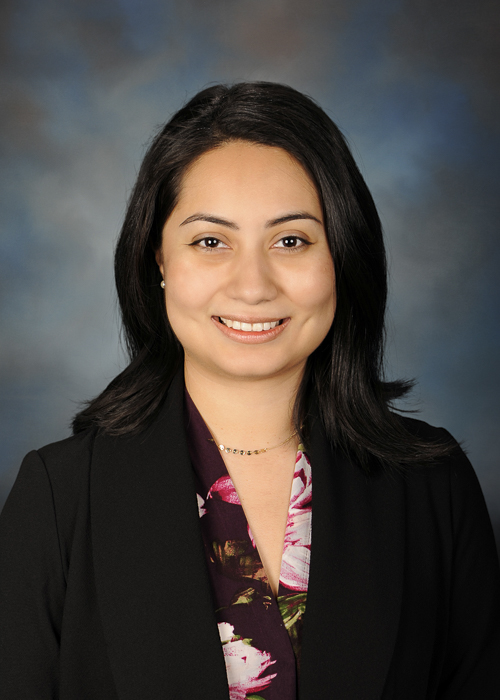
Rep. Barbara Hernandez
Sponsored bills
Urges the U.S. Congress to approve a COVID-19 relief package of at least $120 billion that includes funding for public and private colleges and universities for student and institutional needs, reopening costs, technology costs, and lost revenue due to the pandemic, and also includes limited liability protection for these institutions.
Creates the Certified Professional Midwives Practice Act. Provides for the licensure of midwives by the Department of Financial and Professional Regulation and for certain limitations on the activities of licensed midwives. Creates the Illinois Midwifery Board. Sets forth provisions concerning application, qualifications, grounds for disciplinary action, and administrative procedures. Amends the Regulatory Sunset Act to set a repeal date for the new Act of January 1, 2031. Amends the Illinois Insurance Code, the Medical Practice Act of 1987, the Nurse Practice Act, and the Illinois Public Aid Code to make related changes.
Creates the Task Force on Missing and Murdered Chicago Women Act. Creates the Task Force on Missing and Murdered Chicago Women. Provides for the composition of the Task Force and its appointment and meetings. Provides that the Task Force must examine and report on the following: (1) the systemic causes behind violence that Chicago women and girls experience, including patterns and underlying factors that explain why disproportionately high levels of violence occur against Chicago women and girls, including underlying historical, social, economic, institutional, and cultural factors that may contribute to the violence; (2) appropriate methods for tracking and collecting data on violence against Chicago women and girls, including data on missing and murdered Chicago women and girls; (3) policies and institutions such as policing, child welfare, medical examiner practices, and other governmental practices that impact violence against Chicago women and girls and the investigation and prosecution of crimes of gender-related violence against Chicago residents; (4) measures necessary to address and reduce violence against Chicago women and girls; and (5) measures to help victims, victims' families, and victims' communities prevent and heal from violence that occurs against Chicago women and girls. Provides that the Task Force shall report annually to the General Assembly and the Governor on the work of the Task Force.
Amends the Abused and Neglected Child Reporting Act. Provides that an "abused child" includes a child whose parent or immediate family member, among others, causes or permits a child to suffer unjustifiable or significant mental suffering. Amends the Code of Criminal Procedure of 1963 and the Illinois Domestic Violence Act of 1986. Provides that "abuse" includes emotional abuse. Defines "emotional abuse" as unjustifiable or significant mental suffering caused or permitted by a person to another person.
Creates the Inclusive American History Act. Establishes the Inclusive American History Commission to (i) address the deficiencies and inadequacies in both perspective and content in traditional history course material and instruction and (ii) develop multiperspective, inclusive, and comprehensive standards that a school may use as a guide in replacing or developing its curricula for history education. Sets forth the membership of the Commission. Contains provisions concerning meetings, duties, and reporting. Repeals these provisions on December 31, 2022. Amends the Courses of Study Article of the School Code. Beginning with the 2021-2022 school year, requires schools to suspend all instruction in history education, with exceptions. Not later than June 30, 2022, requires the State Superintendent of Education to provide to schools instructional guidelines and standards based on the recommendations of the Commission so that schools may develop alternative curricula to replace traditional course material and instruction to ensure that students obtain a multiperspective, inclusive, and comprehensive understanding about history. Provides that beginning with the 2022-2023 school year, schools shall resume instruction in history, which shall require the use of age-appropriate discussion, textbooks, and other course material that reframe the study of history by presenting to students an examination of history through the inclusion of diverse perspectives, contrary interpretations, and the viewpoints of various groups of people whose voices have traditionally been excluded from the conventional teaching of history. Effective immediately.
Amends the State Officials and Employees Ethics Act. Provides that each officer, member, and employee must complete, at least annually, a diversity, inclusion, and cultural competence training program. Provides for the contents of the training program. Provides that proof of completion must be submitted to the applicable ethics officer. Provides that the training program shall be overseen by the appropriate Ethics Commission and Inspector General. Requires each ultimate jurisdictional authority to submit a report summarizing the training program with specified content. Requires governmental units to adopt an ordinance or resolution establishing a policy of diversity, inclusion, and cultural competence training.
Amends the Illinois Domestic Violence Act of 1986. Requires all counties in the State, within 18 months of the effective date of the Act, to allow a petition for an order of protection to be filed electronically.
Amends the School Code. Adds as commemorative holidays January 15 (to be known as Humanitarian Day and observed as a day of respect for the principles of human and civil rights and to involve the use of the color white as a visual affirmation to practice these principles), April 4 (to be known as Victims of Violence Wholly Day and observed as a day of respect for the principles of nonviolence and to involve the use of the color black as a visual affirmation to practice these principles), and August 28 (to be known as Dream Day and observed as a day of respect for the spiritual and moral principles of peoplehood and to involve the use of the colors black and white as a visual affirmation to practice these principles). Provides that the teaching of the history of the United States shall include the study of the American civil rights renaissance, that period of time from 1954 to 1965 called the Movement. House Committee Amendment No. 1 Adds reference to: 105 ILCS 5/27-20.4 from Ch. 122, par. 27-20.4 Further amends the School Code. Sets forth additional areas to be included in the Black History unit of instruction, including the study of the American civil rights renaissance and the study of pre-enslavement history.
Amends the Criminal Code of 2012. Provides that, in addition to other elements defining the offense, a person commits criminal sexual assault if that person commits an act of sexual penetration and is a physician licensed under the Medical Practice Act of 1987 to practice medicine in all of its branches or licensed as a chiropractic physician under that Act and the victim is a patient under the physician or chiropractic physicians's care or to whom the physician or chiropractic physician has access due to his or her practice as a physician or chiropractic physician. Effective January 1, 2021.