

Amends the Department of Professional Regulation Law. Provides that when a licensee applies to renew a license, the Division of Professional Regulation of the Department of Financial and Professional Regulation shall deem the licensee's renewal fee to have been paid if the licensee can provide proof that the licensee's total annual income for the preceding calendar year was less than $50,000. Provides that renewal forms adopted by the Division shall include language informing licensees that the renewal fee shall be deemed paid if a licensee can prove that the licensee made less than $50,000 in total annual income in the preceding calendar year. Provides that a W-2 form, or similar tax document, stating that a licensee made less than $50,000 in total annual income in the preceding year shall be sufficient evidence that the licensee made less than $50,000 in total annual income in the preceding calendar year.
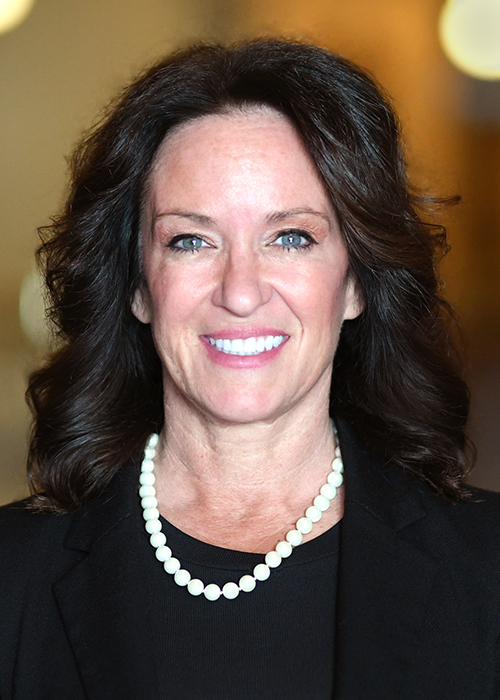
Rep. Jennifer Sanalitro
Sponsored bills
Amends the Higher Education Student Assistance Act. Establishes the Illinois Trades Retention and Development Encouragement (ITRADE) Grant Program to be administered by the Illinois Student Assistance Commission. Provides that the Illinois Student Assistance Commission shall award grants under the program to eligible applicants who (i) have graduated from high school or have received a State of Illinois High School Diploma, (ii) are pursuing or intend to pursue a qualifying degree or certificate at a qualified institution, and (iii) are entitled to apply for assistance. Provides that a qualifying degree or certificate is an associate degree or certificate granted by a qualified institution in a field related to the trades, including, but not limited to, electrical work, plumbing, masonry, steel working, fabrication, or construction. Amends the State Finance Act to make conforming changes. Effective January 1, 2026.
Amends the Property Tax Code. Provides that, for taxable years 2025 and thereafter, the maximum income limitation for the Low-Income Senior Citizens Assessment Freeze Homestead Exemption is $75,000 for all qualified property. Effective immediately.
Amends the Administration Article of the Illinois Public Aid Code. Provides that by January 1, 2026, and every January 1 thereafter, the Department of Healthcare and Family Services shall publish on its official website a complete and comprehensive report of its receipts and expenditures under the Medical Assistance program during the prior fiscal year. Requires the report to be organized by type of service and to detail all State and federal funds received, allocated, and expended during the reporting year, including the amount of any federal matching funds or reimbursements received by the Department for federally mandated services, State optional services, waiver services, and services provided to noncitizens. Requires the report to also include a detailed accounting of any State or federal funds appropriated to the Department for the Medical Assistance program in a prior fiscal year that were subsequently allocated and expended for covered services during the reporting year. Provides that the first report due January 1, 2026 shall include a compilation of individual reports on funding receipts and expenditures under the Medical Assistance program for State fiscal years 2018 through 2025. Effective immediately.
Amends the Criminal Code of 2012. Creates the offense of fentanyl-related child endangerment. Provides that a person commits the offense when the person knowingly or recklessly endangers the life or health of a child under 18 years of age by exposing or allowing exposure of the child to fentanyl, including consumption of fentanyl. Provides that a violation is a Class 2 felony. Creates the offense of aggravated fentanyl-related child endangerment. Provides that a person commits the offense when the person knowingly or recklessly endangers the life or health of a child under 18 years of age by exposing or allowing exposure of the child to fentanyl, including consumption of fentanyl and the child experiences death, great bodily harm, disability, or disfigurement as a result of the fentanyl-related child endangerment. Provides that exposure to fentanyl as prescribed or administered by a health care professional in the course of medical treatment does not constitute endangerment. Provides that a violation is a Class X felony for which the offender shall be sentenced to a term of imprisonment of not less than 6 years and not more than 30 years and fined not to exceed $100,000. Defines terms.
Amends the School Code. Allows a METT Educator District License for teaching a course in manufacturing, engineering, technology, or a trade (METT) to be issued to an applicant who has at least 10,000 working hours in a trade. Provides that a METT Educator District License may be issued to qualified individuals who have not obtained a bachelor's degree or an equivalent number of hours in an educational program at an institution of higher education. Provides that a METT Educator District License is valid until June 30 immediately following 5 years of the license being issued and may be renewed. Provides that a METT Educator District License is valid only for the teaching of a course that the State Board of Education has identified as related to the work experience of the licensee. Sets forth other provisions regarding the license. Amends the Postsecondary and Workforce Readiness Act. Provides that the State Board of Education, in conjunction with the Department of Commerce and Economic Opportunity or the Department of Labor, shall expand a database to identify METT labor shortages. Provides that by July 1, 2028, school districts in identified regions shall be notified by the State Board and shall participate in a College and Career Pathway Endorsement program and offer a METT endorsement. Makes other changes.
Creates the Reinvest in Future Technical Careers Act. Provides that the Department of Revenue shall award income tax credits to taxpayers who make authorized contributions to scholarship granting organizations for the purpose of awarding scholarships to eligible students who attend technical academies. Sets forth limitations with respect to the aggregate amount of credits awarded by the Department of Revenue under the program in a calendar year and the amount of credits awarded to an individual taxpayer. Amends the Illinois Income Tax Act to make conforming changes.
Provides that the Act may be referred to as the Knight-Silas Act. Amends the Criminal Code of 2012. Provides that a person commits aggravated battery when, in committing a battery, other than by the discharge of a firearm, he or she: (1) knowingly causes great bodily harm or permanent disability or disfigurement to an individual whom the person knows to be a Department of Children and Family Services employee; and (2) is, at the time of the commission of the offense, 21 years of age or older and causes great bodily harm or permanent disability or disfigurement to an individual whom the person knows to be a Department of Children and Family Services employee: (i) performing his or her official duties; (ii) battered to prevent performance of his or her official duties; or (iii) battered in retaliation for performing his or her official duties. Provides that "Department of Children and Family Services employee" includes any (i) Department caseworker or (ii) investigator employed by an agency or organization providing social work, case work, or investigative services under a contract with or a grant from the Department of Children and Family Services. Provides that a violation is a Class 2 felony. Provides that if the battery causes great bodily harm or permanent disability or disfigurement to the employee, the penalty is a Class 1 felony.
Provides that the Act may be referred to as the Knight-Silas Act. Amends the Criminal Code of 2012. Provides that aggravated battery, other than by the discharge of a firearm, includes a battery committed by a person who, at the time of the commission of the offense, is 21 years of age or older and the battery was committed upon an individual whom the person committing the offense knows to be a person working under the Adult Protective Services Program or an Ombudsman under the State Long Term Care Ombudsman Program of the Department on Aging, or a Department of Children and Family Services employee: (1) performing his or her official duties; (2) battered to prevent performance of his or her official duties; or (3) battered in retaliation for performing his or her official duties. Provides that a violation is a Class 2 felony, except if the battery causes great bodily harm or permanent disability or disfigurement to an individual, a violation is a Class 1 felony. Defines "Department of Children and Family Services employee" and "ombudsman".
Amends the Illinois Vehicle Code. Provides that a unit of local government, including a home rule unit, may not enact an ordinance providing for a noise monitoring system upon any portion of its roadways (removing language allowing the City of Chicago to enact an ordinance providing for a noise monitoring system upon any portion of the roadway known as Lake Shore Drive). Makes changes to the definition of "noise monitoring system".