

Amends the Department of Human Services Act. Requires the Department of Human Services to establish a Youth Training and Education in the Building Trades Program to award grants to community-based organizations for the purpose of establishing training programs for youth with an interest in the building trades. Provides that under the training programs, each youth shall receive: (1) formal training and education in the fundamentals and core competencies in the youth's chosen trade; and (2) hands-on experience in the building trades by participating in community improvement projects involving the rehabilitation of vacant and abandoned residential property. Requires selected organizations to use the grant money to establish an entrepreneurship program to provide eligible youth with the capital and business management skills necessary to launch their own businesses. Contains provisions concerning residential property that is eligible for acquisition under the Program; the selection criteria for community-based organizations; and the Youth Training and Education in the Building Trades Fund. Amends the Illinois Housing Development Act. Requires the Illinois Housing Development Authority to establish a Training Youth in the Building Trades Program that is substantially similar to the Youth Training and Education in the Building Trades Program. Contains provisions concerning residential property that is eligible for acquisition under the Program; the selection criteria for community-based organizations; and the Training Youth in the Building Trades Fund. Amends the State Finance Act to create the Youth Training and Education in the Building Trades Fund and the Training Youth in the Building Trades Fund. Effective January 1, 2020. Senate Floor Amendment No. 1 Deletes reference to: 20 ILCS 1305/10-48 new 20 ILCS 3805/7.32 new 30 ILCS 105/5.892 new Adds reference to: 20 ILCS 605/605-1025 new Replaces everything after the enacting clause. Amends the Department of Commerce and Economic Opportunity Law of the Civil Administrative Code of Illinois. Provides that subject to appropriation, the Department of Commerce and Economic Opportunity may establish a Training in the Building Trades Program (Program) to award grants to community-based organizations for the purpose of establishing training programs for persons who are 18 through 35 years of age and have an interest in the building trades. Provides that persons eligible to participate in the Program shall include youth who have aged out of foster care and have an interest in the building trades. Provides that under the training programs, participating persons shall receive: (i) formal training and education in the fundamentals and core competencies in the person's chosen trade; and (ii) hands-on experience to further develop the person's building trade skills by participating in community improvement projects involving the rehabilitation of vacant and abandoned residential property in economically depressed areas of the State. Requires selected organizations to also use the grant money to establish an entrepreneurship program to provide eligible persons with the capital and business management skills necessary to successfully launch their own businesses as contractors, subcontractors, real estate agents, or property managers or as any other entrepreneurs in the building trades. Contains provisions concerning residential property that is eligible for acquisition and rehabilitation under the Program; the selection criteria for community-based organizations; and the Training in the Building Trades Fund. Amends the State Finance Act to create the Training in the Building Trades Fund. Effective January 1, 2020.
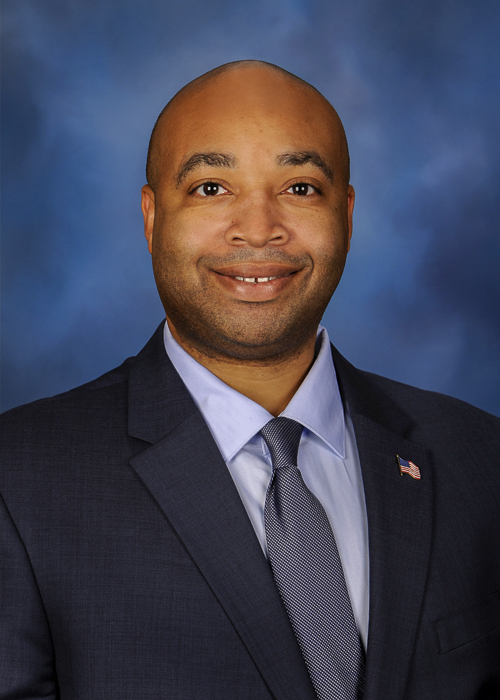
Rep. Justin Slaughter
Sponsored bills
Amends the Abused and Neglected Child Reporting Act. Removes the list of mandated reports under the Act and instead lists several categories of professionals required to report suspected child abuse and neglect to the Department of Children and Family Services, including: (1) medical personnel; (2) social services and mental health personnel; and (3) crisis intervention personnel. Provides that when 2 or more persons who work within the same workplace and are required to report under the Act share a reasonable cause to believe that a child may be an abused or neglected child, a single report may be made by a designated reporter. Provides that nothing in the Act requires a child to come before the mandated reporter in order for the reporter to make a report of suspected child abuse or child neglect. Provides that persons required to report under the Act must complete mandated reporter training provided through or approved by the Department and that the training must be completed within a specified timeframe. Requires the Department to adopt rules by January 1, 2020 on its process for approving mandated reporter training. Provides that, by January 1, 2021, continuing education requirements for persons licensed by the Department of Financial and Professional Regulation must include mandated reporter training. Requires the Department, by January 1, 2020, to adopt rules and procedures for educating members of the public about their right to report child abuse or neglect. Requires the Department to seek assistance from businesses and organizations on raising awareness about child abuse and child neglect and the Department's statewide toll-free child abuse hotline. Senate Committee Amendment No. 1 Replaces everything after the enacting clause. Amends the Abused and Neglected Child Reporting Act. Organizes the list of mandated reporters under the Act into the following categories of professionals: (i) medical personnel; (ii) social services and mental health personnel; (iii) crisis intervention personnel; (iv) education personnel; (v) recreation or athletic program or facility personnel; (vi) child care personnel; (vii) law enforcement personnel; (viii) funeral home directors; (ix) clergy members; and (x) physicians and other specified medical personnel who provide abortions, abortion referrals, or contraceptives. Provides that when 2 or more persons who work within the same workplace and are required to report under the Act share a reasonable cause to believe that a child may be an abused or neglected child, a single report may be made by a designated reporter. Provides that nothing in the Act requires a child to come before the mandated reporter in order for the reporter to make a report of suspected child abuse or child neglect. Provides that persons required to report under the Act must complete mandated reporter training within 3 months of their date of engagement in a professional or official capacity as a mandated reporter, and at least every 3 years thereafter. Provides that the trainings shall be in-person or web-based, and shall include, at a minimum, information on certain topics, including: (a) indicators for recognizing child abuse and child neglect, as defined under the Act; and (b) responding to a child in a trauma-informed manner. Provides that the mandated reporter training shall be provided through the Department of Children and Family Services, through an entity authorized to provide continuing education for professionals licensed through the Department of Financial and Professional Regulation, the State Board of Education, the Illinois Law Enforcement Training Standards Board, or the Department of State Police, or through an organization approved by the Department to provide mandated reporter training. Requires the Department of Children and Family Services to make available a free web-based training for reporters. Requires each mandated reporter to report to his or her employer and, when applicable, to his or her licensing or certification board that he or she received the mandated reporter training. Provides that beginning January 1, 2021, if a mandated reporter receives licensure from the Department of Financial and Professional Regulation or the State Board of Education, and his or her profession has continuing education requirements, the training mandated under the Act shall count toward meeting the licensee's required continuing education hours. Requires the Department of Children and Family Services to develop culturally sensitive materials on child abuse and child neglect, the statewide toll-free telephone number established under the Act, and the process for reporting any reasonable suspicion of child abuse or child neglect. Senate Floor Amendment No. 2 Replaces everything after the enacting clause. Reinserts the provisions of Senate Amendment No. 1, but with the following changes: Provides that educational personnel required to report under the Abused and Neglected Child Reporting Act must do so only to the extent required under a specified provision of the Act (rather than only to the extent required in accordance with other provisions expressly concerning the duty of school board members to report suspected child abuse). Provides that when 2 or more persons who work within the same workplace and are required to report under the Act share a reasonable cause to believe that a child may be an abused or neglected child, one of those reporters may be designated to make a single report (rather than a single report may be made by a designated reporter). In a provision requiring mandated reporters to complete reporter training within 3 months of their date of engagement in a professional or official capacity as a mandated reporter, provides that the 3-month requirement may be extended to 6 months pursuant to any other applicable State law that governs training requirements for a specific profession. Requires certain medical personnel who work with children in their professional or official capacity to complete mandated reporter training at least every 6 years. Requires such medical personnel to attest at each time of licensure renewal on their renewal form that they understand they are a mandated reporter of child abuse and neglect, that they are aware of the process for making a report, that they know how to respond to a child in a trauma-informed manner, and that they are aware of the role of child protective services and the role of a reporter after a call has been made. Requires medical personnel who do not work with children in their professional or official capacity to make similar affirmations in lieu of repeated training. House Committee Amendment No. 1 Adds reference to: 50 ILCS 705/7 from Ch. 85, par. 507 Amends the Illinois Police Training Act. Provides that the curriculum for probationary police officers at all certified police training schools shall include a block of instruction addressing the mandatory reporting requirements under the Abused and Neglected Child Reporting Act. Provides that minimum in-service training requirements, which a police officer must complete every 3 years, shall include training on reporting child abuse and neglect. Further amends the Abused and Neglected Child Reporting Act. Provides that persons required to report under the Act must complete an initial mandated reporter training (rather than must complete mandated reporter training) within 3 months of their date of engagement in a professional or official capacity as a mandated reporter, or within the time frame of any other applicable State law that governs training requirements for a specific profession, and at least every 3 years thereafter. Provides that the initial requirement (rather than the initial 3-month requirement) only applies to the first time they engage in their professional or official capacity (rather than only applies to the first time they engage in their professional or official capacity and may be extended to 6 months pursuant to any other applicable State law that governs training requirements for a specific profession).
Amends the Department of Commerce and Economic Opportunity Law of the Civil Administrative Code of Illinois. Requires the Department of Commerce and Economic Opportunity to create a Clean Water Workforce Pipeline Program to provide grants and other financial assistance to individuals for careers in water infrastructure. Provides requirements for funding, grants, and other financial assistance from the Program on a competitive and annual basis for specified activities. Provides that the Program shall have an annual goal of training and placing 2,500 specified individuals in water sector jobs annually. Directs the Department to coordinate with the Environmental Protection Agency, Illinois Finance Authority, and other State agencies that provide financial support for water infrastructure projects in order to encourage the employment of individuals trained through the Program onto projects receiving State financial assistance. Provides that the Department may select a Program Administrator to oversee the allocation of funds and select organizations that receive funding. Requires recipients under the Program to report annually to the Department on the success of their efforts and their contribution to reaching the goals of the Program. Requires the Department to compile the information and report specified information to the General Assembly annually. Within 90 days after the amendatory Act's effective date, requires the Department to propose a draft plan to implement amendatory Act's provisions for public comment and to finalize the plan within 180 days after the amendatory Act's effective date. Grants rulemaking authority to the Department to implement the Program and ensure compliance with the amendatory Act's provisions. Provides that moneys in the Water Workforce Development Fund shall only be used to fund the Program and to assist and enable implementation of clean water infrastructure capital investments. Amends the State Finance Act. Creates the Water Workforce Development Fund. Senate Floor Amendment No. 1 Replaces everything after the enacting clause with the provisions of the introduced bill with the following changes: Provides that the Program shall be funded by appropriations from the Build Illinois Bond Fund, Capital Development Fund, or General Revenue Fund or other funds as identified by the Department of Commerce and Economic Opportunity. Provides that grants may be made, among other entities, to multi-craft labor organizations (currently, labor unions). Removes language providing that the continuing education for individuals to prepare for and build on workforce training and the training of individuals in various skill and trades necessary to build and maintain clean water infrastructure are activities for which grants and other financial assistance may be awarded. Provides that an annual goal of the Program is to train and place at least 300, or 25% of the number of annual jobs created by State financed water infrastructure projects, whichever is greater (currently, 2,500), specified persons in water sector-related apprenticeships (currently, jobs) annually. Provides that the Environmental Protection Agency, the Illinois Finance Authority, and other State agencies that provide financial support for water infrastructure projects shall support the Program in attaining the goal of employing specified individuals. Provides that the Water Workforce Development Fund shall receive moneys from the Build Illinois Bond, the Capital Development Fund, the General Revenue Fund, and any other funds. House Committee Amendment No. 1 Provides that "multi-craft labor organization" includes a labor-management apprenticeship program that is registered with and approved by a labor organization that has an accredited training program through the Higher Learning Commission or the Illinois Community College Board.
Amends the Code of Criminal Procedure of 1963. Creates a bill of rights for children of incarcerated parents. Provides that the Department of Corrections, the county sheriff, or county correctional department shall develop and implement policies and practices that adhere to the bill of rights for decisions that impact incarcerated individuals with children. Effective immediately. Correctional Note (Dept of Corrections) There is no fiscal or population impact on the department. House Floor Amendment No. 3 Deletes reference to: 725 ILCS 5/106F-5 Adds reference to: 725 ILCS 5/106F-15 new 725 ILCS 5/106F-20 new Replaces everything after the enacting clause. Amends the Code of Criminal Procedure of 1963. Creates the Task Force on Children of Incarcerated Parents. Provides for membership of the Task Force. Provides that the Office of the Lieutenant Governor shall provide administrative and technical support to the Task Force and shall be responsible for administering its operations, appointing a chairperson, and ensuring that the requirements of the Task Force are met. Provides that the Task Force shall have all appointments made within 30 days of the effective date of the amendatory Act. Provides that the first meeting shall be held no later than August 1, 2019. Provides that the Task Force shall review available research, best practices, and effective interventions to formulate recommendations. Provides that the Task Force shall submit a report of its findings and recommendations to the General Assembly and the Governor by December 31, 2019. Makes other changes. Effective immediately.
Amends the Civil Administrative Code of Illinois. Provides that, except as otherwise provided by law, no department shall deny an occupational or professional license based solely on the applicant's citizenship status or immigration status. Amends the Illinois Explosives Act to allow a person admitted for permanent residence to qualify for licensure. Amends the Illinois Plumbing License Law, the Water Well and Pump Installation Contractor's License Act, the Illinois Horse Meat Act, the Liquor Control Act of 1934, and the Safety Deposit License Act to remove references to United States citizenship as a prerequisite for licensure. Amends the Coal Mining Act to remove references to United States citizenship as a prerequisite and references to the ability to speak and understand the American Language. Makes other changes. Senate Committee Amendment No. 1 Replaces everything after the enacting clause with the provisions of the introduced bill with the following changes. In the Illinois Explosives Act, allows a person lawfully admitted for permanent residence (rather than a person admitted for permanent residence) to qualify for licensure. In the Coal Mining Act, restores references to United States citizenship and adds references to persons lawfully admitted for permanent residence. Adds an immediate effective date.
Amends the Illinois Public Aid Code. Requires the Illinois Student Assistance Commission (ISAC) to identify and flag college students who are potentially eligible to receive Supplemental Nutrition Assistance Program (SNAP) benefits. Provides that the factors to be used to determine potential SNAP eligibility shall be prescribed by ISAC in consultation with the Department of Human Services, but at a minimum shall include income information reported on a college student's Free Application for Federal Student Aid. Requires ISAC, in consultation with the Department of Human Services, to develop a notice that ISAC shall make available electronically to institutions of higher education that includes, at a minimum, college student SNAP eligibility criteria, the Application for Benefits Eligibility's website address, and the Illinois Hunger Coalition's Hunger Hotline. Requires Illinois institutions of higher education that participate in the Monetary Award Program to provide the notice in writing to all students who are enrolled or accepted for enrollment and are identified by ISAC as potentially SNAP eligible. Requires ISAC to adopt rules. Effective immediately. Senate Committee Amendment No. 1 Adds reference to: 305 ILCS 5/12-4.13b Replaces everything after the enacting clause. Reinserts the provisions of the introduced bill, but with the following changes and additions: Provides that the Department of Human Services shall consult with the Illinois Workforce Innovation Board (rather than with the Illinois Workforce Investment Board) to establish a protocol to identify and verify all potential exemptions to certain federal eligibility rules under the Supplemental Nutrition Assistance Program (SNAP). Provides that a career and technical educational program approved by the Illinois Community College Board that could be a component of a SNAP Employment and Training (E&T) program, as identified by the Department of Human Services, shall be considered an employment and training program under a specified provision of the Code of Federal Regulations, unless prohibited by federal law. In provisions requiring the Illinois Student Assistance Commission (ISAC) to adopt rules concerning SNAP eligibility notifications to college students, requires ISAC to adopt the rules on or before October 1, 2020 (rather than on or before October 1, 2019). Effective immediately. House Committee Amendment No. 1 Requires the Illinois Student Assistance Commission (ISAC) to annually include information about the Supplemental Nutrition Assistance Program (SNAP) in the language that schools are required to provide to students eligible for the Monetary Award Program grant (rather than requiring ISAC to identify and flag college students who are potentially eligible to receive SNAP benefits). Provides that the language shall, at a minimum, direct students to information about college student eligibility criteria for SNAP, and direct students to the Department of Human Services and to the Illinois Hunger Coalition's Hunger Hotline for additional information. Requires Illinois institutions of higher education that participate in the Monetary Award Program (MAP) to provide the notice to all students who are enrolled, or who are accepted for enrollment and intending to enroll, and who have been identified by ISAC as MAP-eligible at the institution (rather than requiring ISAC to develop, in consultation with the Department of Human Services, an electronic notice for institutions of higher education that includes, at a minimum, college student SNAP eligibility criteria, the Application for Benefits Eligibility's website address, and the Illinois Hunger Coalition's Hunger Hotline).
Amends the Medical Patient Rights Act. Provides that every woman has certain rights with regard to pregnancy and childbirth, including the right to receive care that is consistent with current scientific evidence about benefits and risks, the right to choose her birth setting, the right to be provided with certain information, and the right to be treated with respect at all times before, during, and after pregnancy by her health care professionals and to have a health care professional that is culturally competent and treats her appropriately regardless of her ethnicity, sexual orientation, or religious background. Requires the Department of Public Health, Department of Healthcare and Family Services, Department of Children and Family Services, and Department of Human Services to post information about these rights on their publicly available websites. Requires every health care provider, day care center, Head Start, and community center to post information about these rights in a prominent place and on their websites, if applicable. Requires the Department of Public Health to adopt rules to implement the provisions. Effective immediately. Fiscal Note (Dept. of Public Health) HB 2 would not pose any fiscal cost aside from standard staff time with the rulemaking. The cost would be negligible. Senate Floor Amendment No. 1 Replaces everything after the enacting clause with the provisions of the engrossed bill with the following changes: Removes language regarding a woman's rights to receive maternity care regarding social and behavioral factors, to receive continuous social, emotional, and physical support during labor and birth, and to receive full advance information about specified risks and benefits. Provides that a woman has the right to a certified nurse midwife as her maternity care professional and to examine and receive an explanation of her total bill for services rendered. Specifies that nothing in the provisions or any rules adopted under them shall be construed to require a physician, health care professional, hospital, hospital affiliate, or health care provider to provide care inconsistent with generally accepted medical standards or available capabilities or resources. Makes other changes. Effective January 1, 2020 (rather than immediately).
Amends the Illinois Insurance Code. Requires an individual or group policy of accident and health insurance or managed care organization that provides mental health benefits to provide reimbursement for benefits that are delivered through the psychiatric Collaborative Care Model. Provides that an individual or group policy of accident and health insurance or managed care organization that provides mental health benefits may deny reimbursement of any current procedural terminology code listed on the grounds of medical necessity if medical necessity determinations are in compliance with federal law and related regulations. Makes conforming changes to the Illinois Public Aid Code. Effective immediately. Senate Floor Amendment No. 1 Replaces the definition of "psychiatric Collaborative Care Model" with language providing that the term means the evidence-based, integrated behavioral health service delivery method, which includes a formal collaborative arrangement among a primary care team consisting of a primary care provider, a care manager, and a psychiatric consultant, and includes, but is not limited to, the following elements: care directed by the primary care team; structured care management; regular assessments of clinical status using validated tools; and modification of treatment as appropriate. House Floor Amendment No. 1 Changes the immediate effective date to January 1, 2020.
Amends the Evidence Article of the Code of Civil Procedure. Provides that evidence of a person's immigration status is not admissible in any civil proceeding unless: it is essential to prove an element of a claim or an affirmative defense; or a person or his or her attorney voluntarily reveals his or her immigration status to the court. Provides that a party intending to offer evidence regarding a person's immigration status shall file a written motion at least 14 days before trial. Provides that the court shall conduct an in camera hearing to review the probative value of the person's immigration status. Provides that if the court finds that the probative value of the person's immigration status outweighs its prejudicial nature, the court shall make findings of fact and conclusions of law regarding the permitted use of the evidence. Provides that the motion, related papers, and the record of the hearing shall be sealed and remain under seal unless the court orders otherwise. Provides that a party who communicates to a person or witness any threat to or actually disclose a person's or witness's immigration status to any entity or immigration or law enforcement agency with the intent to deter the person from testifying commits a Class C misdemeanor. Senate Floor Amendment No. 1 Replaces everything after the enacting clause with the provisions of the introduced bill and makes the following changes: Provides that evidence is also admissible if it is offered to prove an interest or bias of a witness, if it does not cause confusion of the issues or mislead the trier of fact, and the probative value of the evidence outweighs its prejudicial nature. Provides that a party intending to offer evidence related to a person's immigration status shall file a written motion that also explains why it is essential to a claim or affirmative defense or is probative of an interest or bias of a witness, it does not cause confusion of the issues or mislead the trier of fact, and the probative value of the evidence outweighs its prejudicial nature. Makes a corresponding change regarding findings of fact and conclusions of law the court must make regarding the permitted use of the evidence. Senate Floor Amendment No. 2 Deletes language providing that a written motion shall explain why it is essential to a claim or affirmative defense or is probative of an interest or bias of a witness.
Amends the Sexual Assault Evidence Submission Act. Provides that the Department of State Police shall create and operate a statewide sexual assault evidence kit tracking system. Provides that on and after the effective date of the amendatory Act, each sexual assault evidence kit created shall have a tracking mechanism attached to the kit for input into the statewide sexual assault evidence kit tracking system. Provides that every sexual assault evidence kit shall have the tracking mechanism attached to the kit for input into the statewide sexual assault evidence kit tracking system on or before January 1, 2020. Provides that the statewide sexual assault evidence kit tracking system shall: (1) track the location and status of sexual assault evidence kits throughout the criminal justice process, including the initial collection in examinations performed at medical facilities, receipt at local law enforcement agencies, and receipt and analysis at forensic laboratories; (2) allow medical facilities performing sexual assault forensic examinations, law enforcement agencies, prosecutors, State and local crime laboratories, and other entities who have physical custody of sexual assault evidence kits to update and track the status and location of sexual assault evidence kits; (3) allow victims of sexual assault to anonymously track and receive updates regarding the status of their sexual assault evidence kits; and (4) use technology to allow continuous access for appropriate personnel. Effective July 1, 2019.