

Amends the Illinois Public Labor Relations Act. Provides that the showing of interest in support of a petition filed for the purpose of selecting a labor organization as the representative of the employees in a bargaining unit may be evidenced by electronic communications, and such writing or communication may be evidenced by the electronic signature of the employees. Provides that the showing of interest shall be valid only if signed within 12 months prior to the filing of the petition. Provides that a secret ballot election held for the purpose of selecting a labor organization as the representative of the employees in a bargaining unit may be conducted electronically, using an electronic voting system, in addition to paper ballot voting systems. Provides that it shall be an unfair labor practice for an employer to promise, threaten, or take any action because of an employee's specified participation in a strike. House Floor Amendment No. 1 Adds reference to: 115 ILCS 5/7 from Ch. 48, par. 1707 115 ILCS 5/8 from Ch. 48, par. 1708 115 ILCS 5/14 from Ch. 48, par. 1714 Amends the Illinois Educational Labor Relations Act. With respect to the recognition of exclusive bargaining representatives, provides that the showing of interest in support of certain petitions may be evidenced by electronic communications and such writing or communication may be evidenced by the electronic signature of an employee as provided under the Electronic Commerce Security Act. Provides that the showing of interest shall be valid only if signed within 12 months prior to the filing of the petition. In provisions regarding elections, provides that a secret ballot election may be conducted electronically, using an electronic voting system, in addition to paper ballot voting systems. Adds as an unfair labor practice promising, threatening, or taking any action (i) to permanently replace an employee who participates in a strike, (ii) to discriminate against an employee who is working or has unconditionally offered to return to work for the employer because the employee supported or participated in such as a strike, or (iii) to lockout, suspend, or otherwise withhold from employment employees in order to influence the position of such employees or the representative of such employees in collective bargaining prior to a strike. Senate Committee Amendment No. 1 Specifies that it shall be an unfair labor practice for public employers and educational employers to promise, threaten, or take specified actions against their employees concerning a lawful strike. Effective immediately.
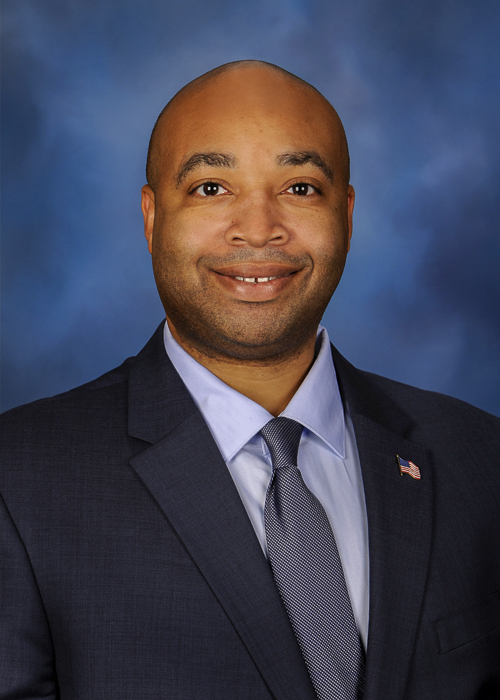
Rep. Justin Slaughter
Sponsored bills
Amends the Department of Commerce and Economic Opportunity Law of the Civil Administrative Code of Illinois. Provides that the Department of Commerce and Economic Opportunity shall establish criteria and guidelines for State-designated cultural districts. Specifies powers and duties of the Department. Provides requirements concerning certification of State-designated cultural districts. Provides State-designated cultural district reporting requirements. Defines "State-designated cultural district". Senate Committee Amendment No. 1 Replaces everything after the enacting clause. Reinserts the provisions of the introduced bill with changes. Requires the Department of Commerce and Economic Opportunity to establish an advisory committee to advise the Department on program rules and the certification process. Provides for the members of the advisory committee. Modifies and provides further requirements concerning certification of State-designated cultural districts. Makes other changes. Senate Floor Amendment No. 2 Replaces everything after the enacting clause with the provisions of Senate Amendment No. 1, and makes a change providing that the advisory committee to advise the Department of Commerce and Economic Opportunity on program rules and the certification process shall include 4 community representatives (rather than 2) appointed by the Governor representing diverse racial, ethnic, and geographic groups not captured in the membership of the other designees, with the input of community and stakeholder groups. House Floor Amendment No. 2 Deletes reference to: 20 ILCS 605/605-1055 new Adds reference to: 20 ILCS 605/605-1057 new Replaces everything after the enacting clause. Reinserts the provisions of the engrossed bill with changes. Modifies the powers and duties of the Department of Commerce and Economic Opportunity regarding the establishment of State-designated cultural districts. Modifies the composition of the advisory committee. Provides that the advisory committee shall reflect the diversity of the State of Illinois, including geographic, racial, and ethnic diversity. Provides further requirements concerning certification of State-designated cultural districts. Provides that the Department shall award no more than 5 State-designated cultural districts every year, and that the total amount of State-designated cultural districts shall be more than 15. Provides that any State-designated cultural district that fails to file the specified required report for 2 consecutive years shall lose its status. Repeals provisions on July 1, 2031. Makes other changes. House Floor Amendment No. 3 Provides for the appointment of members to the advisory committee by the Minority Leaders of the House of Representatives and the Senate.
Creates the Community Emergency Services and Supports Act. Provides that the Act applies to every unit of local government that provides or coordinates ambulance or similar emergency medical response or transportation services for individuals with emergency medical needs. A home rule unit may not respond to or provide services for a mental or behavioral health emergency, or create a transportation plan or other regulation, relating to the provision of mental or behavioral health services in a manner inconsistent with this Act. Provides that one plan shall describe how the EMS Region will provide mobile emergency mental and behavioral health services to individuals who do not present as a threat to the responders, and are not involved in criminal activity at the time of the response. Provides that the plan shall conform to the requirements of the Act and, recognizing the variety of systems, services, and needs across the State, provide the specific requirements and guidance appropriate for that region. Provides that the plan shall be identified as the region's community emergency services and supports plan. Provides that the second plan shall describe the manner and extent to which responders operating under the region's Community Emergency Services and Supports Plan coordinate with law enforcement when responding to individuals who appear to be in a mental or behavioral health emergency while engaged in conduct alleged to constitute a non-violent misdemeanor. Provides that the plan shall be identified as the region's Non-Violent Misdemeanor Coordination Plan. Amends the Emergency Telephone System Act to make conforming changes. Effective immediately. Fiscal Note (Dept. of Human Services) The fiscal impact to IDHS to provide for the establishment and oversight on the committees would be minimal. House Floor Amendment No. 1 Replaces everything after the enacting clause. Creates the Community Emergency Services and Support Act. Provides that each 9-1-1 call center and provider of emergency services dispatched through a 9-1-1 system must coordinate with the mobile mental and behavioral health services established by the Division of Mental Health of the Department of Human Services so that the following State goals and State prohibitions are met whenever a person interacts with one of these entities for the purpose seeking emergency mental and behavioral health care or when one of these entities recognizes the appropriateness of providing mobile mental or behavioral health care to an individual with whom they have engaged. Provides that the Division of Mental Health is also directed to provide guidance regarding whether and how these entities should coordinate with mobile mental and behavioral health services when responding to individuals who appear to be in a mental or behavioral health emergency while engaged in conduct alleged to constitute a non-violent misdemeanor. Provides that 9-1-1 call centers, emergency services dispatched through 9-1-1 call centers, and the mobile mental and behavioral health service established by the Division of Mental Health must coordinate their services so that certain specified State prohibitions are avoided. Provides that the Division of Mental Health shall establish regional advisory committees in each EMS Region to advise on emergency response systems for mental and behavioral health. Provides that the Act applies to persons of all ages, both children and adults. Provides that the Act does not limit an individual's right to control his or her own medical care. No provision of this Act shall be interpreted in such a way as to limit an individual's right to choose his or her preferred course of care or to reject care. Provides that no provision of this Act shall be interpreted to promote or provide justification for the use of restraints when providing mental or behavioral health care. Amends the Emergency Telephone System Act to make conforming changes. Senate Committee Amendment No. 1 Deletes reference to: 50 ILCS 750/4 Replaces everything after the enacting clause. Creates the Community Emergency Services and Support Act. Provides that each 9-1-1 call center and provider of emergency services dispatched through a 9-1-1 system must coordinate with the mobile mental and behavioral health services established by the Division of Mental Health of the Department of Human Services so that the following State goals and State prohibitions are met whenever a person interacts with one of these entities for the purpose seeking emergency mental and behavioral health care or when one of these entities recognizes the appropriateness of providing mobile mental or behavioral health care to an individual with whom they have engaged. The Division of Mental Health is also directed to provide guidance regarding whether and how these entities should coordinate with mobile mental and behavioral health services when responding to individuals who appear to be in a mental or behavioral health emergency while engaged in conduct alleged to constitute a non-violent misdemeanor. Provides that 9-1-1 PSAPs, emergency services dispatched through 9-1-1 PSAPs, and the mobile mental and behavioral health service established by the Division of Mental Health must coordinate their services so that the State goals listed in this Section are achieved. Appropriate mobile response service for mental and behavioral health emergencies shall be available regardless of whether the initial contact was with 9-8-8, 9-1-1 or directly with an emergency service dispatched through 9-1-1. Provides that the Division of Mental Health shall establish a Statewide Advisory Committee to review and make recommendations for aspects of coordinating 9-1-1 and the 9-8-8 mobile mental health response system most appropriately addressed on a State level. Provides that the Division of Mental Health shall establish Regional Advisory Committees in each EMS Region to advise on regional issues related to emergency response systems for mental and behavioral health. Provides that the exemptions from civil liability in the Emergency Telephone Systems Act apply to any act or omission in the development, design, installation, operation, maintenance, performance, or provision of service directed by the Act. Provides that the Act applies to persons of all ages, both children and adults. This Act does not limit an individual's right to control his or her own medical care. No provision of this Act shall be interpreted in such a way as to limit an individual's right to choose his or her preferred course of care or to reject care. No provision of this Act shall be interpreted to promote or provide justification for the use of restraints when providing mental or behavioral health care. Senate Floor Amendment No. 2 Make technical and stylistic changes in the bill as amended by Senate Amendment No. 1. Adds additional responsibilities for 9-1-1 Public Safety Answering Point telecommunicators and emergency service providers. Places the applicability and home rule preemption provisions in a separate Section of the bill.
Creates the Illinois Amateur Sports Commission Act. Provides that the purpose of the Commission is to research, study, and to make recommendations to the Governor and the General Assembly about the promotion, development, expansion, and fostering of amateur sports, amateur sports programs, and amateur sporting events throughout the State. Sets forth the areas of study that the Commission must examine. Sets forth the membership of the Commission. Contains provisions concerning meetings and reporting. Effective immediately. House Floor Amendment No. 1 Replaces everything after the enacting clause. Reinserts the provisions of the introduced bill with changes. Changes the name of the Illinois Amateur Sports Commission to the Illinois Commission on Amateur Sports. Provides that the purpose of the Commission includes making recommendations to the Governor, the General Assembly, and the Department of Commerce and Economic Opportunity about the promotion, development, expansion, hosting, and fostering of amateur sports, amateur sports programs, and amateur sporting events and tournaments throughout the State. Provides that the recommendations reported by the Commission shall include, among other objectives, to support and encourage the development of sports tourism. Expands the membership of the Commission to include a representative of the Illinois Council of Convention and Visitor Bureaus or any other similar State-certified entity. Makes conforming changes. House Floor Amendment No. 2 Replaces everything after the enacting clause. Reinserts the provisions of the bill as amended by House Amendment No. 1 with changes. Provides that the Commission shall meet initially within 90 days (rather than 30 days) after the effective date of the Act. Provides that the Commission is dissolved and the Act is repealed on January 1, 2026.
Amends the Unified Code of Corrections. Provides that the Department of Corrections shall make information about the availability of referral services to any other State or local agencies known to a parolee or releasee prior to his or her release from the correctional facility where the parolee or releasee has been residing. Effective immediately.
Amends the Juvenile Court Act of 1987. In the Section concerning temporary custody of an abused or neglected minor, provides that nothing in the provisions shall restrict the Department of Children and Family Services from immediately restricting or terminating parent-child contact or sibling contacts if the Department or its assigns reasonably believe that continuation of the contact, as set out in the plan, would result in an immediate threat (instead of "would be contrary to") to the child's health, safety, and welfare. Provides that the reasonable belief must be based on credible evidence. Provides that such restrictions on parent-child contact and sibling contacts by the Department or its assigns shall only occur on an individual case-by-case basis. House Floor Amendment No. 1 Replaces everything after the enacting clause. Reinserts the provisions of the bill as introduced, with the following changes: Provides that the Department of Children and Family Services may immediately restrict or terminate parent-child contact or sibling contacts, without either amending the parent-child visiting plan or the sibling contact plan or obtaining a court order, where the Department or its assigns reasonably believe there is an immediate need to protect the child's health, safety, and welfare. Provides that such restrictions or terminations must be based on available facts to the Department and its assigns when viewed in light of the surrounding circumstances and shall only occur on an individual case-by-case basis.
Amends the Illinois Controlled Substances Act. Provides that, notwithstanding any other provision of law, a prescription for a substance in Schedule II, III, IV, or V must be sent electronically, in accordance with provisions regarding the Prescription Monitoring Program. Effective immediately. House Floor Amendment No. 1 Deletes reference to: 720 ILCS 570/401.3 new Adds reference to: 720 ILCS 570/311.6 new Replaces everything after the enacting clause. Amends the Illinois Controlled Substances Act. Provides that notwithstanding any other provision of law, a prescription for a substance classified in Schedule II, III, IV, or V must be sent electronically. Provides that notwithstanding any other provision of law, a prescriber shall not be required to issue prescriptions electronically if he or she certifies to the Department of Financial and Professional Regulation that he or she will not issue more than 25 prescriptions during a 12-month period. Prescriptions in both oral and written form for controlled substances shall be included in determining whether the prescriber will reach the limit of 25 prescriptions. Provides that the Department of Financial and Professional Regulation shall adopt rules for the administration of these provisions. Provides that these rules shall provide for the implementation of any such exemption to the requirements under these provisions that the Department of Financial and Professional Regulation may deem appropriate, including the exemption limiting a prescriber from issuing more than 25 prescriptions during a 12-month period. Effective January 1, 2023.
Amends the Fair Patient Billing Act. Requires a hospital to proactively offer information on charity care options available to patients, regardless of their immigration status, health insurance, or residency, and to obtain the signature of a patient declining charity care if the patient does not intend to access financial assistance. Effective July 1, 2021. House Floor Amendment No. 1 Replaces everything after the enacting clause. Amends the Fair Patient Billing Act. Provides that a hospital shall proactively offer information on charity care options available to uninsured patients, regardless of their immigration status or residency. Effective on the first day of the first month immediately following 90 days after becoming law.
Creates the Prior Authorization Reform Act. Provides requirements concerning disclosure and review of prior authorization requirements, denial of claims or coverage by a utilization review organization, and the implementation of prior authorization requirements or restrictions. Provides requirements concerning a utilization review organization's obligations with respect to prior authorizations in nonurgent circumstances, urgent health care services, and emergency health care services. Provides that a utilization review organization shall not require prior authorization under specified circumstances. Provides requirements concerning the length of prior authorizations. Provides that health care services are automatically deemed authorized if a utilization review organization fails to comply with the requirements of the Act. Provides that the Director of Insurance may impose an administrative fine not to exceed $250,000 for violations of the Act. Defines terms. Amends the Illinois Insurance Code to change the definition of "emergency medical condition". Amends the Managed Care Reform and Patient Rights Act to provide that companies that transact accident and health insurance shall comply with specified requirements of the Managed Care Reform and Patient Rights Act. Amends the Illinois Public Aid Code to provide that all managed care organizations shall comply with the requirements of the Prior Authorization Reform Act. Makes other changes. Effective January 1, 2022. House Floor Amendment No. 1 Replaces everything after the enacting clause with the provisions of the introduced bill with the following changes. Changes references from "utilization review organization" to "health insurance issuer" or "health insurance issuer or its contracted utilization review organization". Provides that a health insurance issuer or its contracted utilization review organization must ensure that all adverse determinations are made by a physician when the request is by a physician or a representative of a physician. Provides that a health insurance issuer shall periodically review its prior authorization requirements and consider removal of prior authorization requirements in specified circumstances (rather than a utilization review organization shall not require prior authorization in specified circumstances). In provisions concerning length of prior authorization approval, provides that a prior authorization approval shall be valid for the lesser of 12 months after the date the health care professional or health care provider receives the prior authorization approval or the length of treatment as determined by the patient's health care professional. In provisions concerning clinical review criteria of prior authorization requirements, removes language that provides that a utilization review organization shall seek input from actively practicing physicians representing major areas of the specialty who are not employees of the utilization review organization or consultants to the utilization review organization before establishing or substantially or materially altering written clinical review criteria. Removes language that provides that a utilization review organization shall not deny prior authorization of a health care service solely based on the grounds that a health care professional or health care provider judges a service, product, or procedure is medically appropriate for his or her patient even if it has not been formally approved for the specific condition being treated. In provisions concerning statistics that shall be made available regarding prior authorization approvals and denials, removes specified categories of information. In provisions concerning requirements applicable to the physician who can review consultations and appeals, removes language that provides that the physician must not be employed by a utilization review organization, be under contract with the utilization review organization other than to participate in one or more of the utilization review organization's health care professional networks or to perform reviews of appeals, or otherwise have any financial interest in the outcome of the appeal. Makes other changes. Effective January 1, 2022. House Floor Amendment No. 2 Deletes reference to: 215 ILCS 134/65 Adds reference to: 215 ILCS 5/155.36 Replaces everything after the enacting clause with the provisions of the introduced bill, and makes the following changes: In the Prior Authorization Reform Act, deletes a Section concerning obligations with respect to prior authorization concerning emergency health care services, and makes changes in provisions governing applicability; definitions; disclosure and review of prior authorization requirements; obligations with respect to prior authorizations; personnel qualified to make adverse determinations of a prior authorization request; adverse determinations; review of appeals; denials; length of prior authorization approval; continuity of care; effect of failure to comply with the Act; and administration and enforcement. Makes further changes in the Illinois Insurance Code in a Section concerning obligations under the Managed Care Reform and Patient Rights Act. Deletes changes made to the Managed Care Reform and Patient Rights Act in a Section concerning emergency services prior to stabilization. Effective January 1, 2022.
Amends the Juvenile Court Act of 1987. Provides that if a minor is committed to the Department of Juvenile Justice the clerk of the court shall forward to the Department all police reports for sex offenses allegedly committed or committed by the minor. Amends the Unified Code of Corrections. Provides that the Department of Juvenile Justice shall maintain and administer all State youth centers. Deletes provision permitting a person committed to the Department of Juvenile Justice to be isolated for disciplinary reasons. Provides that all sentences imposed by an Illinois court under the Code shall run concurrent to any and all sentences under the Juvenile Court Act of 1987. Provides that the target release date for youth committed to the Department as a Habitual Juvenile Offender or Violent Juvenile Offender under the Juvenile Court Act of 1987 shall be extended by not less than 12 months. Creates the Department of Juvenile Justice Reimbursement and Education Fund in the State treasury. Amends the State Finance Act to make conforming changes. House Floor Amendment No. 1 Adds an immediate effective date to the bill.