

Creates the Illinois Renewable Fuel Standards Act. Provides that diesel fuel must contain at least a stated percentage of biodiesel fuel oil by volume on and after a specified date. Amends the Use Tax Act, the Service Use Tax Act, the Service Occupation Tax Act, and the Retailers' Occupation Tax Act. Makes changes concerning incentives for biodiesel to provide that the incentive for 100% biodiesel and biodiesel blends with more than 10% but no more than 99% biodiesel applies through June 30, 2024 (currently, December 31, 2023). Provides that, with respect to 100% biodiesel and biodiesel blends with more than 19% but no more than 99% biodiesel, the tax does not apply to proceeds of sales made on or after July 1, 2024. Effective immediately, except that provisions creating the Illinois Renewable Fuel Standards Act take effect on July 1, 2022.
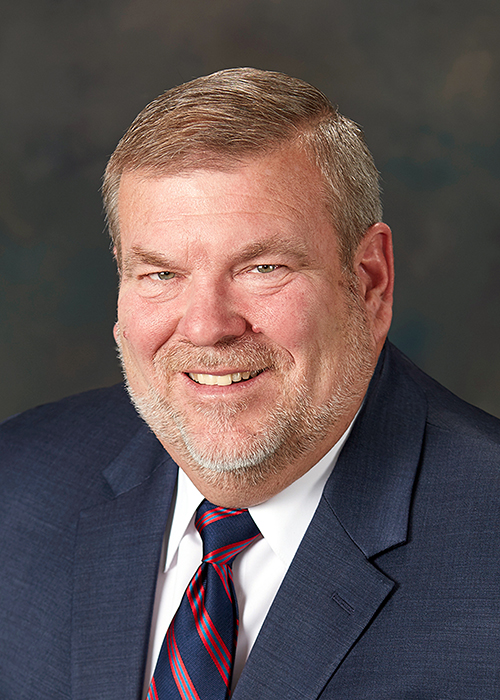
Rep. Charlie Meier
Sponsored bills
Amends the Civil Administrative Code of Illinois. Provides that the Director of Veterans' Affairs shall be a veteran who was honorably discharged from the United States Armed Forces and has experience in either a medical profession, health care, or assisted living facility management.
Amends the Use Tax Act, the Service Use Tax Act, the Service Occupation Tax Act, and the Retailers' Occupation Tax Act. Provides that, beginning 30 days after the effective date of the amendatory Act, the cents per gallon rate established by the Department of Revenue for the prepayment of tax by motor fuel retailers may not exceed $0.18 per gallon for motor fuel and 80% of that amount for gasohol and biodiesel blends. Provides that the rate of tax imposed under the Acts for motor fuel, gasohol, majority blended ethanol fuel, and biodiesel and biodiesel blends may not exceed that prepayment amount set by the Department of Revenue. Effective immediately.
Amends the General Provisions Article of the Illinois Pension Code. Provides that benefit or annuity payments to a member or participant shall be suspended if the member or participant is indicted or charged by information with a felony and the board of the retirement system or pension fund determines that the felony relates to or arises out of or in connection with his or her service as a member or participant of the retirement system or pension fund. Provides that if the member or participant is not convicted of that felony, payment of the benefit or annuity shall resume and the retirement system or pension fund shall pay to the member or participant the amount of the suspended annuity or benefit payments with interest. Provides that if the member or participant is convicted of that felony, the suspended annuity or benefit payments shall not be paid to the member or participant. Provides that the amendatory Act applies without regard to whether the member or participant first became a member or participant of a retirement system or pension fund before the effective date. Amends the State Mandates Act to require implementation without reimbursement. Effective immediately.
Affirms trust in the decision Illinoisans made when they rejected the path to taxing retirement income by prohibiting the "Fair Tax" from becoming enacted in the 2020 election.
Commends Officer Rob Horner and paramedic Martin Carlen for their quick thinking, decisive actions, and teamwork that helped rescue two senior citizens from Silver Lake on September 8, 2021.
Recognizes the importance of the National Great Rivers Research and Education Center (NGRREC) as a leader in fresh water research and education. Congratulates Executive Director Dr. Gary Rolfe and the NGRREC on its 20th anniversary.
Creates the Illinois Industrial Biotechnology Partnership Act. Establishes the Industrial Biotechnology Public-Private Partnership as a State-sponsored board consisting of specified members to promote and market Illinois as a destination for research, development, and commercialization for industrial biotechnology. Provides for the appointment of members to the Partnership. Provides requirements concerning meetings and compensation. Provides for administrative and other support to the Partnership. Provides for duties and funding of the Partnership. Provides reporting requirements. Provides for the adoption of rules. Defines terms. Amends the Department of Commerce and Economic Opportunity Law. Creates the Industrial Biotechnology Workforce Development Grant Program. Provides that the Program shall provide grants for the purpose of fostering a well-trained and well-skilled industrial biotechnology workforce. Provides funding and eligibility requirements. Provides reporting requirements. Provides for the adoption of rules. Amends the State Finance Act. Creates the Industrial Biotechnology Human Capital Fund and Industrial Biotechnology Capital Maintenance Fund as special funds in the State treasury for specified purposes. Provides for funding of each Fund. Allows the use of Fund moneys for specified grants. Provides reporting requirements. Provides for the adoption of rules. Amends the Economic Development for a Growing Economy Tax Credit Act. Requires the Department of Commerce and Economic Opportunity to evaluate the tax credit program regarding employment and investment criteria to ensure that the program is applicable to both small startup firms as well as existing companies in the industrial biotechnology field. House Committee Amendment No. 2 Deletes reference to: 20 ILCS 605/605-1055 new 30 ILCS 105/6z-124 new 30 ILCS 105/6z-125 new 35 ILCS 10/5-75 Adds reference to: 20 ILCS 605/605-1095 new 30 ILCS 105/6z-130 new 30 ILCS 105/6z-131 new Replaces everything after the enacting clause. Reinserts the provisions of the engrossed bill with changes. Makes changes to the membership of the Industrial Biotechnology Public-Private Partnership. Provides that members shall be appointed within 90 days (instead of 30 days) after the effective date of the Act. Provides that the Partnership shall develop and direct efforts to attract companies to use existing Illinois facilities for research, development, and pre-commercialization activities. Provides that the Department of Commerce and Economic Opportunity, or a non-profit organization designated by the Department of Commerce and Economic Opportunity, shall provide administrative and other support to the Partnership (instead of the Department of Commerce and Economic Opportunity alone). Provides that the Partnership is dissolved on December 31, 2025. Provides that certain grant programs created in the engrossed bill are subject to appropriation. Contains provisions concerning private matching funds necessary for the expenditure of funds appropriated to the Department of Commerce and Economic Opportunity for the use of the Industrial Biotechnology Public-Private Partnership. Provides that reports concerning the grant programs established in the bill are due on or before January 31 of the year following the fiscal year in which the moneys are allocated. Removes amendatory provisions requiring the Department of Revenue to evaluate the Economic Development for a Growing Economy Tax Credit Program. Makes conforming and other changes.
Amends various laws to include emergency medical dispatchers in references to first responders. House Floor Amendment No. 2 Deletes reference to: 820 ILCS 310/1 Deletes from the engrossed bill a proposed amendment to the Workers' Occupational Diseases Act that would have expressly provided that emergency medical dispatchers are COVID-19 first responders.
Amends the Community Mental Health Act. Makes a technical change in a Section concerning the short title. Senate Floor Amendment No. 1 Deletes reference to: 405 ILCS 20/0.1 from Ch. 91 1/2, par. 300.1 Adds reference to: 410 ILCS 50/3.2 from Ch. 111 1/2, par. 5403.2 Replaces everything after the enacting clause. Amends the Medical Patient Rights Act. Removes language providing that nothing in the Act shall restrict the ability of a health care facility to regulate the hours of visitation, the number of visitors per patient or the movement of visitors within the facility. Provides that, during a period for which the Governor has issued a proclamation declaring that a disaster exists or in the event of an outbreak or epidemic of a communicable disease in the community in which the health care facility is located, a health care facility shall ensure an opportunity for at least one visitor, not counting a clergy person, to visit a resident or patient of the health care facility. Requires visitation to be subject to the guidelines, conditions, and limitations of the health care facility's visitation policy and any rules or guidelines established by the U.S. Centers for Medicare and Medicaid Services and the Centers for Disease Control and Prevention. Provides that visitors may be required by the health care facility to submit to health screenings necessary to prevent the spread of infectious disease. Provides that a health care facility may restrict a visitor who does not pass its health screening requirement and require a visitor to adhere to infection control procedures. Provides that a health care facility may deny visitation under the Act if the situation demands. Makes other changes. Effective immediately. House Floor Amendment No. 2 Replaces everything after the enacting clause. Reinserts the provisions of the engrossed bill with the following changes. Authorizes a skilled nursing home, extended care facility, or intermediate care facility to prohibit an individual from visiting a resident or patient of the nursing home or facility if specific facts demonstrate that the individual would endanger his or her physical health or safety or the health or safety of a resident, patient, or health care worker of the nursing home or facility. Requires such a denial to be in writing and provided to the individual and the resident or patient with whom the individual was denied visitation. Requires each skilled nursing home, extended care facility, and intermediate care facility to inform each resident of the nursing home or facility (or that individual's representative) of the resident's visitation rights and the facility's visitation-related policies and procedures. Specifies that these nursing homes and facilities must not restrict, limit, or otherwise deny visitation privileges on the basis of race, color, national origin, religion, sex, gender identity, sexual orientation, or disability. Requires the nursing homes and facilities to ensure that all visitors enjoy full and equal visitation privileges, consistent with the residents' preferences.