

Amends the Unified Code of Corrections. Provides that if the court finds that an offender sentenced to a term of imprisonment for a felony meets the eligibility requirements of the Department of Corrections, the court may in its sentencing order approve the offender for placement in the impact incarceration program and the Department shall accept the offender in the program (rather than the Department must consent to the offender's acceptance in the program). House Floor Amendment No. 2 Replaces everything after the enacting clause. Amends the Unified Code of Corrections. In a provision concerning impact incarceration, deletes references to "incarceration". Provides that to participate in the program, the person must be physically able to participate in physical activities (rather than strenuous physical activities or labor). Provides that the program shall include community service activities, cognitive behavioral programming, life skills, and reentry planning, in addition to other requirements. Deletes certain program requirements including mandatory physical training and labor, military formation and drills, regimented activities, and uniformity of dress and appearance. Extends the participation period from a range of 120 to 180 days to a range of one year to 18 months. Provides that a committed person shall not have the time required to successfully complete the program extended beyond the maximum 18 month period of participation. Provides that the Department of Corrections shall advocate for the impact program and the Department may identify candidates for participation in the program that were not previously recommended and formally submit the names to the State's Attorney of the committing county.
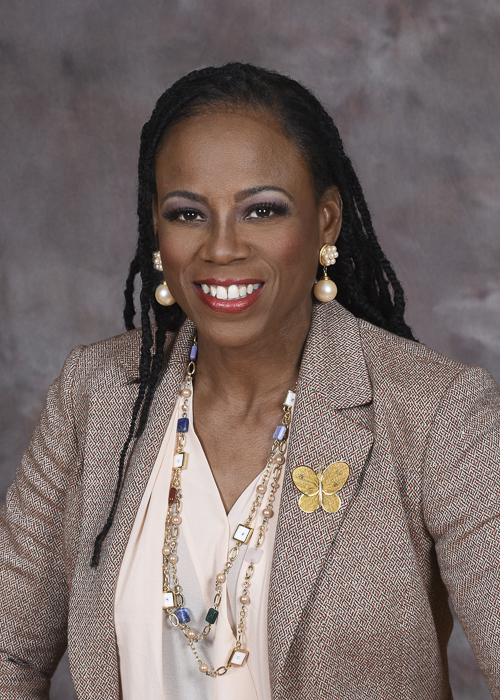
Rep. Carol Ammons
Sponsored bills
Amends the Property Tax Code. Provides that certification of the levy by the county clerk may be done electronically. House Floor Amendment No. 1 Replaces everything after the enacting clause. Reinserts the provisions of the engrossed bill. Provides that the materials that may be submitted electronically include any supplemental or supportive documentation.
Amends the Business Enterprise for Minorities, Women, and Persons with Disabilities Act. Provides that all State agencies shall recognize and accept the certifications of businesses that have been certified as minority-owned businesses or women-owned businesses for purposes of participating in the Business Enterprise Program, when such certification was provided by any entity having certification requirements more restrictive than that required by the Business Enterprise Program, including, but not limited to, an income level requirement. Senate Committee Amendment No. 1 Deletes reference to: 30 ILCS 575/8k new Adds reference to: 30 ILCS 575/8l new Replaces everything after the enacting clause. Reinserts the provisions of the engrossed bill with changes. Provides that the Business Enterprise Program (rather than State agencies) shall recognize and accept the certifications of businesses that have been certified as minority-owned businesses or women-owned businesses by the City of Chicago, Cook County, or other entities approved by the Business Enterprise Council for purposes of participating in the Business Enterprise Program, provided that the City of Chicago, Cook County, or other entities approved by the Business Enterprise Council have certification requirements more restrictive than that required by the Business Enterprise Program, including, but not limited to, an income level requirement. Makes other changes.
Amends the Department of Commerce and Economic Opportunity Law of the Civil Administrative Code of Illinois. Provides that the Department of Commerce and Economic Opportunity shall establish criteria and guidelines for State-designated cultural districts. Specifies powers and duties of the Department. Provides requirements concerning certification of State-designated cultural districts. Provides State-designated cultural district reporting requirements. Defines "State-designated cultural district". Senate Committee Amendment No. 1 Replaces everything after the enacting clause. Reinserts the provisions of the introduced bill with changes. Requires the Department of Commerce and Economic Opportunity to establish an advisory committee to advise the Department on program rules and the certification process. Provides for the members of the advisory committee. Modifies and provides further requirements concerning certification of State-designated cultural districts. Makes other changes. Senate Floor Amendment No. 2 Replaces everything after the enacting clause with the provisions of Senate Amendment No. 1, and makes a change providing that the advisory committee to advise the Department of Commerce and Economic Opportunity on program rules and the certification process shall include 4 community representatives (rather than 2) appointed by the Governor representing diverse racial, ethnic, and geographic groups not captured in the membership of the other designees, with the input of community and stakeholder groups. House Floor Amendment No. 2 Deletes reference to: 20 ILCS 605/605-1055 new Adds reference to: 20 ILCS 605/605-1057 new Replaces everything after the enacting clause. Reinserts the provisions of the engrossed bill with changes. Modifies the powers and duties of the Department of Commerce and Economic Opportunity regarding the establishment of State-designated cultural districts. Modifies the composition of the advisory committee. Provides that the advisory committee shall reflect the diversity of the State of Illinois, including geographic, racial, and ethnic diversity. Provides further requirements concerning certification of State-designated cultural districts. Provides that the Department shall award no more than 5 State-designated cultural districts every year, and that the total amount of State-designated cultural districts shall be more than 15. Provides that any State-designated cultural district that fails to file the specified required report for 2 consecutive years shall lose its status. Repeals provisions on July 1, 2031. Makes other changes. House Floor Amendment No. 3 Provides for the appointment of members to the advisory committee by the Minority Leaders of the House of Representatives and the Senate.
Amends the Privacy of Child Victims of Criminal Sexual Offenses Act. Provides that law enforcement agency records and all circuit court records relating to any investigation or proceeding pertaining to a criminal sexual offense shall be restricted to exclude the identity of a child victim, and shall not be restricted to exclude the identity of any child who is a victim of such criminal sexual offense or alleged criminal sexual offense only if a court order is issued authorizing the disclosure of a particular case or particular cases records maintained by any circuit court clerk. Senate Committee Amendment No. 1 Replaces everything after the enacting clause. Reinserts the provisions of the bill as introduced, with the following change: Clarifies language related to restricting the identity of child victims of criminal sexual offenses or alleged criminal sexual offenses by providing that such identity shall be restricted unless a court order is issued authorizing the removal of such restriction of a particular case record or particular records of cases maintained by any circuit court clerk. House Committee Amendment No. 1 Further amends the Privacy of Child Victims of Criminal Sexual Offenses Act. Provides that an advocate and victim's attorney may be exempt from a requirement to exclude a victim's identity in certain records (in addition to the exemptions provided in current law). Provides that the copy of the criminal history record information to be provided under a specified provision shall exclude the identity of the child victim. Provides that, in a provision concerning criminal sexual offense and school districts, a superintendent shall be restricted from revealing the identity of the victim. Provides that nothing in this Article precludes or may be used to preclude a mandated reporter from reporting child abuse or child neglect as required under the Abused and Neglected Child Reporting Act. House Floor Amendment No. 2 Provides that the Attorney General and Assistant Attorneys General may be exempt from a requirement to exclude a victim's identity in certain records.
Creates the Know Before You Owe Private Education Loan Act. Requires private educational lenders to obtain from the relevant institution of higher education at which the borrower will use the loan proceeds certifications regarding cost, enrollment status of the borrower, and financial assistance available to the borrower. Provides that private educational lenders must file reports with the Department of Financial and Professional Regulation and the Student Loan Ombudsman. Provides that loan statements must be provided not less frequently than quarterly. Requires institutions of higher education to certify compliance with provisions of the Act to the Board of Higher Education or Illinois Community College Board as a condition to operate. Defines terms. Effective immediately. House Floor Amendment No. 2 Revises a cross-reference to certain certifications required under the Act to be made by an institution of higher education. Senate Committee Amendment No. 1 Defines the term "annual percentage rate" and requires disclosure of that rate. Provides an exemption from reporting for private educational lenders that fund 10 or fewer educational loans in a calendar year. Adds disclosure requirements for income share agreements.
Amends the Illinois Dental Practice Act. Makes a technical change in a Section concerning advertising. House Floor Amendment No. 3 Deletes reference to: 225 ILCS 25/45 Adds reference to: 225 ILCS 25/19.2 745 ILCS 49/20 Replaces everything after the enacting clause. Amends the Illinois Dental Practice Act. Provides that the Department of Financial and Professional Regulation may issue a temporary permit authorizing the practice of dentistry (rather than dentistry or dental hygiene) if specified conditions are satisfied, including a collaborative agreement with and under the direct supervision of an Illinois licensed dentist. Provides that the temporary permit shall only permit the holder to practice dentistry within the scope of the dental studies and in conjunction with a charitable organization or a continuing education program provided by a continuing education sponsor approved by the Department. Provides for the licensure of continuing education sponsors by the Department. Provides that a temporary visiting dentist may not administer conscious sedation, deep sedation, or general anesthesia. Provides that a patient who seeks treatment from a temporary visiting dentist must sign a consent form acknowledging that the care the patient will receive will be provided by a dentist not licensed in the State of Illinois. Provides that a temporary permit shall be valid for no longer than 5 consecutive clinical days within 6 months from the date of issuance. Provides for the cancellation of temporary permits and licenses by the Secretary of Financial and Professional Regulation. Amends the Good Samaritan Act. Provides that provisions concerning exemption from civil liability for certain dental services performed without compensation do not apply to a dentist issued a temporary visiting dentist permit.
Amends the Community Benefits Act. Provides that the Act applies to all nonprofit and public hospitals licensed under the Hospital Licensing Act or operated under the University of Illinois Hospital Act (rather than not applying to a hospital operated by a unit of government, a hospital located outside of a metropolitan statistical area, or a hospital with 100 or fewer beds). Requires community benefits plans to describe activities the hospital is undertaking to address health equity, reduce health disparities, and improve community health. Provides that, in order to increase transparency and accessibility of charity care and financial assistance data, the Attorney General shall post on the Attorney General's website: all community benefits plans contained in reports submitted by hospitals; and a compiled report that summarizes information from completed community benefits plans. Provides that an electronic version of the compiled report shall be sent to the Governor and each member of the General Assembly. Provides a late filing fee for nonprofit hospitals for community benefits plans of $2,500 per month that the report is late (rather than $100). Makes other changes. Amends the Hospital Uninsured Patient Discount Act. Provides that a hospital, other than a rural hospital or a Critical Access Hospital, shall provide a discount from charges to specified uninsured patients for all medically necessary health care services exceeding $150 (rather than $300) in any one inpatient admission or outpatient encounter. Provides for civil monetary penalties of $1,000 to $5,000 (rather than $500) for a violation. Requires the Attorney General to publish an annual report that outlines complaints received related to hospital uninsured discount programs and financial assistance applications. Makes other changes. Effective immediately. Senate Floor Amendment No. 1 Deletes reference to: 210 ILCS 76/5 210 ILCS 76/25 Replaces everything after the enacting clause with the provisions of the introduced bill and makes the following changes. Removes language specifying that the Act applies to all nonprofit and public hospitals licensed under the Hospital Licensing Act or operated under the University of Illinois Hospital Act. Removes language changing the provisions concerning a nonprofit hospital that fails to make a report of the community benefits plan. Removes language increasing civil monetary penalties. Provides that hospitals shall permit an uninsured patient to apply for a discount within 90 days (rather than 60 days) of the date of discharge or date of service. Provides that hospitals shall offer uninsured patients who receive community-based primary care provided by a community health center or a free and charitable clinic, are referred by such an entity to the hospital, and seek access to nonemergency hospital-based health care services with an opportunity to be screened for and assistance with applying for public health insurance programs if there is a reasonable basis to believe that the uninsured patient may be eligible for a public health insurance program. Changes the effective date from immediate to January 1, 2022. Makes other changes. House Committee Amendment No. 1 In provisions of the Hospital Uninsured Patient Discount Act regarding patient responsibility, provides that hospitals may make the availability of a discount and the maximum collectible amount under the Act contingent upon the uninsured patient first applying for coverage under public health insurance programs (rather than public programs) if there is a reasonable basis to believe that the uninsured patient may be eligible for such program.
Creates the Preventing Youth Vaping Act. Provides that it is unlawful for a person to sell or distribute specified electronic cigarettes and electronic cigarette packaging. Contains advertising and manufacturing requirements. Provides civil and criminal penalties. Provides that the Department of Agriculture, Department of Revenue, Department of Public Health, and Illinois State Police shall have equal and joint authority to administer and enforce the Act, may adopt rules, and may inspect any business that manufactures, transports, or distributes electronic cigarettes to ensure compliance with the Act. Amends the Prevention of Tobacco Use by Persons under 21 Years of Age and Sale and Distribution of Tobacco Products Act. Removes language providing that an "electronic cigarette" does not include a tobacco product and that a "tobacco product" does not include an electronic cigarette. Provides prohibitions regarding the sale of electronic cigarettes and allows specified peace officers to seize any tobacco products or electronic cigarettes involved in a specified violation. Makes other changes. Amends the Prevention of Cigarette Sales to Persons under 21 Years of Age Act. Changes the Act's title to the Prevention of Cigarette and Electronic Cigarette Sales to Persons under 21 Years of Age Act. Defines "electronic cigarette" and refers to electronic cigarettes in conjunction with cigarettes. Makes other changes. Effective immediately. Senate Floor Amendment No. 1 Deletes reference to: 720 ILCS 678/9 Replaces everything after the enacting clause with the provisions of the introduced bill with the following changes. In provisions of the Preventing Youth Vaping Act regarding prohibitions, removes language providing that it is unlawful to sell in any one transaction more than 2 electronic cigarettes, 4 prepackaged cartridges of electronic cigarette solution, or 100 milliliters of electronic cigarette solution to a consumer. Provides that "electronic cigarette" does not include any device that meets the definition of cannabis paraphernalia under the Cannabis Regulation and Tax Act. Provides that electronic cigarettes first sold prior to August 8, 2016 and for which a premarket tobacco product application was submitted to the U.S. Food and Drug Administration by September 9, 2020 shall not be deemed to be in violation of specified provisions. Removes language requiring manufacturers to annually submit specified reports and lists of ingredients to the Attorney General. In provisions amending the Prevention of Tobacco Use by Persons under 21 Years of Age and Sale and Distribution of Tobacco Products Act, provides that no person shall honor or accept any discount, coupon, or other benefit or reduction in price that is inconsistent with specified provisions, subsequent United States Food and Drug Administration industry guidance, or any rules adopted under the specified federal provisions (instead of specified prohibitions). Makes other changes. In provisions amending the Prevention of Cigarette Sales to Persons under 21 Years of Age Act, removes changes to provisions concerning statements for delivery sales. Makes other changes. Effective immediately. House Floor Amendment No. 3 In provisions creating the Preventing Youth Vaping Act, provides that the Department of Revenue may adopt rules that are reasonable, necessary, and related to the administration and enforcement of the provisions of the Act (rather than providing that the Department of Agriculture, the Department of Revenue, the Department of Public Health, and the Illinois State Police shall have equal and joint authority to administer and enforce the Act and may adopt rules for the purpose of administering and enforcing the Act). Provides that the Department of Revenue, the Department of Public Health, a local public health department, the Department of Human Services, the Illinois State Police, a county sheriff, and a municipal police department (rather than the Department of Agriculture, Department of Revenue, Department of Public Health, and Illinois State Police) may inspect any business that sells, manufactures, transports, or distributes electronic cigarettes in the State to ensure compliance with the Act. Requires any violation of the Act to be reported to the Department of Revenue within 7 business days. In provisions amending the Prevention of Tobacco Use by Persons under 21 Years of Age and Sale and Distribution of Tobacco Products Act, removes language providing that no person under 21 years of age shall buy any tobacco product, electronic cigarette, or alternative nicotine product. Provides that any peace officer or duly authorized member of the Illinois State Police, a county sheriff's department, a municipal police department, the Department of Revenue, the Department of Public Health, a local health department, or the Department of Human Services (rather than any peace officer or duly authorized member of the Department of Revenue or the Department of Public Health) may seize specified products. Provides that after the Department of Revenue has seized any tobacco product, nicotine product, or electronic cigarette under the amendatory provisions and a person having any property interest in the seized property has not been charged with an offense under specified provisions, the Department of Revenue must hold a hearing and determine specified information. Removes language providing an immediate effective date. Makes other changes.
Amends the Illinois School Student Records Act. Makes a technical change in a Section concerning the short title. Senate Floor Amendment No. 2 Deletes reference to: 105 ILCS 10/1 Adds reference to: New Act Replaces everything after the enacting clause. Creates the Commission on Equitable Public University Funding Act. Creates the Commission on Equitable Public University Funding for the purpose of recommending specific data-driven criteria and approaches to the General Assembly to adequately, equitably, and stably fund public universities in this State and to evaluate existing funding methods. Sets forth the membership of the Commission. Sets forth the recommendations the Commission must include in the report to the General Assembly. Contains provisions concerning administrative support, compensation, meetings, reporting, and compliance. Effective immediately. House Committee Amendment No. 1 Adds the chairperson of the Higher Education Working Group to the membership of the Commission. Provides that the recommendations made by the Commission may be informed by the data-driven findings and recommendations established by the Chicago State University Equity Working Group and other groups (rather than by the Chicago State University Equity Working Group or other groups). House Floor Amendment No. 3 Replaces everything after the enacting clause. Reinserts the contents of the engrossed bill with changes. Adds to the membership of the Commission on Equitable Public University Funding. Makes conforming and other changes. Effective immediately. House Floor Amendment No. 4 Adds the Minority Spokesperson of the Higher Education Committee of the House of Representatives and the Minority Spokesperson of the Higher Education Committee of the Senate to the membership of the Commission.