

Creates the Community Emergency Services and Supports Act. Provides that the Act applies to every unit of local government that provides or coordinates ambulance or similar emergency medical response or transportation services for individuals with emergency medical needs. A home rule unit may not respond to or provide services for a mental or behavioral health emergency, or create a transportation plan or other regulation, relating to the provision of mental or behavioral health services in a manner inconsistent with this Act. Provides that one plan shall describe how the EMS Region will provide mobile emergency mental and behavioral health services to individuals who do not present as a threat to the responders, and are not involved in criminal activity at the time of the response. Provides that the plan shall conform to the requirements of the Act and, recognizing the variety of systems, services, and needs across the State, provide the specific requirements and guidance appropriate for that region. Provides that the plan shall be identified as the region's community emergency services and supports plan. Provides that the second plan shall describe the manner and extent to which responders operating under the region's Community Emergency Services and Supports Plan coordinate with law enforcement when responding to individuals who appear to be in a mental or behavioral health emergency while engaged in conduct alleged to constitute a non-violent misdemeanor. Provides that the plan shall be identified as the region's Non-Violent Misdemeanor Coordination Plan. Amends the Emergency Telephone System Act to make conforming changes. Effective immediately. Fiscal Note (Dept. of Human Services) The fiscal impact to IDHS to provide for the establishment and oversight on the committees would be minimal. House Floor Amendment No. 1 Replaces everything after the enacting clause. Creates the Community Emergency Services and Support Act. Provides that each 9-1-1 call center and provider of emergency services dispatched through a 9-1-1 system must coordinate with the mobile mental and behavioral health services established by the Division of Mental Health of the Department of Human Services so that the following State goals and State prohibitions are met whenever a person interacts with one of these entities for the purpose seeking emergency mental and behavioral health care or when one of these entities recognizes the appropriateness of providing mobile mental or behavioral health care to an individual with whom they have engaged. Provides that the Division of Mental Health is also directed to provide guidance regarding whether and how these entities should coordinate with mobile mental and behavioral health services when responding to individuals who appear to be in a mental or behavioral health emergency while engaged in conduct alleged to constitute a non-violent misdemeanor. Provides that 9-1-1 call centers, emergency services dispatched through 9-1-1 call centers, and the mobile mental and behavioral health service established by the Division of Mental Health must coordinate their services so that certain specified State prohibitions are avoided. Provides that the Division of Mental Health shall establish regional advisory committees in each EMS Region to advise on emergency response systems for mental and behavioral health. Provides that the Act applies to persons of all ages, both children and adults. Provides that the Act does not limit an individual's right to control his or her own medical care. No provision of this Act shall be interpreted in such a way as to limit an individual's right to choose his or her preferred course of care or to reject care. Provides that no provision of this Act shall be interpreted to promote or provide justification for the use of restraints when providing mental or behavioral health care. Amends the Emergency Telephone System Act to make conforming changes. Senate Committee Amendment No. 1 Deletes reference to: 50 ILCS 750/4 Replaces everything after the enacting clause. Creates the Community Emergency Services and Support Act. Provides that each 9-1-1 call center and provider of emergency services dispatched through a 9-1-1 system must coordinate with the mobile mental and behavioral health services established by the Division of Mental Health of the Department of Human Services so that the following State goals and State prohibitions are met whenever a person interacts with one of these entities for the purpose seeking emergency mental and behavioral health care or when one of these entities recognizes the appropriateness of providing mobile mental or behavioral health care to an individual with whom they have engaged. The Division of Mental Health is also directed to provide guidance regarding whether and how these entities should coordinate with mobile mental and behavioral health services when responding to individuals who appear to be in a mental or behavioral health emergency while engaged in conduct alleged to constitute a non-violent misdemeanor. Provides that 9-1-1 PSAPs, emergency services dispatched through 9-1-1 PSAPs, and the mobile mental and behavioral health service established by the Division of Mental Health must coordinate their services so that the State goals listed in this Section are achieved. Appropriate mobile response service for mental and behavioral health emergencies shall be available regardless of whether the initial contact was with 9-8-8, 9-1-1 or directly with an emergency service dispatched through 9-1-1. Provides that the Division of Mental Health shall establish a Statewide Advisory Committee to review and make recommendations for aspects of coordinating 9-1-1 and the 9-8-8 mobile mental health response system most appropriately addressed on a State level. Provides that the Division of Mental Health shall establish Regional Advisory Committees in each EMS Region to advise on regional issues related to emergency response systems for mental and behavioral health. Provides that the exemptions from civil liability in the Emergency Telephone Systems Act apply to any act or omission in the development, design, installation, operation, maintenance, performance, or provision of service directed by the Act. Provides that the Act applies to persons of all ages, both children and adults. This Act does not limit an individual's right to control his or her own medical care. No provision of this Act shall be interpreted in such a way as to limit an individual's right to choose his or her preferred course of care or to reject care. No provision of this Act shall be interpreted to promote or provide justification for the use of restraints when providing mental or behavioral health care. Senate Floor Amendment No. 2 Make technical and stylistic changes in the bill as amended by Senate Amendment No. 1. Adds additional responsibilities for 9-1-1 Public Safety Answering Point telecommunicators and emergency service providers. Places the applicability and home rule preemption provisions in a separate Section of the bill.
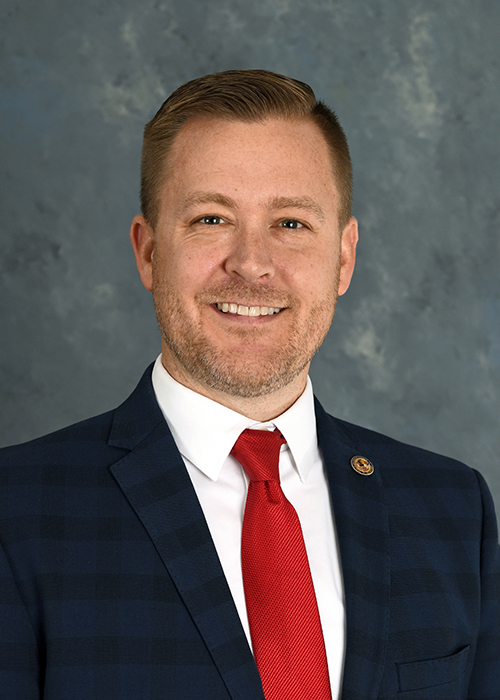
Rep. C.D. Davidsmeyer
Sponsored bills
Amends the Banking Emergencies Act. Provides that any day on which a bank, or any one or more of its offices, is closed during all or any part of its normal banking hours due to an emergency or impending emergency affecting the bank or any one or more of its offices (rather than pursuant to authorization granted by the Secretary) shall be a legal holiday for all purposes with respect to any banking business of any character. Provides that the Department of Financial and Professional Regulation may adopt rules to address the closing or alteration of hours by banks at one or more of their offices when affected by an emergency or impending emergency. Repeals provisions concerning powers of the Secretary of Financial and Professional Regulation and provisions concerning notice to the Secretary and the public. Senate Committee Amendment No. 1 Deletes reference to: 205 ILCS 610/2 rep. 205 ILCS 610/3 rep. Adds reference to: 205 ILCS 610/2 from Ch. 17, par. 1002 205 ILCS 610/3 from Ch. 17, par. 1003 Replaces everything after the enacting clause. Amends the Banking Emergencies Act. In provisions concerning powers of the Secretary of Financial and Professional Regulation, provides that following a proclamation by the Secretary that authorizes banks to close or alter the hours at any or all of the bank offices due to an emergency, the officers of the bank may, at an earlier time than a proclamation by the Secretary that the emergency or impending emergency has ended, determine that the closed office or offices should reopen and the amount of time reasonably necessary to reopen. Provides that the officers of a bank shall have the authority to determine not to open any of the bank's offices or to close an office if an emergency exists, or is impending, which affects or may affect the bank's offices, even if the Secretary does not issue a proclamation. Provides that the office closed shall remain closed until the time that the officers determine the emergency has ended, and for the further amount of time reasonably necessary to reopen. Provides that no bank office shall remain closed for more than 48 consecutive hours. Provides that the Department of Financial and Professional Regulation may adopt rules to address the closing or alteration of hours by banks at one or more of their offices when affected by an emergency or impending emergency. Makes other changes.
Amends the Illinois Vehicle Code. Provides that provisions restricting the transportation of students to certain vehicles does not apply to any motor vehicle of the first division or the second division while that vehicle is being operated by specified entities for the purpose of transporting students to or from any agrarian-related school activity. Effective immediately. Senate Floor Amendment No. 1 Provides that a student participating in an agrarian-related activity may be transported in certain second division pick-up trucks. Deletes language providing that provisions restricting the transportation of students to certain vehicles does not apply to any motor vehicle of the first division or the second division while that vehicle is being operated by specified entities for the purpose of transporting students to or from any agrarian-related school activity.
Amends the Emergency Medical Services (EMS) Systems Act. Provides that, in a rural population of 7,500 or fewer inhabitants, each EMS System medical director shall create an exception to the credentialing process to allow registered nurses, physician assistants, and advanced practice registered nurses to serve as EMTs. Requires each EMS System medical director to accept documentation from an applicant detailing education from either continuing education or documented work experience and practical skill credentialing including, but not limited to, airway management, ambulance operations, extrication, telecommunications, and pre-hospital cardiac and trauma care. Requires each EMS System medical director to ensure that applicants meet EMS System requirements for credentialing and authorizing the practice in accordance with the EMS System Plan as an EMT. House Floor Amendment No. 2 Replaces everything after the enacting clause. Amends the Emergency Medical Services (EMS) Systems Act. Provides that, in a rural population of 5,000 or fewer inhabitants, each EMS System Medical Director may create an exception to the credentialing process to allow registered nurses, physician assistants, and advanced practice registered nurses to apply to serve as volunteers who perform the same work as EMTs. Requires that, as part of the volunteer recognition process, EMS Systems shall ensure that registered nurses, physician assistants, and advanced practice registered nurses have an active license issued by the Department of Financial and Professional Regulation. Provides that the system-level recognition shall require documentation and proof of the completion of at least 20 hours of prehospital care-specific coursework approved by the Department of Public Health and 8 hours of observant riding time. Provides that each EMS System Medical Director who creates an exception to the credentialing process may require additional training or documentation and may reject a volunteer applicant for just cause. Provides that each exemption period shall be no longer than one year, after which time a volunteer applicant may apply for another exemption. Provides that each EMS System Medical Director is responsible for ensuring that volunteer applicants meet EMS System requirements for credentialing and authorizing the practice in accordance with the EMS System plan for basic life support. Provides that exceptions to the credentialing process are only allowable for volunteer EMS agencies in Illinois.
Amends the Downstate Teacher Article of the Illinois Pension Code. Provides that through June 30, 2023 (instead of June 30, 2021), an annuitant may accept employment as a teacher without impairing his or her retirement status if that employment is not within the school year during which service was terminated and does not exceed 120 paid days or 600 paid hours in each school year. Makes a conforming change. Effective immediately.
Creates the Prescription Drug Repository Program Act. Requires the Department of Public Health to, by rule, establish a prescription drug repository program, under which any person may donate a prescription drug or supplies needed to administer a prescription drug for use by an individual who meets eligibility criteria specified by the Department. Sets forth requirements that prescription drugs or supplies must meet in order to be accepted and dispensed under the program. Provides that no drugs or supplies donated under the prescription drug repository program may be resold. Provides that nothing in the Act requires that a pharmacy or pharmacist participate in the prescription drug repository program. Provides for civil and criminal immunity for drug and supply manufacturers and individuals in relation to the donation, acceptance, or dispensing of prescription drugs or supplies under the prescription drug repository program. Imposes conditions on any rulemaking authority. Amends the Pharmacy Practice Act, the Wholesale Drug Distribution Licensing Act, the Senior Pharmaceutical Assistance Act, the Illinois Food, Drug and Cosmetic Act, the Illinois Controlled Substances Act, and the Cannabis and Controlled Substances Tort Claims Act to provide that persons engaged in donating or accepting, or packaging, repackaging, or labeling, prescription drugs to the extent permitted or required under the Prescription Drug Repository Program Act are exempt from provisions of those other Acts that might prohibit or otherwise regulate such activity. House Committee Amendment No. 1 Replaces everything after the enacting clause. Creates the Illinois Drug Reuse Opportunity Program Act. Provides that, notwithstanding any other law or rule, donors may donate drugs to recipients and recipients may receive donated drugs from donors. Provides that recipients shall only dispense or administer drugs to eligible patients, further donate drugs to another recipient, or dispose of drugs in accordance with specified provisions. Provides that drugs donated for use under the Act are considered nonsaleable. Provides that, when dispensing a drug to an eligible patient, the recipient must do so at no cost to the eligible patient, except that a reasonable handling fee may be charged. Provides that recipients may only dispense or administer a prescription drug or provide an over-the-counter drug if specified requirements are met. Provides that recipients shall, to the greatest extent practicable, dispense drugs received under the Act to priority patients. Provides that drugs may be accepted under the Act only if specified requirements are met. Contains requirements for the further donation of drugs by a recipient. Contains provisions regarding the disposition of specified drugs. Provides that nothing in the Act requires that a pharmacy or pharmacist be a recipient of drugs under the Act. Provides that the Act shall supersede any inconsistent law or rule for activities conducted under the Act. Contains other provisions. Amends the Pharmacy Practice Act, the Wholesale Drug Distribution Licensing Act, the Senior Pharmaceutical Assistance Act, the Illinois Food, Drug and Cosmetic Act, the Illinois Controlled Substances Act, and the Cannabis and Controlled Substances Tort Claims Act to provide that persons engaged in donating or accepting, or packaging, repackaging, or labeling, prescription drugs to the extent permitted or required under the Illinois Drug Reuse Opportunity Program Act are exempt from provisions of those other Senate Committee Amendment No. 1 Replaces everything after the enacting clause. Reinserts the provisions of the engrossed bill with the following changes. Provides that "prescription drug" does not include a drug for the treatment of cancer that can only be dispensed to a patient registered with the drug manufacturer in accordance with the federal Food and Drug Administration's requirements. Provides that when dispensing a drug to an eligible patient, the recipient must do so at no cost to the eligible patient, except that a uniform reasonable handling fee (rather than a reasonable handling fee) may be charged.
Amends the Voluntary Payroll Deductions Act of 1983. Requires the Comptroller (rather than the Governor) to perform specified duties concerning the designation of organizations qualified to receive payroll deductions and the creation of an Advisory Committee under the Act. Amends the State Comptroller Act. Removes a provision requiring the Department of Central Management Services to transmit to the Comptroller a certified copy of all reports it may issue concerning State property. Amends the State Finance Act. Makes changes concerning fiscal year limitations. Repeals provisions concerning contracts signed by State agencies with procurement authority. Amends the Illinois Procurement Code. Makes changes concerning the filing of contracts with the Comptroller. Amends the State Prompt Payment Act. Requires specified information under the Vendor Payment Program to be disclosed on August 1 of each year (currently, July 1 of each year) for the previous fiscal year. Amends the Property Tax Code. Requires the State Comptroller to make available on the Comptroller's website a Fiscal Responsibility Report Card (currently, submit to the General Assembly and the clerk of each county a Fiscal Responsibility Report Card). Makes other changes. Effective immediately. Senate Committee Amendment No. 1 Adds reference to: 15 ILCS 405/19.5 15 ILCS 405/28 new 20 ILCS 415/4c from Ch. 127, par. 63b104c 30 ILCS 540/8 Replaces everything after the enacting clause. Amends the Voluntary Payroll Deductions Act of 1983. Requires the Comptroller (rather than the Governor) to perform specified duties concerning the designation of organizations qualified to receive payroll deductions and the creation of an Advisory Committee under the Act. Amends the State Comptroller Act. Removes a provision requiring the Department of Central Management Services to transmit to the Comptroller a certified copy of all reports it may issue concerning State property. Provides for Comptroller recess appointments. Amends the State Finance Act. Makes changes concerning fiscal year limitations. Repeals provisions concerning contracts signed by State agencies with procurement authority. Amends the Illinois Procurement Code. Makes changes concerning the filing of contracts with the Comptroller. Amends the State Prompt Payment Act. Requires specified information under the Vendor Payment Program to be disclosed on August 1 of each year (currently, July 1 of each year) for the previous fiscal year. Amends the Property Tax Code. Requires the State Comptroller to make available on the Comptroller's website a Fiscal Responsibility Report Card (currently, submit to the General Assembly and the clerk of each county a Fiscal Responsibility Report Card). Makes other changes. Effective immediately. House Committee Amendment No. 2 Adds reference to: 5 ILCS 80/4.32 5 ILCS 80/4.34 Adds provision amending the Regulatory Sunset Act. Extends the repeal of the Crematory Regulation Act from January 1, 2022 to January 1, 2024. House Floor Amendment No. 3 Removes provisions concerning extensions of the lapse period.
Amends the Medical Assistance Article of the Illinois Public Aid Code. Provides that the Department of Healthcare and Family Services shall reimburse epilepsy specialists, as defined by the Department by rule, who are authorized by Illinois law to provide epilepsy treatment services to persons with epilepsy or related disorders via telehealth. Provides that the Department shall establish, by rule, a method to reimburse providers for epilepsy treatment services provided by telehealth. Effective immediately.
Amends the Rehabilitation of Persons with Disabilities Act. Requires the Superintendent of the Illinois School for the Deaf to have a degree in educational administration, together with at least 10 years of experience in either deaf or hard of hearing education, the administration of deaf or hard of hearing education, or a combination of the 2 (rather than degrees in both educational administration and deaf education, together with at least 15 years of experience in either deaf education, the administration of deaf education, or a combination of the 2). Requires the Superintendent of the Illinois School of the Visually Impaired to have a degree in educational administration, together with at least 10 years of experience in either blind or visually impaired education, or a combination of the 2 (rather than degrees in both educational administration and blind and visually impaired education, the administration of blind or visually impaired education, or a combination of the 2). Effective immediately.
Amends the School Code, the Seizure Smart School Act, the College and Career Success for All Students Act, the Juvenile Court Act of 1987, the Sex Offender Community Notification Law, and the Murderer and Violent Offender Against Youth Registration Act to replace the terms "school guidance counselor" and "guidance counselor" with the term "school counselor". Effective July 1, 2021.