

Maddy summaryHR 45 (FIND Act) requires federal government contractors to certify they do not discriminate against firearm businesses (including manufacturers, dealers, and trade associations) in their policies or practices. The bill mandates that contractors and subcontractors (for contracts over 10% of the prime contract value) certify they have no discriminatory policies and will not adopt them during the contract term. Violations could lead to contract termination and potential debarment. This applies to all federal procurement contracts awarded after the bill's enactment, excluding sole-source contracts. The law aims to ensure firearm businesses are treated equally in government contracting without restricting legitimate business criteria like creditworthiness or legal compliance.
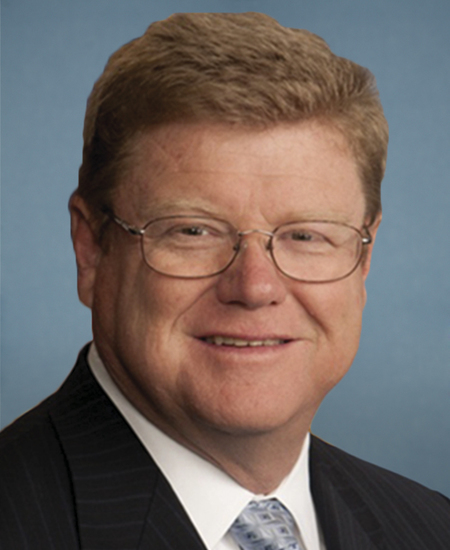
Rep. Mark E. Amodei
Sponsored bills
Maddy summaryHR 138, the Lowering Costs for Caregivers Act of 2025, expands tax-advantaged health savings by allowing taxpayers to use funds in Health Savings Accounts (HSAs), Flexible Spending Accounts (FSAs), and Health Reimbursement Arrangements (HRAs) to cover medical expenses for their parents, not just their spouse. The bill amends the Internal Revenue Code to explicitly include parents as eligible dependents under these accounts, removing prior restrictions. This change directly affects caregivers - primarily adult children supporting aging parents - who will now have greater flexibility to use pre-tax funds for their parents' medical care. The provisions apply to expenses incurred after December 31, 2024, and aim to reduce out-of-pocket costs for family caregivers.
Maddy summaryThe Treat and Reduce Obesity Act of 2023 expands Medicare coverage for obesity treatment by allowing a wider range of healthcare providers - including nurse practitioners, dietitians, psychologists, and community-based counseling programs - to deliver intensive behavioral therapy for obesity, provided they coordinate with primary care providers. It also adds Medicare Part D coverage for medications used to treat obesity or for weight loss management in overweight individuals with related health conditions like diabetes or high blood pressure. These changes directly affect Medicare beneficiaries, particularly older adults (65+), who face higher obesity rates and associated costs, including $50 billion annually in Medicare spending for obesity-related care. The bill requires annual reports to Congress on implementation to improve coordination of obesity care across federal health programs.
Maddy summaryThis bill, HR 1097 (Everett Alvarez, Jr. Congressional Gold Medal Act of 2023), authorizes the award of a Congressional Gold Medal to Everett Alvarez, Jr., in recognition of his service as a U.S. Navy pilot and Vietnam War prisoner of war. It directly honors Alvarez, who was the first U.S. pilot shot down in the Vietnam War, spent over 8.5 years in captivity, and later served in the Peace Corps and Veterans Administration. The bill’s key mechanism is directing the U.S. Mint to strike a gold medal bearing his name and image, with bronze duplicates available for sale to cover costs. It does not create new policies or affect any group beyond the honoree.
Maddy summaryHR 6070 clarifies the Department of Defense's authority to conduct specific military activities at Nevada's Test and Training Range. It explicitly authorizes emergency response, construction of up to 15 small electronic tracking sites (max 150x150 feet), and maintenance of existing roads for threat emitters. The bill also requires the Department of Defense and the Department of the Interior to jointly establish an interagency committee to coordinate activities and minimize conflicts with the Desert National Wildlife Refuge. This update ensures military operations align with wildlife refuge protections under existing law.
Maddy summaryThe Northern Nevada Economic Development and Conservation Act of 2024 authorizes the transfer of federal lands to Nevada counties and tribes for conservation, public recreation, and development purposes. It includes conveyances of approximately 7,777 acres to Douglas County for flood control, 2,669 acres to the Washoe Tribe for cultural preservation, and designates wilderness areas totaling over 120,000 acres. The bill establishes mechanisms for sale of federal lands with proceeds distributed to state education programs (5%), county general budgets (10%), and special conservation accounts (85%). It withdraws designated wilderness areas from mineral development and establishes management guidelines consistent with the Wilderness Act, directly affecting Nevada counties, federal land agencies, and tribal communities through concrete land transfers and conservation designations.
Maddy summaryThe PROVE IT Act of 2024 directs the U.S. Energy Secretary to study and publicly report on the greenhouse gas emissions intensity of key U.S. manufactured products (like steel, aluminum, lithium batteries, and critical minerals) compared to those produced in "covered countries" (including the EU, China, and major trading partners). It requires a transparent methodology for calculating emissions data, identifies gaps in existing data, and establishes a public online database showing U.S. emissions advantages for these products. The bill also mandates an annual report on foreign countries using forced labor or human rights abuses in the production of critical minerals or rare earths. Importantly, it clarifies the study does not create new taxes, fees, or mandatory reporting requirements.
Maddy summaryHR 7865 amends the Convention on Cultural Property Implementation Act to clarify rules for importing coins and collectible money (numismatic materials). It adds a clear definition specifying that numismatic material includes coins, tokens, paper money, and medals. The bill requires importers to provide evidence that such items were lawfully acquired, are a known type documented in numismatic references, and aren't from illicit excavations. Customs officers cannot demand additional documentation beyond these requirements unless they have evidence of fraud. This directly affects collectors and importers of numismatic items by streamlining the import process for legally acquired pieces.
Maddy summaryHR 4961 requires U.S. Customs and Border Protection (CBP) to maintain the operating hours at all U.S. ports of entry along the U.S.-Canada border at or above the levels in effect before the COVID-19 pandemic's public health emergency declaration. This directly affects CBP operations and travelers, commercial truckers, and businesses relying on cross-border trade through these ports. The key provision mandates CBP to ensure hours equal to or greater than pre-pandemic schedules without requiring new approvals. The bill creates a concrete policy change by legally binding CBP to specific operational hours, avoiding any reduction below the 2019 baseline.
Maddy summaryThis bill creates an exemption for Medicare Advantage plan physicians who had at least 90% of their prior authorization requests approved for specific services in the previous year. These doctors would be exempt from needing pre-approval for those same services in subsequent plan years, reducing administrative delays for patients. The exemption continues until revoked (based on updated approval rates) or the physician opts out. It also requires plans to allow providers to discuss treatment plans with a qualifying physician during the authorization process.