Issue · Healthcare

Healthcare

Every healthcare bill, vote, and legislator stance in Idaho, automatically classified by Maddy, our AI policy reader.

Total bills
90
68th Legislature, 2nd Regular Session (2026)
Top supporter
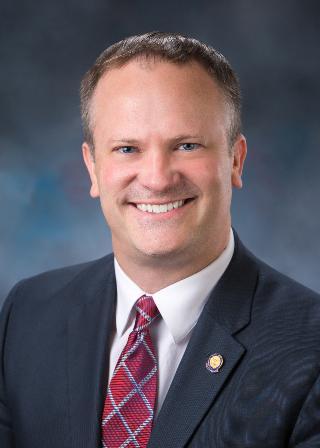
Jack Nelsen
85% support rate
Top opponent
Kent Marmon
23% support rate
Ranked legislators
10
5 support · 5 oppose
Key legislators

Who's moving healthcare in Idaho

Legislators moving healthcare in Idaho
Legislator Party Stance Support rate Votes
Jack Nelsen
Jack Nelsen House · District 26B
R
Strong +
85% 47
Kelly Anthon
Kelly Anthon Senate · District 27
R
Strong +
82% 36
Jim Woodward
Jim Woodward Senate · District 1
R
Strong +
82% 37
Julie VanOrden
Julie VanOrden Senate · District 30
R
Strong +
82% 36
Clay Handy
Clay Handy House · District 27B
R
Strong +
80% 46
Kent Marmon
Kent Marmon House · District 11A
R
Oppose
23% 43
Brian Lenney
Brian Lenney Senate · District 13
R
Oppose
25% 33
Glenneda Zuiderveld
Glenneda Zuiderveld Senate · District 24
R
Oppose
27% 37
Christy Zito
Christy Zito Senate · District 8
R
Oppose
27% 37
Josh Kohl
Josh Kohl Senate · District 25
R
Oppose
27% 37
Showing 51–60 of 90 bills

All healthcare bills

passed · Idaho · Senate Mar 4, 2026

S 1319: INSURANCE – Adds to existing law to establish the Emergency Care Affordability Act.

Idaho's S 1319, the Emergency Care Affordability Act, protects patients from surprise bills by requiring out-of-network freestanding emergency rooms to accept the in-network rate as full payment for emergency services. It prohibits these facilities from billing patients for costs exceeding the in-network rate (known as "balance billing") and mandates that health insurance plans pay providers directly for emergency care at the in-network rate, including covering the patient's cost-sharing. The law applies specifically to emergency services provided in freestanding emergency rooms (like standalone facilities not attached to hospitals) and covers all health benefit plans, including self-funded plans. This ensures patients receive emergency care without facing unexpected high costs from out-of-network providers.
Sub-Topics Insurance
in committee · Idaho · House Feb 4, 2026

H 578: MEDICAID – Adds to existing law to provide legislative approval for a state plan amendment regarding incarcerated juveniles transition services.

This Idaho bill (H 578) requires legislative approval for a Medicaid state plan amendment to provide transition services for juveniles in custody. It directly affects incarcerated juveniles within 30 days of release from correctional facilities after a court hearing, ensuring they receive medical/dental screenings and case management referrals. Key provisions mandate that these services - screenings meeting medical standards and referrals to local care - must be included in a state plan submitted by July 2026, with services starting no earlier than July 2027. The bill also specifies that services must align with federal Medicaid requirements and depend on annual legislative funding.
Sub-Topics Courts Medicaid
signed · Idaho · Senate Apr 2, 2026

S 1313: NATUROPATHIC DOCTOR LICENSING AND NATUROPATH REGISTRATION – Amends existing law to provide for the voluntary licensure of pharmacists as naturopathic doctors.

S 1313 creates a voluntary licensure pathway for pharmacists in Idaho to become naturopathic doctors by requiring them to complete a 160-credit-hour naturopathic program and pass a competency exam, while maintaining their existing pharmacy license. The bill amends Idaho Code to include pharmacists in the definition of "licensed naturopathic doctor" and updates committee structures to reflect this new option, including adding a pharmacist to the formulary committee. The law will take effect on July 1, 2026.
in committee · Idaho · House Feb 27, 2026

H 783: MEDICAL SAVINGS ACCOUNTS – Amends existing law to include health care sharing ministries as an eligible medical expense.

H 783 amends Idaho's medical savings account law to include health care sharing ministry expenses as eligible medical costs for tax deductions. This directly affects Idaho residents who use health care sharing ministries (alternative health cost-sharing groups) instead of traditional insurance, allowing them to deduct related expenses. The bill updates the definition of "eligible medical expense" in Section 63-3022K(3)(e) to explicitly cover payments made through these ministries for the account holder, spouse, dependents, or dependent children. It does not change existing deduction limits ($2,000 annually before 2014 or $10,000 after 2014). The change simplifies tax treatment for ministry members without altering contribution rules or penalties.
in committee · Idaho · House Feb 3, 2026

H 572: PEDIATRIC SECRETIVE TRANSITIONS PARENTAL RIGHTS ACT – Adds to existing law to establish the Pediatric Secretive Transitions Parental Rights Act.

Idaho's H 572, the "Pediatric Secretive Transitions Parental Rights Act," prohibits healthcare providers, schools, and child care entities from facilitating a minor's medical or social gender transition without parental consent. It defines "sex transition procedures" to include puberty blockers, hormone therapy, and surgery (excluding medically necessary treatments for intersex conditions), while "social transition" covers nonmedical changes like name or pronoun use. Covered entities must inform parents about a child's interest in transition and obtain their written consent before facilitating any transition. Violations allow parents to sue for $50,000+ in statutory damages, injunctive relief, or attorney fees, and the state attorney general can seek additional penalties. The bill applies to children under 18 who are not married or emancipated.
Sub-Topics Children's Health
in committee · Idaho · House Feb 13, 2026

H 655: MEDICAID – Adds to existing law to establish provisions regarding Medicaid prior authorization exemptions for certain preceptorships.

This Idaho bill (H 655) exempts physicians in primary care, psychiatry, or OB/GYN from needing prior approval for Medicaid-covered services if they provide 360+ hours of unpaid mentoring (preceptorship) to graduate students annually, with at least 60% of those hours in rural shortage areas. Physicians must track and report hours to the state health department, which verifies eligibility and grants a 12-month exemption starting the next calendar year. The exemption is limited to 100 physicians per specialty yearly, and the state can revoke it if claims review shows insufficient adherence to the program. This directly affects Idaho physicians mentoring students in rural areas, aiming to reduce administrative barriers for rural healthcare training.
Sub-Topics Medicaid Primary Care
in committee · Idaho · Senate Feb 16, 2026

S 1284: DIETITIANS – Adds to existing law to provide for Idaho’s participation in the dietitian licensure compact.

Idaho's S 1284 would allow the state to join the Dietitian Licensure Compact, enabling dietitians licensed in Idaho to practice in other participating states without obtaining separate licenses in each. The compact establishes a "compact privilege" that is equivalent to a license in other member states, requiring dietitians to meet uniform standards for practice. It includes provisions for sharing disciplinary information among states to protect public health and specifically supports military members and their spouses who relocate across state lines. This bill would update Idaho's licensing law to implement the compact's framework for interstate practice.
Sub-Topics Medical Licensing Public Health Tags Licensing
signed · Idaho · Senate Apr 1, 2026

S 1335: EDUCATION – Amends existing law to revise provisions regarding contract requirements for state-supported medical and veterinary students.

This bill requires Idaho-resident students receiving state-funded medical or veterinary education to sign contracts committing to practice in Idaho for specific periods. Medical students must practice full-time in Idaho for four years after obtaining a license, finishing residency, or completing a fellowship. Veterinary students starting in fall 2027 must dedicate at least 600 annual hours to agricultural animal care (cattle, sheep, goats, swine) and complete a mixed practice program. Students who fail to meet these commitments must reimburse the state for their education costs over eight years without interest, with limited exceptions for hardship. A new reimbursement fund will manage these payments and distribute incentive grants to Idaho physicians.
in committee · Idaho · Senate Mar 30, 2026

S 1346: IMMUNIZATIONS – Adds to existing law to establish a moratorium on certain uses of human gene therapy products.

This Idaho bill (S 1346) establishes a two-year moratorium on using human gene therapy products for immunizations in children under 18 and pregnant women. It directly affects healthcare providers and manufacturers who administer such therapies for infectious diseases, prohibiting all routes of administration under this category. Key provisions define "human gene therapy products" broadly (including modified cells and genetic materials) but exclude cancer treatments, genetic disorder therapies, and approved clinical trials. The moratorium requires legislative review of safety data before renewal and includes specific exemptions for compassionate use or clinical trials. The bill aims to pause experimental gene-based immunizations pending safety evaluation.
signed · Idaho · Senate Mar 18, 2026

S 1331: APPROPRIATIONS – Rescissions – Relates to reducing the appropriation for fiscal year 2026.

Idaho's S 1331 reduces state funding for education programs in fiscal year 2026 by $22.3 million from the Public School Income Fund and transfers money to the General Fund. It directly affects public schools (teachers and student support), Idaho's universities (including Boise State, Idaho State, and the University of Idaho), community colleges, and education programs like medical residencies and career technical education. Key mechanisms include cutting specific budget line items (e.g., $5.4 million for Boise State University, $1.8 million for student administrators), reducing authorized staff positions, and reallocating funds. The bill declares an emergency to expedite these fiscal adjustments.
Showing 51 to 60 of 90 bills
Previous 1 5 6 7 9 Next