

Maddy summaryThis Senate Resolution requests the Hawaii Departments of Health, Human Services, and Education to create a coordinated plan to address fetal alcohol spectrum disorders (FASD), which affect approximately 840 babies born in the state each year. The plan would explore establishing a statewide FASD coordinator, strategies for accessing federal funding, and methods to improve awareness and training for healthcare providers and educators. The resolution outlines specific goals including reducing foster care and criminal justice involvement, lowering economic barriers to early intervention, and improving overall quality of life for affected individuals and families. Departments are asked to submit their findings and recommendations to the Legislature by December 15, 2026.
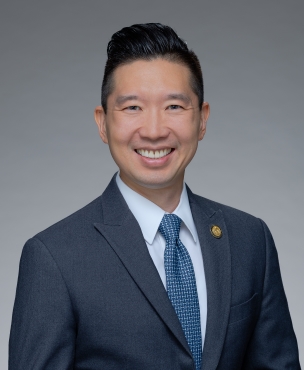
Sen. Stanley Chang
Sponsored bills
Maddy summaryThis Senate Resolution asks the Office of Planning and Sustainable Development to work with several agencies to evaluate how much infrastructure capacity exists around transit-oriented development areas in Honolulu. The assessment will focus specifically on sewer and water systems to determine if they can handle future growth in these neighborhoods. This study aims to identify necessary upgrades and investments before new construction projects proceed in these designated zones. The resolution directs the findings to be shared with multiple city and state officials responsible for planning and development.
Maddy summaryThis Senate Concurrent Resolution asks health maintenance organizations in Hawaii to follow the state's Clean Claims Statute, which requires them to pay uncontested health care claims within 30 days or 15 days for electronic submissions. The resolution highlights that delayed payments can harm medical practices and patients, particularly in rural and underserved areas, and notes that current enforcement by the Insurance Division appears inconsistent. It requests that HMOs be held accountable for timely reimbursements and directs copies of the resolution to state officials including the Insurance Commissioner and Department of Commerce and Consumer Affairs.
Maddy summaryThis Senate Concurrent Resolution requests three Hawaii state agencies - the Department of Health, Department of Human Services, and Department of Education - to create a coordinated plan to address fetal alcohol spectrum disorders (FASD). The plan would explore establishing a statewide FASD coordinator, strategies for accessing federal funding, and methods to improve awareness, training, and support for affected individuals and families. Agencies are asked to submit their findings and recommendations, including any proposed legislation, to the Legislature by December 15, 2026.
Maddy summaryThis Senate resolution requests the Hawaii Director of Health to form a Water Fluoridation Working Group to study adding fluoride to public drinking water. The group would include representatives from the state health department and water supply agencies across all four counties to evaluate best practices and potential barriers to implementation. Members would submit findings and recommendations to the Legislature by early 2027, with the committee scheduled to dissolve by June 2027. The resolution is based on concerns about oral health access and cites federal guidance supporting water fluoridation as a cost-effective way to prevent tooth decay.
Maddy summaryThis Senate Resolution requests that health maintenance organizations in Hawaii comply with state laws requiring timely payment of health care claims. It asks these insurers to issue reimbursements within 30 days of receiving claims, or within 15 days for electronically submitted ones, as mandated by the Clean Claims Statute. The resolution highlights concerns that delayed payments can harm medical practices and patients, particularly in rural and underserved areas. It directs copies of the request to state officials including the Insurance Commissioner and Director of Commerce and Consumer Affairs for their attention.
Maddy summarySB 2010 authorizes law enforcement to impound motor vehicles when specific traffic violations are alleged or committed. It directly affects drivers who commit those violations, allowing authorities to seize vehicles as a consequence. The key provision enables immediate impoundment without requiring a court conviction first. This bill changes enforcement procedures by giving officers this authority upon violation allegations. The bill is currently pending introduction in the legislature.
Authorizes the Department of Land and Natural Resources and certain public or private entities to operate conservation banks, subject to approval from the Board of Land and Natural Resources, for situations where a person or entity is required to provide compensatory mitigation to offset adverse impacts to threatened, endangered, candidate, or proposed species as part of an approved incidental take license and habitat conservation plan. Adds the Associate Director of the United States Geological Survey, Ecosystems Mission Area, to the membership of the Endangered Species Recovery Committee. Requires the Endangered Species Recovery Committee to review applications and proposals for conservation banks and conduct subsequent reviews and oversight. Effective 7/1/3000. (HD1)
Requires each hospital licensed in the State to provide an annual attestation to the State Health Planning and Development Agency that the hospital is in compliance with federal hospital price transparency requirements. Permits patients to file a counterclaim against debt collection actions filed by hospitals to determine if the hospital is in compliance with federal hospital price transparency requirements. Requires hospitals to provide patients with an easy-to-understand itemized bill statement before initiating a debt collection action against a patient. Effective 1/30/2050. (HD1)
Maddy summarySB 2448 creates legal remedies for people whose intimate images are shared without consent. It directly affects individuals who have had private photos or videos of their intimate areas distributed without permission. The bill establishes a civil cause of action, allowing victims to sue for damages and seek court orders to remove the images. It defines "intimate images" as photos or videos showing a person's intimate areas, and prohibits their disclosure without the person's consent. The law aims to provide clear legal recourse for victims of non-consensual image sharing.