

Authorizes the Hawaii Housing Finance and Development Corporation to utilize revenue bonds when securing a line of credit or other instrument of indebtedness for the Bond Volume Cap Recycling Program. Effective 7/1/3000. (HD1)
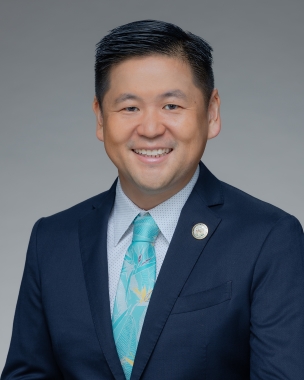
Sen. Troy Hashimoto
Sponsored bills
Establishes the Aerospace and Aeronautics Development Program within the Department of Business, Economic Development, and Tourism. Appropriates funds. Effective 7/1/2050. (SD1)
Requires the State Building Code Council to assess the financial impact of the adoption of a code or standard on single-family and multi-family homes. Requires the State Building Code Council to also include amortized utility costs when adopting codes or standards. Amends annual reporting requirements for the State Building Code Council to include assessment of costs and determinations of benefits for residents.
Clarifies the definition of "qualified nonprofit housing trust" to specify organizations that exclusively serve qualified residents as defined in section 201H-32, HRS.
Maddy summarySB 451 would require the Department of Human Services to establish a Medicaid buy-in program, enabling working people with disabilities to maintain health coverage without losing Medicaid benefits when they earn income. This program would allow individuals to pay a portion of the cost to stay enrolled in Medicaid while working, rather than losing coverage as earnings increase. The bill is scheduled to take effect on December 31, 2050, but remains under review by the Health and Human Services committee. It directly affects working adults with disabilities who currently face coverage gaps when earning above Medicaid income limits.
Requires that any procurement change order that increases the contract cost by more than fifty per cent or substantially increases the scope of work be considered a new contract for procurement purposes.
Maddy summarySB 371 creates new criminal offenses for damaging critical infrastructure facilities, establishing distinct penalties for first-degree (more severe) and second-degree property damage. It directly affects individuals who intentionally damage facilities like power plants, water treatment centers, or communication hubs. The bill defines "critical infrastructure facilities" and sets specific criminal penalties for property damage to these sites. This law aims to strengthen legal protections for essential public infrastructure systems.
Establishes a paid family leave program for state and county employees. Authorizes a qualifying employee to take up to 12 weeks of paid leave for the birth or placement of a child or to care for a family member who has a serious health condition. Requires the employee to agree to subsequently work for the employer for at least 12 weeks upon return to service except under certain conditions.
Establishes a regulatory review program overseen by the Department of the Attorney General to evaluate all Hawaii Administrative Rules adopted by state agencies and identify any rules that should be retained, modified or repealed. Requires each state agency to review 20 per cent of their rules every year and submit a report to the Department of the Attorney General. Requires the Department of the Attorney General to notify the Governor and Legislature of any noncompliance by a state agency, adopt rules, and submit annual reports to the Legislature and Governor. Appropriates funds. Effective 1/1/2525. (SD1)
Maddy summarySB 1013 expands the state's Earned Income Tax Credit (EITC) by allowing qualifying low-to-moderate income taxpayers who claim a dependent under age 18 to receive an additional credit amount. This directly affects working families with children in that age group who currently qualify for the EITC but may not have received the full benefit for younger dependents. The key provision increases the credit amount for these taxpayers, providing more tax relief based on the number of qualifying children under 18. The bill is still in committee review and has not yet been enacted.