

Maddy summaryHCR 138 is a concurrent resolution requesting the Legislative Reference Bureau to study adopting fiscal notes into Hawaii’s legislative process. Fiscal notes would disclose the potential financial impact of bills on state/local government, a practice used in 44 states. The study must examine implementation methods (statute vs. rules), associated costs, public accessibility, barriers like staffing, and lessons from states like Colorado and Texas. It aims to inform whether Hawaii should require such disclosures before lawmakers vote. The Bureau must submit findings by early 2026.
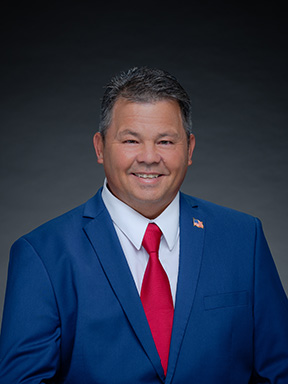
Rep. David Alcos
Sponsored bills
Maddy summaryThis is a House Resolution (not a bill), urging the Congressional Pacific Islands Caucus to reintroduce and advocate for the "Engage the Pacific Act." It does not create new law but requests action on a previously proposed measure. The resolution cites that the 118th Congress considered this Act (which would require the State Department to establish a civil society engagement committee, develop a Pacific communications strategy, and support education scholarships), but it was not passed. The resolution aims to renew U.S. commitment to Pacific Island nations through this specific legislative proposal.
Maddy summaryThis non-binding House Resolution urges the University of Hawaii to extend its resident-tuition-equivalent rate (currently available only to students from the Marshall Islands, Federated States of Micronesia, and Palau) to additional Pacific Island nations. It does not change tuition policy but requests the university update its qualifying nations list to include more Pacific Island neighbors, aiming to increase educational access for students from those regions. The resolution specifically references expanding beyond the current 150% resident-rate list (covering nations like American Samoa and Tonga) to align with the Freely Associated States' 100% rate.
Maddy summaryHCR 83 is a legislative resolution disapproving the 2025 Commission on Salaries' recommendation to increase salaries for Hawaii's governor, lieutenant governor, department heads, legislators, and judges. The legislature rejected these proposed increases, citing current economic conditions as "excessive," and directed the Commission to reconvene by November 2025 to review the disapproval reasons and submit a revised proposal for the 2026 legislative session. This resolution does not set new salaries but mandates the Commission to adjust its recommendations based on legislative feedback. As a procedural resolution (not a law), it affects the Commission's process rather than directly changing pay.
Maddy summaryHCR 51 is a non-binding request urging Honolulu to build a new public swimming pool complex in the Forty-First House District on Oahu. It specifies the facility must include an Olympic-sized pool for exercise, a jetted hot tub, and a dedicated children’s pool to serve community recreation and health needs. The resolution formally asks the Honolulu City Council to fund and approve construction and the Mayor to endorse the project. It does not create new law but seeks to influence city planning priorities. This request directly affects residents in the Forty-First District who would gain access to new recreational facilities.
Maddy summaryThis House Resolution (HR 77) disapproves the 2025 Salary Commission's recommendations for increasing salaries of certain state officials, including the governor, judges, and department heads. The legislature rejected these proposed increases, stating they were excessive given Hawaii's current economic conditions. The resolution requires the Salary Commission to reconvene by November 2025 to review the legislature's disapproval and submit revised salary recommendations for the 2026 legislative session. This action directly affects the salary schedules for the officials covered by the Commission's original proposal.
Maddy summaryThis is a House Resolution (not a bill), urging the City and County of Honolulu and developers to coordinate infrastructure planning with stakeholders before approving new housing developments. It highlights Hawaii’s infrastructure challenges, including a D+ rating and $1.1 billion in unfunded needs, and notes that premature construction without adequate infrastructure has delayed housing solutions. The resolution does not create new laws but formally requests coordination to address these issues. It directs the resolution to specific officials and housing developers for awareness.
Maddy summaryHCR 135 is a concurrent resolution urging Hawaii's Department of Law Enforcement, City and County of Honolulu, and Honolulu Police Department to collaborate with local businesses and organizations to establish safe disposal programs for illegal fireworks. It proposes creating designated drop-off locations where residents can safely discard unused fireworks year-round, reducing the risk of improper storage or disposal. The resolution references a prior successful disposal event that collected over 1,300 pounds of fireworks from 121 residents. This initiative aims to address community safety concerns related to illegal fireworks use, following incidents like the tragic New Year’s Eve explosion in Salt Lake. (Note: As a non-binding resolution, it does not create new laws but encourages agency action.)
Maddy summaryHCR 162 is a non-binding concurrent resolution urging the University of Hawaii to extend reduced tuition rates to students from Pacific Island nations without public bachelor's degree programs. Currently, students from the Freely Associated States (Marshall Islands, Micronesia, Palau) pay 100% of resident tuition, while others like American Samoa pay 150%. The resolution requests expanding this 100% rate to include additional Pacific Island nations on the university's updated list. This directly affects students from qualifying Pacific Island countries seeking undergraduate education at the University of Hawaii.
Maddy summaryHCR 89 is an advisory resolution urging the State of Hawaii and the City and County of Honolulu to collaborate on developing a large sports complex in West Oahu. It proposes a 200-400 acre facility with a 65,000-seat stadium, multiple sports fields, training arenas, and a Pacific Culture Center, targeting partnerships with Asia-Pacific entities to minimize taxpayer costs. The resolution requires a feasibility study and report by the Governor and Mayor by late 2025, including site options in Kunia or Kapolei and land acquisition steps, but does not allocate funds or mandate construction. As a non-binding resolution, it seeks to initiate planning and partnerships rather than enact policy changes.