

Maddy summaryThis bill requests the Hawaii Department of Education to create a standardized swimmer classification framework for public schools to improve water safety and equity. The resolution asks the department to adopt a specific system developed by Leahi Swim School and Na Kama Kai, which defines three proficiency levels: Swimmer, Water Safe Individual, and Water Smart Individual. Each level includes specific criteria such as swimming distances, treading water, stroke proficiency, and knowledge of ocean safety and environmental stewardship. The framework is intended to guide physical education, athletics, and enrichment programs by establishing clear benchmarks for student water competency.
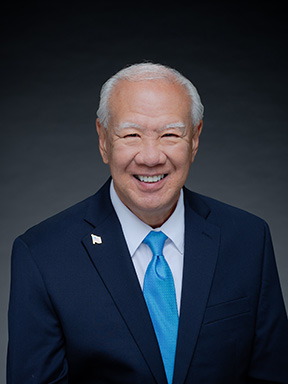
Rep. Gregg Takayama
Sponsored bills
Maddy summaryThis House Concurrent Resolution urges Hawaii state agencies to create a statewide peer counselor program for high school students to address youth loneliness and social disconnection. The program would involve trained student peer counselors who receive standardized instruction in active listening, ethical boundaries, and culturally responsive practices to foster peer connections and early identification of emotional distress. The Department of Education would lead implementation in collaboration with the Department of Health, Office of Wellness and Resilience, and Hawaii State Youth Commission, starting with pilot programs in select schools before statewide rollout. The resolution emphasizes face-to-face interaction, trust-building activities, and clear referral pathways to licensed mental health professionals while prioritizing culturally appropriate approaches for Native Hawaiian and Pacific Islander students.
Maddy summaryThis bill requests the Department of Business, Economic Development, and Tourism to conduct a study on Hawaii's food manufacturing strengths and identify strategic export markets for high-value local products. The study will analyze competitive advantages, calculate minimum profit margins needed to offset Hawaii's high operational costs, and assess logistical barriers to international trade. It also directs the University of Hawaii to update its food innovation curriculum to teach entrepreneurs how to engineer products specifically for premium export markets. Additionally, the bill asks state agencies to collaborate on integrating study findings into existing workforce development programs and to propose policy changes that prioritize funding for businesses manufacturing identified high-value products.
Maddy summaryThis bill requests the Hawaii Department of Land and Natural Resources and the Department of Education to work together on a permanent program to increase tree coverage at public schools across the state. The initiative aims to address heat exposure and improve outdoor learning opportunities, with special attention to ensuring equitable tree distribution in lower-income and Title I schools that currently have less shade. The program would include long-term tree maintenance, strategic species selection, and the creation of dedicated staff positions to sustain the effort. It builds on existing pilot programs like Shade Trees for Schools and Fruit Trees for Schools, which have shown positive results but have been limited by short-term funding.
Maddy summaryThis bill urges state and city transportation departments to collaborate with local community groups to develop and improve the coastal trail system on Oahu's North Shore. The resolution emphasizes the need for safe, non-vehicular pathways to address current unsafe road conditions and encourage walking and biking in the area. It calls for community involvement in all stages of trail planning, design, construction, and maintenance to ensure the trails meet local needs. The measure also references existing efforts like the Complete Streets Ordinance and Vision Zero Action Plan as context for improving transportation safety and accessibility.
Maddy summaryHCR 8 is a concurrent resolution urging Hawaiian counties to approve building permits for home safety modifications within 45 days of receiving a complete application. It specifically targets modifications (like ramps or grab bars) recommended by a healthcare provider for older adults (62+) or people with disabilities, when the county deems them essential for safety or health. The resolution does not create new law but seeks to reduce delays that contribute to fall risks and hospitalizations, emphasizing counties must act on complete applications within the 45-day timeframe.
Maddy summaryHCR 6 is a Hawaii legislative resolution affirming that hospitals must provide life-saving emergency care - including abortion services when medically necessary - to stabilize pregnant patients under the federal Emergency Medical Treatment and Active Labor Act (EMTALA). It addresses confusion caused by recent shifts in federal guidance about EMTALA's requirements, particularly following the 2025 rescission of federal affirmations supporting emergency abortion care. The resolution urges all Hawaii hospitals, including religiously affiliated ones, to uphold EMTALA's standards without delay or denial of care. It does not create new law but reinforces Hawaii's commitment to ensuring pregnant patients receive timely emergency treatment as required by federal statute.
Maddy summaryThis House Resolution urges Maui Health to partner with state agencies and medical stakeholders to create a full-time medical residency program on Maui, addressing a critical shortage of physicians that worsened after the 2023 wildfires. The bill specifically recommends using federal Rural Health Transformation Program funding to cover initial costs while seeking additional resources from grants and private partnerships. It requests collaboration with the John A. Burns School of Medicine and local health centers, and asks Maui Health to submit a progress report to the Legislature by early 2027. This non-binding resolution aims to improve access to primary care and specialist services for Maui's underserved population without mandating specific actions.
Maddy summaryThis bill requests that Hawaii's Departments of Health, Human Services, and Education create a coordinated plan to address fetal alcohol spectrum disorders (FASD), which affect individuals exposed to alcohol during pregnancy. The plan would explore establishing a statewide FASD coordinator, strategies for accessing federal funding, and methods to improve awareness and treatment services across the state. Departments are asked to include recommendations for training healthcare and education professionals, reducing reliance on foster care and the criminal justice system, and lowering economic barriers to early intervention. The departments must submit their findings and any proposed legislation to the Legislature by December 15, 2026.
Maddy summaryThis House Resolution formally recognizes 2026 as the International Year of Rangelands and Pastoralists in Hawaii, aligning with a United Nations designation. The measure highlights the ecological, economic, and cultural importance of Hawaii's rangelands, which cover over one million acres and support ranchers who contribute more than $50 million annually to the state economy. It encourages state agencies, the University of Hawaii, and local organizations to promote education and research on rangeland management while recommending policies that conserve these lands and protect ranchers' livelihoods. The resolution is transmitted to key state and local officials, including the Governor, Board of Agriculture and Biosecurity, University of Hawaii President, and county mayors.