

Appropriates funds for salaries and fringe benefits of positions for the University of Hawaii Institute for Astronomy's Space Science and Engineering Initiative Workforce Development Program, Maunakea Scholars Program, and Internship Program. Appropriates funds for office equipment and supplies, operational costs, and stipends for high school and college students. Effective 7/31/2050. (SD1)
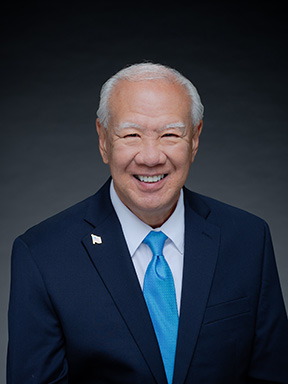
Rep. Gregg Takayama
Sponsored bills
Allows authorized employees of the Department of Law Enforcement, in addition to county police departments, to perform certain actions in reviewing recorded images produced by automated speed enforcement systems. Appropriates funds from the State Highway Fund to the Department of Transportation to establish and implement the Automated Speed Enforcement Systems Program. Effective 7/1/3000. (SD1)
Requires the School Facilities Authority to establish geographically based capital improvement project districts for the localized management of capital improvement projects. Transfers all capital improvement project functions, funds, and vacant Facilities Development Branch positions from the Department of Education to the School Facilities Authority. Clarifies that general funds shall not be used for operations or management of the Authority. Appropriates funds. Effective 7/31/2055. (SD2)
Requires the Hawaii Teacher Standards Board to develop an alternative pathway for a visiting international educator permit aligned to the duration of the educator's J-1 visa program. Permits the Department of Education and charter schools to hire unlicensed individuals as teachers on an emergency basis for five, rather than three, years. Requires HTSB to extend the five-year period in the case of a declared state of emergency. Requires the Department of Education to provide support to assist emergency hires in meeting the requirements of licensure and require the training be mandatory for emergency hires in their fourth and fifth years. Effective 7/31/2055. (SD1)
PART I: Requires motor vehicles to have front number plate mounting brackets or devices and for sellers, licensed dealers, or owners to securely affix number plates to the vehicles. PART II: Amends the Traffic Code relating to street racing. PART III: Expands the Automated Speed Enforcement Systems Program to high-risk locations of state or county highways as determined by the Department of Transportation, under certain conditions. Appropriates moneys. PART IV: Authorizes the installation of a school bus infraction detection system on the exterior of a school bus. Establishes strict liability and the process for issuing summons or citations for drivers shown by the system to be in violation of certain school bus laws. Clarifies the liability of drivers near a school bus that is actively monitored by a school bus infraction detection system. Appropriates moneys. PART V: Specifies that the Department of Transportation's Motor Vehicle Safety Office shall administer the Photo Red Light Imaging Detector Systems Program Special Fund and Automated Speed Enforcement Systems Program Special Fund. PART VI: Clarifies language relating to photo red light enforcement, automated speed enforcement, and penalty provisions. PART VII: Requires the Director of Transportation to adopt rules allowing for mobile vehicle safety inspections of passenger cars. Effective 7/1/3000; provided that part IV, except the rule-making directive and appropriation, effective 7/1/2028. (SD2)
Establishes penalties, including fines and liens, for an owner of residential real property's failure to remediate zoning violations. Requires, under certain conditions, county planning or permitting agencies to record the notice of violation as a lien on the property with the Bureau of Conveyances. Requires referral to the applicable county corporation counsel for foreclosure, subject to certain conditions, if the owner fails to satisfy certain conditions. Requires the applicable district or circuit court to hold a de novo review of penalties assessed for unaddressed residential real property zoning violations, including foreclosure, upon appeal by the affected residential real property owner. Effective 7/1/3000. (SD2)
Requires release on recognizance for defendants charged with violations, traffic offenses, nonviolent petty misdemeanors, nonviolent misdemeanors, and nonviolent class C felonies, subject to conditions. Establishes exclusions for specified offenses, threats to public safety, and certain other circumstances. Requires findings when bail or detention is imposed, ongoing review of continued detention or conditions, and a prompt hearing if bail cannot be posted. Requires prosecutors to notify victims of pretrial decisions. Effective 7/1/3000. (SD2)
Maddy summaryThis bill requests the Hawaii Departments of Health, Human Services, and Education to create a coordinated plan to address fetal alcohol spectrum disorders (FASD), which affect individuals exposed to alcohol during pregnancy. The plan would explore establishing a statewide FASD coordinator, strategies for accessing federal funding, and methods to improve awareness and training for healthcare providers and educators. It aims to reduce the economic and social costs of FASD by improving early identification, treatment access, and support for affected families. The departments must submit their findings and recommendations to the Legislature by December 15, 2026.
Maddy summaryThis House Concurrent Resolution urges Hawaii state and county officials to stop using "excited delirium" as a medical diagnosis, cause of death, or legal theory. The measure is based on findings that this concept lacks scientific validity, is not recognized by major medical organizations, and has no official diagnostic code. It specifically calls for medical determinations and legal proceedings to rely on scientifically valid principles instead. The resolution also directs copies to county mayors and council leaders and is named in memory of veteran Sheldon Haleck.
Maddy summaryThis bill is a Hawaii House Concurrent Resolution that urges the U.S. Congress to pass H.R. 2687, known as the End Kidney Deaths Act. The resolution highlights that kidney disease disproportionately affects people of color and that many Hawaii residents currently rely on dialysis with hundreds dying annually due to limited access to transplants. The proposed federal legislation would create regulated, refundable tax credits for individuals who donate a kidney to a stranger, aiming to increase the number of living donors and reduce kidney-related deaths. The bill emphasizes that living donation is already highly regulated with safeguards for donor safety and notes that transplants can save lives while reducing long-term healthcare costs.