

Maddy summaryHCR 190 is a resolution requesting Hawaii's Department of Health to convene a Demolition Waste Reduction Working Group. It aims to address Hawaii's landfill capacity crisis by reducing construction and demolition waste, which makes up 21-40% of landfill mass, and aligning with the state's 2045 carbon neutrality goals. The working group would include health department leadership, industry representatives (construction, demolition, reuse, waste management), and community groups to develop strategies for scaling material reuse, removing barriers, and creating policy incentives. The group must submit annual reports with recommendations to the legislature, focusing on environmental justice and reducing landfill reliance. This resolution directly affects the construction sector, waste management industries, and communities near landfills disproportionately exposed to waste-related health risks.
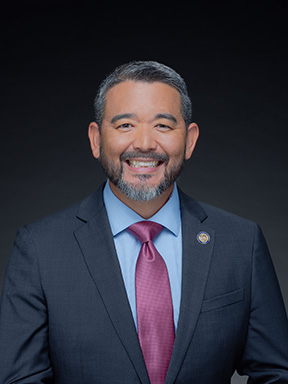
Rep. Andrew Garrett
Sponsored bills
Authorizes the Hawaii Criminal Justice Data Center to transmit all expungement orders to the Judiciary to effectuate the purposes of Act 159, SLH 2023. (HD1)
Requires conditions placed on appropriations to the Stadium Development Special Fund to be met before expenditure. Restricts private donations to the Stadium Authority to use on stadium infrastructure and stadium development costs. Appropriates funds out of the Stadium Development Special Fund, subject to the completion of specific project readiness conditions. Requires certain moneys expended to be from private sources. Effective 7/1/2050. (SD1)
Maddy summaryHCR 124 is a non-binding legislative resolution encouraging the Kawaihuelani Center for Hawaiian Language at the University of Hawaiʻi at Mānoa to expand its I Hoa na Moolelo Project. This project provides a quarterly children’s magazine in Hawaiian for students in grades 2-6 at Kaiapuni schools on Oʻahu. The resolution specifically asks the Center to create more learning resources and opportunities for Hawaiian language use at home and in communities. It directly supports Kaiapuni students, families, and educators by promoting Hawaiian language immersion beyond school hours. The resolution does not create new law but formally recognizes the Center’s existing work in language revitalization.
Maddy summaryHCR 173 is a non-binding resolution urging Hawaii's Department of Health to partner with community health centers and healthcare providers to launch education, outreach, and vaccination drives at schools with vaccination rates below 30% starting in the 2025-2026 school year. It directly affects schools in Hawaii with low immunization rates, as highlighted by data showing 17% of students lack complete vaccination records. The resolution requires the Department of Health to develop a long-term plan to address vaccine hesitancy in collaboration with the Department of Education and submit a report to the Legislature by 2026. It does not create new laws but recommends specific actions based on successful models from other states. The resolution emphasizes community engagement and culturally competent approaches to improve vaccination rates.
Maddy summaryHCR 35 requests Hawaii's Auditor to reassess the social and financial effects of mandating health insurance coverage for biomarker testing, following reports that insurers still deny or delay coverage despite existing requirements. It directly affects patients needing biomarker tests (used for diagnosing conditions like cancer or Alzheimer's) and insurers who determine coverage. The resolution stems from concerns that insurers' medical director approvals create access barriers, forcing patients to pay out-of-pocket or appeal denials even when doctors deem tests medically necessary. The Auditor will evaluate whether mandatory coverage - already required by prior law (HB2223) - effectively improves access without financial or social impacts. This procedural resolution seeks updated analysis to address persistent coverage gaps.
Maddy summaryThis resolution encourages the Kawaihuelani Center for Hawaiian Language at the University of Hawaii at Manoa to continue its existing I Hoa na Moolelo Project, which publishes a Hawaiian-language children's magazine for Kaiapuni (Hawaiian immersion) students and families. It directly supports Kaiapuni students and their families by promoting Hawaiian language use at home through accessible resources. As a symbolic resolution, it has no legal effect but formally recognizes the importance of Hawaiian language preservation and urges the Center to expand its current efforts.
Maddy summaryThis resolution urges Hawaii's Department of Health to launch education, outreach, and vaccination drives at schools with vaccination rates below 30% starting in the 2025-2026 school year. It requires partnering with community health centers and local healthcare providers to increase access and address vaccine hesitancy through culturally appropriate engagement. The resolution also directs the Department of Health to collaborate with the Department of Education to develop a long-term plan and submit a report to the Legislature by early 2026 detailing funding and administrative needs. It directly affects schools with low vaccination rates, particularly those in underserved communities, and references successful models from other states to inform Hawaii's approach. The resolution is non-binding but sets a clear timeline and partnership framework for improving school vaccination rates.
Maddy summaryThis non-binding House Resolution encourages the University of Hawaii to evaluate and expand its student mental health services. It specifically asks the university to hire additional mental health professionals and support staff, extend counseling hours, improve crisis response, and adopt proactive outreach initiatives. The resolution also requests the university provide periodic updates to the legislature on its progress. It does not mandate changes or allocate funding, serving only as a recommendation to address growing student mental health needs.
Maddy summaryThis House Resolution (HR 62) requests the Office of the State Fire Marshal to form a working group to study vegetation management practices on public and private property. The group will evaluate property owner responsibilities for reducing wildfire risks, particularly near electric utility lines, and develop recommendations for minimum safety standards for tree trimming near power facilities. It specifically responds to wildfire risks identified after the 2023 Maui fires, including the role of invasive grasses and human-caused ignitions. The working group must include representatives from fire services, utilities, counties, and invasive species councils, but does not create new laws - only seeks recommendations for future policy.