

Prohibits certain harmful uses of realistic digital imitations generated by artificial intelligence (AI). Establishes certain exemptions. Provides for civil actions and civil remedies for individuals injured by unauthorized AI-generated realistic digital imitations. (CD1)
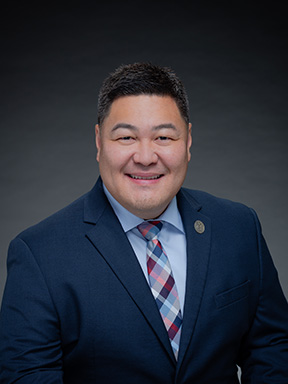
Rep. Tyson Miyake
Sponsored bills
Maddy summaryHB 1974 requires the State Health Planning and Development Agency to create and publish a comprehensive state plan addressing hearing loss, using state funds that the bill appropriates. This bill directly affects the State Health Planning and Development Agency, mandating it to develop the plan within a specified timeframe. The key provision is the allocation of state funding to support the agency's work in researching and outlining strategies to address hearing loss across the state. The bill passed a committee recommendation with amendments in February 2026, moving it toward potential passage.
Maddy summaryHB 1705 allows licensed mental health counselors to serve as child custody evaluators in court cases. This change directly affects families involved in custody disputes, as it expands the pool of qualified professionals who can assess children's well-being during these proceedings. The bill modifies existing law to permit counselors with appropriate licensure to be appointed for this specific role, rather than limiting it to other types of evaluators. This is a concrete policy change that alters who can provide these evaluations in family court.
Requires the Department of Human Services to develop and implement a state-funded financial assistance program to offer state-funded colorectal screenings and treatment for certain persons. Requires state-funded coverage for follow-up treatment for colorectal cancer for certain persons. Requires coverage to include a follow-up colonoscopy after a positive test result. Specifies that coverage is not subject to a deductible, copayment, coinsurance, or any other cost-sharing requirements. Appropriates funds and establishes one full-time equivalent (1.0 FTE) position. (CD1)
Clarifies that, for tax credits issued after 7/1/2026, a partner or member that is a partnership or limited liability company that has been allocated a Low-Income Housing Tax Credit may either further allocate the credit or transfer, sell, or assign all or a portion of the credit to any taxpayer. Extends the sunset date of Act 129, SLH 2016, relating to the Low-Income Housing Tax Credit, until 12/31/2032. (CD1)
Beginning 1/1/2027, authorizes the Hawaii Housing Finance and Development Corporation, instead of the counties, to approve and certify general excise tax exemptions for certain housing development projects developed under county housing incentive programs. Sunsets 7/1/2031. (CD1)
Requires the counties to allow for the installation and operation of rainwater catchment systems for potable and nonpotable uses on all properties. Allows the counties to require registration, inspection, or notification of rainwater catchment systems. (CD1)
Repeals the prohibition against qualified residents for Hawaii Housing Finance and Development Corporation-approved projects holding a majority interest in land and repeals the requirement that qualified residents demonstrate financial viability or ability to pay rent. Limits a qualified resident from owning a majority interest in no more than one property suitable for dwelling purposes, but requiring the disposal of such property within two years. Amends exemptions from statutes, ordinances, charter provisions, and rules for certain housing projects developed by the Corporation that satisfy certain conditions, including requirements related to employment, owner-occupancy, and deed restrictions. (CD1)
Deems a county inclusionary mandate as a form of development exaction and treats the mandate as a housing affordability impact fee. Provides parameters for a county's adoption or amendment of an inclusionary mandate for residential or mixed-use development. Establishes additional components for a needs assessment study for a county-imposed inclusionary mandate. Conditions the adoption or amendment of a county inclusionary mandate for residential or mixed-use development on written findings of essential nexus and rough proportionality and a determination of financial feasibility. (CD1)
Authorizes the Board of Land and Natural Resources to enter into community co-management agreements and establishes qualifications for eligible community co-managers. Authorizes the disposition of public lands by a community co-management agreement. (CD1)