This bill requests that Hawaii's Public Utilities Commission impose specific conditions before approving any costs related to liquefied natural gas infrastructure, operations, or fuel supply. It directly affects utility companies and ratepayers by requiring that all LNG costs be fully recovered by 2045, eliminating obligations for stranded investments, and ensuring fuel supply agreements allow for a complete phase-out by 2045. The resolution also mandates that LNG approvals must not increase costs for customers in Hawaii, Kauai, or Maui counties, must include protections against fuel price volatility through utility sharing mechanisms, and must deny costs if cleaner alternatives are available or if the commitment exceeds renewable energy needs. Additionally, the bill directs the commission to consider how LNG approvals might impact renewable energy development and to evaluate risks from stranded assets and reliance on single fuel suppliers when reviewing utility costs.
This House Resolution asks the Hawaii Department of Agriculture and Biosecurity to explore placing renewable energy systems on existing agricultural reservoirs and irrigation infrastructure. The bill specifically encourages studying floating solar panels and gravity-powered water turbines that can generate electricity without disrupting water delivery or requiring new dams. It aims to help Hawaii meet its clean energy goals while providing benefits like reduced water evaporation, improved water quality, and local economic opportunities for farmers and communities. The resolution directs the department to collaborate with stakeholders and conduct feasibility studies for pilot projects that prioritize community-based ownership and benefits.
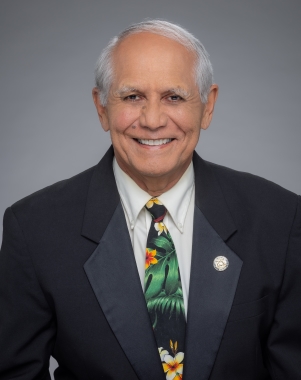
This bill requests the Hawaii State Energy Office to create an Offshore Wind Energy Working Group to study and provide recommendations on offshore wind development in the state. The working group will gather existing data, engage with community stakeholders, assess the suitability of offshore wind projects, and develop best practices for future initiatives. This measure directly affects state energy officials, local communities near O'ahu, and various government agencies that receive copies of the resolution. The bill aims to balance renewable energy goals with environmental, cultural, and socioeconomic concerns while honoring the legacy of Representative Gene Ward.
This Senate Resolution requests the Hawaii Public Utilities Commission to impose specific conditions before approving any costs related to liquefied natural gas infrastructure and operations. The bill directly affects utility companies and ratepayers by requiring that all LNG costs be fully amortized by 2045, eliminating take-or-pay fuel commitments, and ensuring no increased costs for customers in Hawaii, Kauai, or Maui counties. Key provisions also mandate that utilities share fuel price volatility risks with customers and that LNG approvals be denied if cheaper renewable alternatives exist. Additionally, the resolution asks the commission to consider how LNG investments might impact renewable energy development and the risk of stranded assets.
This Senate Resolution recognizes the public health risks posed by air pollution from internal combustion engine vehicles and highlights how traffic-related pollution disproportionately affects communities near major roadways, including children, older adults, and lower-income populations. The document affirms the state's commitment to transitioning toward cleaner transportation choices to improve air quality and protect public health. It does not create new laws or regulations but serves as a formal acknowledgment of these health concerns and environmental justice issues to inform future policy decisions. Copies of the resolution are sent to state officials responsible for transportation and energy policy.
This bill establishes a formal sister-state relationship between the State of Hawaii and Yamagata Prefecture in Japan to strengthen existing cultural, economic, and people-to-people ties. The resolution encourages collaboration in specific areas including sustainable tourism, agriculture and food security, education and workforce development, clean energy, and cultural exchange. It authorizes the Governor to work with Yamagata officials to create memoranda of understanding and implement pilot programs focused on culinary exchanges, joint cultural events, student and professional exchanges, and sustainable development initiatives. The bill directs that copies be sent to relevant state and federal officials to facilitate the partnership.
This House Resolution requests the Hawaii Public Utilities Commission to conduct an independent analysis of energy options that would reduce costs and financial risks for residents while meeting the state's 2045 renewable energy goal. The resolution directs the commission to evaluate various strategies, including renewable energy and long-duration battery storage, rather than relying on imported fuels like natural gas. It requires the commission to engage external experts to produce two separate objective analyses that consider cost impacts through 2055 and account for savings beyond the 2045 deadline. This measure aims to ensure a thorough comparison of energy pathways before decisions are made that could lock in billions of dollars in costs or savings for Hawaii.
This Senate Concurrent Resolution urges the Hawaii Department of Education and Board of Education to create a plan for transitioning public school buses to electric models. The bill cites existing state laws requiring greenhouse gas reduction and energy independence as the legal basis for this initiative. It references successful examples from other districts, such as Oakland, where electric buses have shown benefits like longer lifespans, lower operating costs, improved air quality, and enhanced disaster response capabilities. The resolution requests that the education agencies collaborate with stakeholders and submit a report with findings and a proposed implementation plan to the Legislature by early 2027.
This House Resolution requests that all state agencies in Hawaii use bi-level lighting systems in new buildings starting January 1, 2027. Bi-level lighting adjusts brightness based on motion sensors to reduce energy waste and lower electricity costs. The resolution directs copies to various state officials and agencies to implement this change in future construction projects.
This bill requests that all state agencies install bi-level lighting systems in new state buildings and facilities starting January 1, 2027. Bi-level lighting uses motion sensors to adjust brightness based on occupancy, reducing energy waste compared to traditional systems that stay at full intensity. The resolution directs the House of Representatives to send copies to various state officials, including the Governor and agency directors, to implement this energy-saving measure.