

Maddy summaryThe Keeping the Lights On Act requires regional electricity grid operators (RTOs and ISOs) to submit annual reports detailing electricity demand, generation resources, and how extreme weather impacts supply. It establishes new "reliability markets" to ensure dispatchable power sources (like coal, nuclear, and natural gas plants) are available whenever intermittent sources (such as wind and solar) cannot meet demand, measured every 15 minutes. The bill prohibits the Federal Energy Regulatory Commission from imposing environmental regulations on electricity generation and mandates that grid operators honor power wheeling contracts without diverting electricity to serve their own load. These provisions aim to enhance grid reliability during peak demand and extreme weather events by prioritizing consistent power sources.
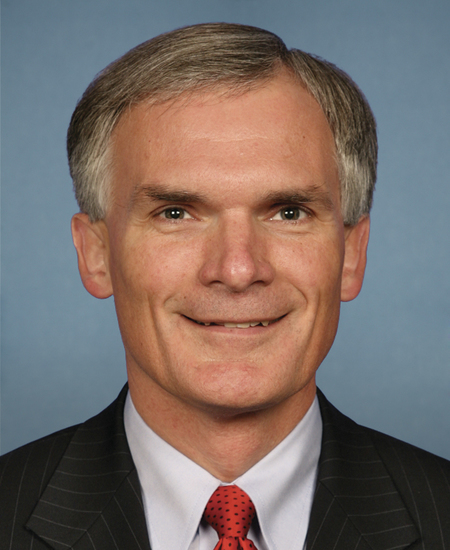
Rep. Robert E. Latta
Sponsored bills
Maddy summaryHR 8843, the American Music Tourism Act of 2024, amends the Visit America Act to direct the Assistant Secretary of Commerce for Travel and Tourism to identify and promote U.S. locations and events significant to music tourism for both domestic and international travelers. It requires the Assistant Secretary to specifically promote travel to music-related attractions (like museums, studios, and venues) and music festivals/concerts. The bill also defines "music tourism" as traveling to visit music sites or attend live music events. Finally, it mandates an annual report to Congress on progress toward these tourism goals, starting one year after the bill's enactment.
Maddy summaryHCONRES 115 is a procedural resolution calling for a joint session of Congress in Philadelphia, Pennsylvania, on July 2, 2026. It directs both the House and Senate to convene together at Independence National Historical Park to commemorate the 250th anniversary (semiquincentennial) of the Declaration of Independence. The resolution does not create new laws or affect any specific group; it solely schedules a ceremonial event honoring Philadelphia's historical role as the site where the Declaration was approved. This is a non-binding commemorative measure focused on marking a historical milestone.
Maddy summaryThis bill rescinds unspent funds from specific federal programs. It targets leftover money from pandemic relief (like the CARES Act and American Rescue Plan) and certain infrastructure initiatives (including education stabilization funds and transportation programs like the Congestion Mitigation Program). The rescission is limited to amounts already allocated for Israel, Ukraine, and Indo-Pacific security supplements under recent appropriations. Unspent funds must be returned to the Treasury, with no new spending created.
Maddy summaryHR 537 authorizes a Congressional Gold Medal to honor 60 diplomats who saved Jewish lives during the Holocaust by issuing visas and passports against their governments' orders, risking expulsion and personal danger. The medal will be presented to the next of kin of these diplomats, alongside representatives from their home countries, and permanently displayed at the United States Holocaust Memorial Museum. The bill also permits the sale of bronze duplicates to cover production costs, with proceeds going to the U.S. Mint. This legislation recognizes the diplomats' humanitarian actions without creating new government programs or altering existing laws.
Maddy summaryHR 8693, the "No American Land for Communist China Act," prohibits U.S. citizens or entities from purchasing real estate adjacent to specific federal lands if owned by the Chinese government or businesses with 25%+ Chinese government ownership. It directly affects Chinese government entities and Chinese-owned businesses operating in the U.S., restricting their ability to buy land near protected federal areas. The bill requires the President to take necessary actions to block such purchases, covering lands managed by Interior, Defense, Agriculture (Forest Service), or designated Indian country. This is a policy restriction, not a funding measure, targeting land transactions near sensitive federal properties.
Maddy summaryHR 8653 authorizes the posthumous award of a Congressional Gold Medal to Major Thomas D. Howie, a U.S. Army officer who died during the Battle of Normandy in WWII. The bill specifies the medal will be presented to his nephew, Tom Howie, or his next of kin, and then permanently displayed at The Citadel Museum. It also permits the U.S. Mint to produce and sell bronze duplicates to cover costs. This is a commemorative measure honoring Major Howie's military service and sacrifice, with no substantive policy changes.
Maddy summaryHJRES 166 is a joint resolution seeking congressional disapproval of a Department of Labor rule that would have changed overtime exemption standards for certain salaried workers. The rule, published in April 2024, aimed to redefine how executive, administrative, professional, outside sales, and computer employees are classified for overtime pay under federal law. If enacted, this resolution would block the rule from taking effect, preserving the existing classification system for these workers.
Maddy summaryHR 5403, the CBDC Anti-Surveillance State Act, prohibits the Federal Reserve from issuing or facilitating central bank digital currency (CBDC) directly or indirectly to individuals through financial institutions. It specifically bans Federal Reserve banks from offering digital products to individuals, maintaining individual accounts, or using CBDC for monetary policy implementation. The bill also clarifies that its restrictions do not apply to existing physical cash or private, permissionless digital payment systems. This bill directly affects the Federal Reserve's ability to develop or deploy a government-run digital dollar. The law aims to prevent the Federal Reserve from creating a digital currency that could enable transaction tracking or government oversight of personal financial activity.
Maddy summaryHJRES 153 is a joint resolution seeking congressional disapproval of a Federal Communications Commission (FCC) rule titled "Safeguarding and Securing the Open Internet; Restoring Internet Freedom," which was submitted on May 22, 2024. If passed, this resolution would nullify the FCC rule, preventing it from taking effect and preserving the previous regulatory framework that required internet service providers to treat all online content equally. The bill directly affects the FCC’s authority to implement this specific rule and would maintain existing net neutrality protections. It follows a procedural mechanism under Chapter 8 of Title 5, U.S. Code, for congressional disapproval of agency rules. The resolution does not alter current law but blocks the FCC’s proposed changes to internet regulation.